
2026 Best Pool Leaf Vacuum for Global Buyers?

Choosing the 2026 Best Pool Leaf Vacuum for Global Buyers requires more than comparing prices. It demands practical testing, product knowledge, and honest attention to local conditions. A pool beside pine trees needs different equipment from a tropical pool surrounded by broad leaves. Debris size matters. So does water depth.

Rudy Stankowitz, a certified pool operator and respected pool-care educator, says, “Consistency matters more than occasional cleaning.” That principle guides this buyer’s overview. A dependable Pool Leaf Vacuum should collect wet leaves without clogging quickly. Its debris bag should release easily, even when full and heavy. Strong wheels, a stable handle, and a useful pole length can prevent strained shoulders during weekly maintenance.

Small details often decide performance. Check battery capacity, charging time, replacement-bag availability, and regional warranty support. Buyers in Europe, Asia, or Australia should also verify charger compatibility and service access. Weather resistance is important, but marketing labels can be vague. Look for clear specifications instead.

Real-world use can be messier than product demonstrations. A vacuum may handle dry leaves well but struggle with soaked debris after rain. Some models feel powerful, yet their bags fill too quickly. That weakness should not be hidden. This guide compares suction, maneuverability, build quality, maintenance effort, and long-term value across different markets.

No single model fits every pool. That is the uncomfortable part. The best choice depends on debris, pool design, climate, budget, and available support.
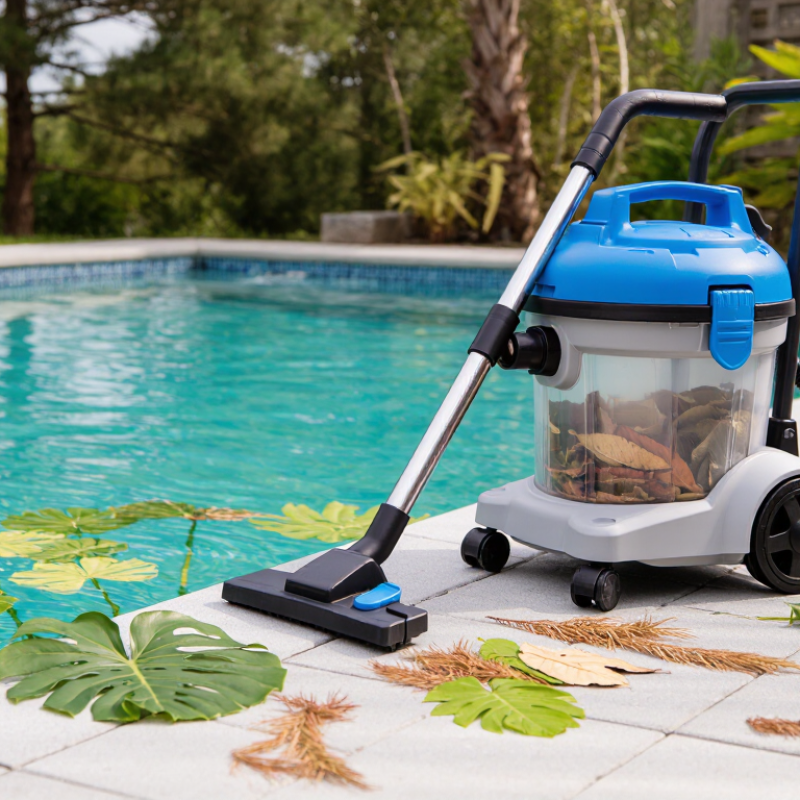
2026 Best Pool Leaf Vacuum for Global Buyers?

What Is a Pool Leaf Vacuum and How Does It Work?

A pool leaf vacuum is a cleaning tool designed to remove leaves, insects, and settled debris from pool surfaces. It usually includes a vacuum head, collection bag, wheels, and either a rechargeable motor or water-powered suction system. The device moves debris into the bag instead of sending it through the pool filter.

The operating process is simple. A motor or water jet creates suction beneath the head. Water and debris enter together, while the mesh bag traps leaves and larger particles. Cleaner water returns to the pool. Battery models offer easier movement, while water-powered models may suit buyers with stronger circulation systems. A full bag reduces suction quickly.

PHTA’s 2023 Industry Statistics estimate more than 10.4 million residential pools in the United States. That scale shows why practical debris control matters. The U.S. Department of Energy also identifies pool pumps as important household energy users. Efficient cleaning can reduce unnecessary filtration time.

Field use reveals a common weakness. Fine sand may pass through coarse bags. Wet leaves can also make the vacuum heavy and awkward. Buyers should check bag capacity, wheel stability, hose compatibility, battery runtime, and replacement-part access. International users need extra care with voltage and charging standards. A vacuum is not a substitute for balanced water chemistry or routine filter cleaning.

Which Pool Leaf Vacuum Types Suit Different Cleaning Needs?

2026 Best Pool Leaf Vacuum for Global Buyers?

Leaf vacuum types suit different cleaning problems. A manual skimmer works well for a few floating leaves and shallow debris. It is inexpensive, quiet, and easy to store. For heavy leaf fall, a wheeled vacuum with a large collection bag reduces repeated emptying. It suits large pools and garden areas with nearby trees. A suction-side vacuum uses the pool pump and filter, making it practical for routine cleaning. However, it may lower water flow when the filter becomes clogged. Small details matter.

Robotic leaf vacuums collect debris independently, which helps pools with frequent storms or uneven cleaning schedules. Grand View Research projects the global pool-cleaning robot market to grow at about 10% annually through 2030. That growth reflects convenience, but not every pool needs automation. Pressure-side systems handle heavier debris and protect the main filter with a separate bag. They need compatible return-line pressure and correct fittings, which vary across regions. Check voltage, hose diameter, warranty support, and replacement-bag availability before importing.

Energy use also deserves attention. ENERGY STAR reports that certified variable-speed pool pumps can use substantially less electricity than standard single-speed pumps. A vacuum connected to an oversized pump may clean quickly but waste energy. I would choose slowly. Match the vacuum to pool size, leaf volume, surface type, and cleaning frequency. Even experienced users sometimes buy the most advanced option first. That is not always the most practical choice.

How to Compare Suction Power, Filtration, Mobility, and Durability

2026 Best Pool Leaf Vacuum for Global Buyers?

How to Compare Suction Power, Filtration, Mobility, and Durability

Choosing a pool leaf vacuum requires more than reading its advertised power. Compare water lift, flow rate, and performance with wet leaves. A strong motor can still disappoint when the intake clogs. Test the vacuum near steps, corners, and shallow water. Those areas reveal practical weakness quickly.

Filtration affects both cleaning speed and water quality. Look for a reusable basket with a secure lid and easy rinsing access. A fine mesh can catch small debris, but it may reduce suction as it fills. I prefer a visible debris chamber. It shows when cleaning is necessary. Filter ratings can sound precise, yet real pool conditions are messier.

Mobility matters during long cleaning sessions. Wide wheels usually roll better across rough decking and pool edges. Check hose flexibility, handle balance, and turning space. A heavy vacuum becomes tiring before the pool looks clean. Durability depends on sealed switches, corrosion-resistant fasteners, and UV-tolerant plastics. Inspect replacement parts before purchase. Global buyers should also verify voltage, charger compatibility, warranty terms, and service access. Some specifications remain unclear. That deserves caution. A small leak around the lid or a brittle wheel can end a useful tool’s life early.

2026 Best Pool Leaf Vacuum for Global Buyers? - How to Compare Suction Power, Filtration, Mobility, and Durability

Vacuum Type Suction / Water Flow Filtration & Debris Handling Collection Capacity Mobility Typical Operating Time Durability Indicators Best Use
Manual Venturi Leaf Vacuum Powered by the pool pump through a standard hose; performance depends on pump flow, commonly about 3,000–8,000 L/h. Mesh collection bag; usually handles leaves, petals, insects, and small twigs. Fine dust may pass through coarse mesh. Approximately 10–25 L, depending on the bag design. Lightweight; suitable for pools with shallow steps and simple shapes. Requires a compatible telescopic pole. Unlimited while the pool pump is operating. Few moving parts; choose UV-resistant plastic, reinforced hose connectors, and corrosion-resistant fasteners. Routine removal of large leaves at a low purchase and maintenance cost.
Battery-Powered Handheld Vacuum Independent motor; typical water flow is about 2,000–5,000 L/h, with stronger models reaching higher flow rates. Reusable mesh or fabric filter; generally suitable for leaves, sand, and small debris when the filter is cleaned regularly. Approximately 1–4 L on compact units and 4–8 L on larger units. Highly mobile; no power cord or pool-pump connection. Weight commonly ranges from about 1.5–4 kg. Usually 30–90 minutes per charge; charging commonly takes 3–8 hours. Look for sealed motor housing, replaceable filters, lithium-ion battery protection, and corrosion-resistant shafts. Quick spot cleaning, spas, above-ground pools, and pools without convenient pump access.
Corded Electric Pool Vacuum Continuous motor-driven suction; commonly rated around 100–250 W, with consistent flow during operation. Multi-layer or fine-mesh filter systems can capture leaves, sand, and smaller suspended debris; filter resistance increases when clogged. Approximately 2–6 L, depending on the filter basket or debris chamber. Good for large pools but limited by cable length and the need for a suitable outdoor power connection. Continuous operation; practical cleaning sessions are commonly 30–120 minutes. Check water-ingress protection, cable strain relief, thermal overload protection, and replaceable impeller or filter parts. Frequent cleaning where stable suction is more important than cordless convenience.
Wheeled Water-Powered Leaf Collector Uses water pressure to create suction; requires adequate hose pressure and usually performs best with a garden hose connection. Large mesh bag optimized for leaves and floating debris; not intended for very fine sediment. Approximately 20–45 L, reducing the number of emptying cycles. Wheels reduce lifting effort and are useful around large pools; performance may be less convenient on steps and tight corners. Unlimited while connected to the water supply. Prioritize reinforced wheels, stainless or coated hardware, UV-stable plastic, and a replaceable collection bag. Large outdoor pools with heavy seasonal leaf fall and mostly open deck areas.
Heavy-Duty Commercial-Style Vacuum High-capacity electric or pump-assisted suction; commonly uses a 250–750 W motor or a high-flow pool-pump connection. Large washable filter basket or multi-stage filtration; suitable for frequent leaf collection and mixed debris. Approximately 5–15 L for compact commercial units; larger external bags may hold more. Usually heavier, often 5–12 kg; larger wheels and longer poles improve handling but reduce portability. Continuous operation when connected to mains power or a pool circulation system. Choose impact-resistant housing, sealed bearings, overload protection, replaceable wear parts, and documented spare-part availability. Hotels, public facilities, large residential pools, and buyers prioritizing long service life.
Comparison note: The figures above are typical ranges for comparable pool-leaf-vacuum configurations. Actual suction, water flow, capacity, runtime, and durability depend on the motor, hose diameter, pool-pump performance, filter condition, battery size, water temperature, and maintenance schedule.

What Features Matter for Pool Sizes, Surfaces, and Global Conditions?

Choosing the best pool leaf vacuum in 2026 depends on pool size, surface, and local conditions. A compact vacuum suits small above-ground pools, while larger pools need stronger suction, wider intake paths, and longer operating time. Check the hose length carefully. A short hose leaves frustrating dead zones.

Surface protection matters. Vinyl liners can tear under rough wheels or sharp intake edges. Concrete and fiberglass tolerate more pressure, but slippery surfaces still require stable movement. I prefer adjustable brushes and soft wheels because they reduce scraping.

However, softer parts may wear faster. That trade-off deserves attention.

Climate changes performance. In humid coastal areas, corrosion-resistant fittings and sealed motor housings are valuable. Dry regions often produce fine dust, so a washable filter with strong debris separation helps prevent clogging. Buyers in colder locations should inspect storage requirements and battery performance below room temperature. Solar exposure also weakens plastic over time. I once underestimated this factor, and a hose became brittle after one summer outdoors. For international purchasing, confirm voltage compatibility, replacement-part access, and clear operating instructions. A powerful unit is not automatically reliable when maintenance support is distant.

How to Choose, Use, Maintain, and Buy the Best 2026 Model?

2026 Best Pool Leaf Vacuum for Global Buyers?

How to Choose, Use, Maintain, and Buy the Best 2026 Model?

Choosing a pool leaf vacuum starts with the pool itself. Measure its surface, depth, steps, and waterline debris. A wide head suits large pools, while a narrow head reaches corners more accurately. Check suction strength, collection capacity, battery runtime, and charging time. For global buyers, confirm voltage, plug compatibility, spare-part access, and delivery conditions. Waterproof construction matters, but no device should be treated carelessly around electrical equipment.

Tips: Test the vacuum in a shallow area first. Move slowly over wet leaves. Empty the bag before suction weakens. Rinse the filter after every use. Store the unit away from direct sunlight. Keep the charger dry. Read the manual twice.

My early mistake was choosing power over balance. The vacuum lifted debris quickly but felt heavy near the steps. A lighter model may work better for frequent cleaning. Before buying, compare verified user reviews, warranty length, service response, and return terms. Ask whether replacement filters and bags remain available in your region. Maintenance is simple, yet often ignored. Inspect seals, wheels, brushes, and hoses each month. If suction drops, stop using it and check for blockages rather than forcing the motor.

Contact Us
