7 Best Dense Load FIBC Bags for Global Sourcing
Global sourcing of bulk materials demands more than a large woven bag. A Dense Load FIBC must protect cargo, support safe handling, and perform consistently across warehouses, ports, and production lines. The right design can reduce spills, loading delays, and unnecessary pallet use. Small details matter.
The OECD’s Global Plastics Outlook reports that global plastic production reached 460 million tonnes in 2019, nearly twice the 2000 level. Packaging represented about 40% of plastic use. This pressure makes reusable, durable, and efficiently designed FIBCs increasingly important. The report also highlights the need for better material efficiency and circularity. Those goals should influence every sourcing decision, not only the purchase price.
ISO 21898 provides internationally recognized requirements for flexible intermediate bulk containers, including construction, testing, and safe working loads. FIBCA technical guidance adds practical considerations for filling, discharge, grounding, and handling. Smithers’ flexible-packaging market research also points to continued demand for high-performance packaging in industrial supply chains. Yet no single bag suits every product. A one-ton mineral load may require a coated fabric and a sift-proof seam, while food-grade powder may need a certified liner and controlled manufacturing conditions. Fit matters.
This guide examines seven Dense Load FIBC options for global sourcing. It considers fabric strength, safety factor, discharge style, liner compatibility, stacking behavior, documentation, and supplier consistency. Samples should still be tested under real loading conditions. Laboratory results can miss rough forklifts, humid storage, or uneven pallets. That is where careful buyers learn the most.
Dense Load FIBC Bags: Definition, Structure, and Typical Applications
Dense Load FIBC Bags: Definition, Structure, and Typical Applications
Dense load FIBC bags are flexible bulk containers designed for heavy, compact materials. The term describes performance, not one universal construction standard. Buyers should confirm the safe working load, safety factor, filling method, and stacking requirements before sourcing. ISO 21898:2024 provides key requirements for the specification and testing of flexible intermediate bulk containers.
A typical bag uses woven polypropylene fabric, four lifting loops, and reinforced seams. Dense materials may require a coated body, stronger corner construction, or an internal liner. Baffles can reduce bulging and improve pallet stability. Top designs include open tops, duffle tops, and filling spouts. Bottom discharge spouts help operators empty powder or granular products with less handling. Small details matter, especially stitching density and loop alignment.
Typical applications include minerals, cementitious powders, agricultural products, plastics, and industrial granules. A 2024 Grand View Research report estimates the global FIBC market will grow at roughly 6% annually through 2030. That growth reflects rising demand for efficient bulk transport and storage. However, market reports often group several FIBC types together. Their figures may not isolate dense-load models. That is worth questioning.
In practical sourcing, request drop-test records, fabric specifications, and third-party inspection evidence. A bag that looks strong may still fail under uneven loading. Static discharge control may also matter in dusty facilities. Specifications should match the product density, moisture exposure, handling equipment, and storage duration.
Key Performance Criteria for Comparing Dense Load FIBC Bags
Dense-load FIBC selection should begin with verified performance, not a catalog photograph. ISO 21898:2004 defines testing for lifting, stacking, drop, and container strength. Compare the tested safe working load, safety factor, and bag configuration. A 1,000-kilogram rating means little without documented test conditions. Check whether the rating applies to one trip or repeated handling. That detail is often missed.
The 2024 Smithers flexible packaging outlook estimates global demand will exceed 300 billion dollars by 2028, increasing pressure on packaging efficiency and traceability. For global sourcing, request batch certificates, seam inspection records, fabric denier, coating details, and moisture-barrier data. ASTM D4169 distribution testing can help evaluate vibration, compression, and drop exposure during transport. Yet laboratory results are not the whole story. A bag may pass testing and still fail after poor forklift handling. I would examine corner lifting loops, discharge spout closure, and pallet contact points during a site visit. Small abrasions matter. They spread under load.
Dense powders also require attention to flow behavior. A liner may reduce contamination, but it can change filling speed and internal pressure. Confirm electrostatic control when the material requires it. Review temperature, humidity, stacking height, and container dwell time before approval. The selection process is rarely perfect. Real shipment feedback should update the specification. Sources: ISO 21898:2004; ASTM D4169; Smithers, The Future of Flexible Packaging to 2028.
Seven Leading Dense Load FIBC Bag Types for Global Sourcing
Seven Leading Dense Load FIBC Bag Types for Global Sourcing
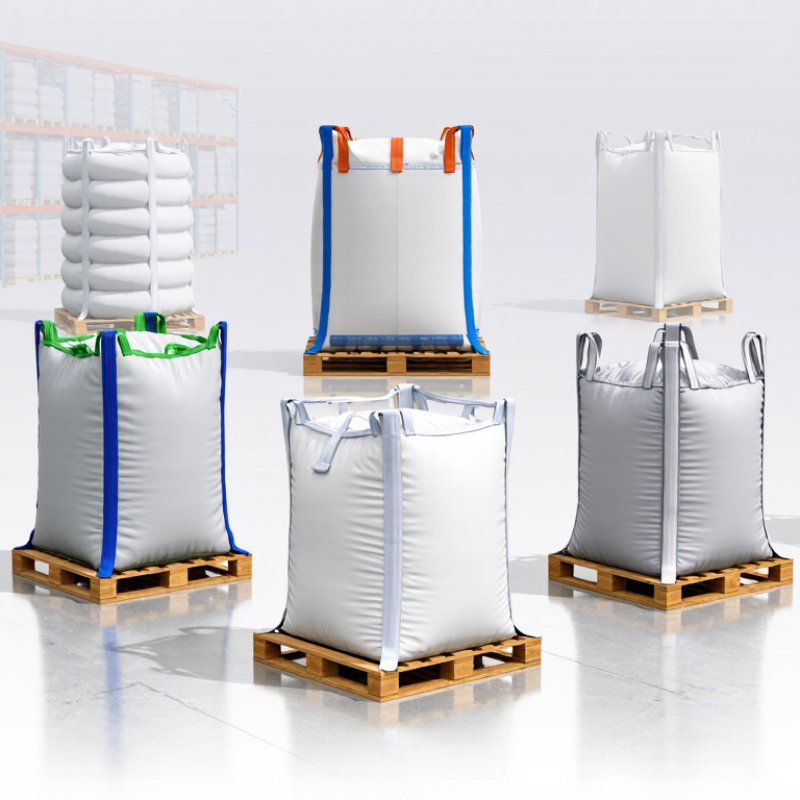
Dense load FIBC bags require careful matching between material density, filling method, and discharge needs. In sourcing reviews, seven types appear most practical: four-panel, U-panel, circular woven, baffle, coated, liner-equipped, and conductive bags.
Four-panel bags offer stable stacking. U-panel bags handle many powdered and granular materials efficiently. Circular bags reduce seam exposure.
Baffle bags keep a squarer shape during storage, which helps maximize warehouse space. Coated bags improve moisture resistance when humidity is a concern. Liner-equipped bags support finer powders and reduce product contact with woven fabric. Conductive bags require verified grounding procedures during controlled industrial handling. They are not a substitute for site safety training.
Check the safe working load, safety factor, fabric strength, and lifting-loop design before comparing prices. A dense material may overload a visually normal bag. It can also stress seams during forklift movement. Test filled samples with the actual product and pallet pattern. Measure height, base spread, and discharge performance. Small details matter.
Global buyers should request production records, material specifications, inspection reports, and traceable batch information. Confirm applicable packaging and transport requirements for each destination. A cheaper bag can look efficient. It may not be. Even experienced teams sometimes overlook liner fit or moisture exposure, so supplier questions should remain specific and documented.
Supplier Evaluation, Customization, Pricing, and Logistics Considerations
7 Best Dense Load FIBC Bags for Global Sourcing
Choosing dense load FIBC bags requires more than comparing unit prices. Evaluate seven points: safe working load, safety factor, fabric strength, dimensions, lifting loops, discharge design, and moisture protection. Ask suppliers for recent test reports, production samples, and traceable material records. A reliable supplier should explain how each bag performs under filling, stacking, transport, and repeated handling.
Customization affects both performance and cost. Confirm fabric weight, coating, liner type, inlet size, outlet size, printing, and pallet compatibility before approval. Request a sample filled with a similar material. It may reveal awkward discharge flow or weak stitching. Pricing should include tooling, sampling, inspection, packaging, and delivery terms. A low quote can still be expensive.
Tips: Compare landed cost, not factory price. Check minimum order quantities and production lead times. For logistics, calculate bag dimensions after folding. Better container utilization can offset a higher unit price. Confirm loading plans, humidity controls, and export documents early. I have seen small labeling errors delay otherwise ready shipments. Build inspection checkpoints before production, during sewing, and before dispatch. Some assumptions will be wrong; review them with real handling data.


 English
 España
 عرب
 简体中文

