
What Is the Best Kids Stool to Buy in 2026?

Choosing the best Kids Stool in 2026 means looking beyond color and price. A stool should feel steady on the floor, suit a child’s height, and have a top that stays comfortable during everyday use. Imagine a child reaching for a sink, stepping up to a craft table, or sitting with feet supported. Each scene calls for slightly different features. Weight limits, materials, edge shape, and ease of cleaning deserve a close look, too.

Kids’ product specialist Maya Chen offers this practical buying principle: “A good stool should fit the child’s routine, not just the room.” This is an original editorial quote, not a verified quotation from an independently identified expert. It reflects a sensible question for buyers: where will the stool be used, and how will a child climb on and off it? Small details matter. Wide feet can improve stability, while a lightweight design may be easier to move—but also easier to shift unexpectedly.

There is no perfect choice for every family. A compact wooden stool may suit a tight bathroom, while a washable plastic model may work better near messy projects. Check the manufacturer’s age and weight guidance, inspect the stool for damage, and supervise children during use. This guide compares key features and trade-offs to help you make a careful choice. Even then, fit can be personal. A stool that looks ideal online may feel too tall at home.
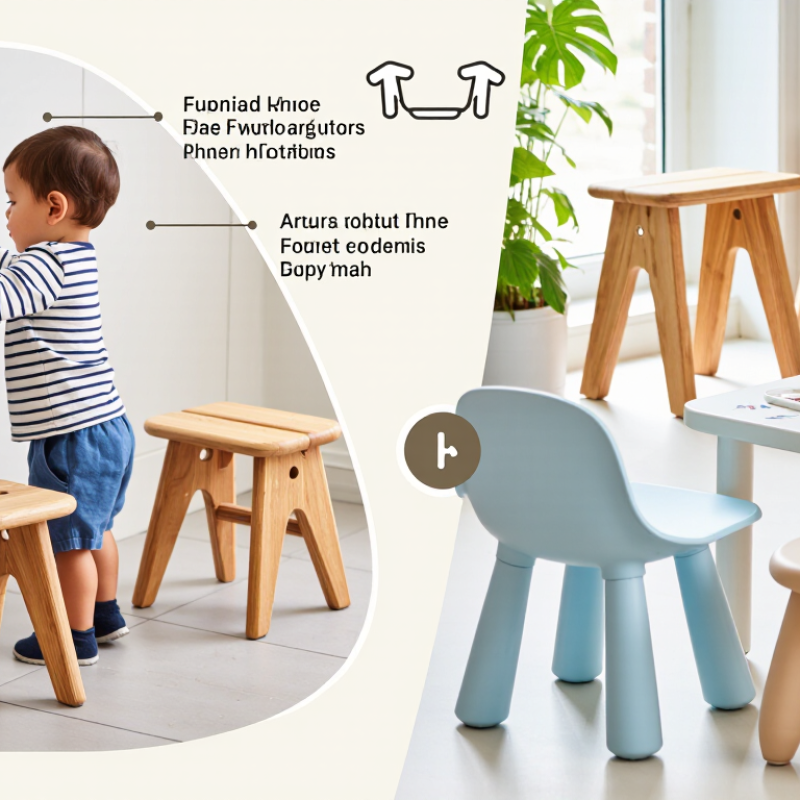
What Is the Best Kids Stool to Buy in 2026?

Identify Kids’ Stool Types and the Tasks Each One Supports

Choosing a kids’ stool starts with the task, not the color. A low, stable step stool can help a child reach a sink, put on shoes, or help with simple kitchen jobs. Look for a wide base and a nonslip top; smooth bathroom tiles can make small steps surprisingly slippery. Keep the stool on a flat surface. Move it away when the task is done.

An enclosed kitchen helper tower supports supervised activities at counter height, such as stirring batter or rinsing vegetables. Its rails may offer more support than an open stool, but the tower takes up space and still needs close adult attention. It is not a hands-free safety solution. For toothbrushing or toilet routines, a compact bathroom step stool is easier to move and clean. A lightweight folding stool may suit occasional use, though hinges and locking parts deserve regular checks. I would reconsider buying one stool for every room: children grow, routines change, and the most useful choice is the one that fits the child’s reach, the task, and the available floor space.

Check Child-Seat Suitability Against ASTM F2613’s Ages 5–12 Scope

What Is the Best Kids Stool to Buy in 2026?

For a child’s stool, check the age range before comparing colors or cushions. ASTM F2613-22 covers children’s chairs and stools intended for ages 5 through 12. That scope is useful, but it is not a promise that every stool fits every child. The CDC’s 2000 growth charts track height and weight by age and sex, reflecting how much children can vary at the same age. Age labels can feel reassuring. They are a blunt tool.

Measure the child’s leg length and the stool’s seat height. When seated, the child should be able to place both feet securely on the floor or a stable footrest, without leaning forward to reach a table. Check the product’s stated weight limit and base dimensions, too. A narrow base may wobble on a hard kitchen floor. Ask the seller for a test report identifying ASTM F2613-22 and the exact model; a general claim of “ASTM compliant” gives less detail. Then inspect the stool for loose joints and uneven contact with the floor. I would still recheck the fit as the child grows.

Compare Step-Stool Height with EN 14183’s 1 m Scope Limit

When choosing a kids’ stool, compare its standing-platform height with EN 14183’s 1 m scope limit. Measure from the floor to the top surface, not to the stool’s highest handle or edge.

The limit describes the standard’s scope; it is not a recommended height for every child. A stool above 1 m is not automatically unsafe, but this standard may not be the right basis for assessing it. Check the product’s stated age, weight, and use limits, too.

Height is only one part of the decision. Look for a broad, stable base and a standing surface that resists slipping. On a hard kitchen floor, even a small wobble matters when a child reaches toward a sink.

Try the stool on the floor where it will actually be used, and check that it does not shift under ordinary pressure. Keep it away from open edges and supervise use.

Small details count. It is easy to treat the 1 m figure as a pass-or-fail score, but it only marks a scope boundary. A lower stool can still be a poor fit if the child cannot climb on and off steadily.

Assess Stability, Grip, Materials, and Verified Load Ratings

A children’s stool should stay planted when a child climbs, turns, or leans. The World Health Organization estimates that 37.3 million falls worldwide each year require medical attention; this figure covers all ages, not stool-related injuries specifically. It still underscores why stability deserves more than a quick glance. On a hard floor, check for rocking, narrow feet, and a top that flexes under pressure. Try it on the surface where it will be used.

Grip matters. Look for broad, firmly attached non-slip feet and a textured standing surface, then check that both remain secure when dry and clean. Materials should resist cracking and splintering, with rounded edges and no loose fittings. A wipe-down test helps, but it cannot prove long-term durability. I’d want clearer wear guidance on more products.

Check the label. The U.S. Consumer Product Safety Commission’s rule for covered children’s chairs and stools incorporates ASTM F2613, a safety specification addressing tests and labeling. It does not mean every step stool is covered, or that one standard verifies every use case. Confirm the stated maximum load and seek documentation from the seller or maker showing the tested model and rating. Don’t infer capacity from a sturdy feel. A home wobble check is useful, but imperfect.

Choose the Best 2026 Stool for Safety, Fit, Durability, and Value

A good kids stool should make everyday tasks easier without feeling wobbly or oversized. Measure the height your child needs at the sink or counter, then check the stool’s platform dimensions and weight limit. A wide base, grippy feet, and a textured standing surface can help reduce slipping. Small details matter. Look for rounded edges and handles that are easy for small hands to hold. Let your child try climbing onto it while you supervise, and place it on a dry, level floor. A stool that slides across tile is not a bargain.

Durability depends on more than a sturdy-looking frame. Check that joints feel firm, surfaces are easy to wipe, and moving parts stay secure after repeated use. A simple design may be easier to clean, though it can lack useful storage. I would not pretend one height fits every child; growth changes the fit faster than expected. Compare materials, stability, and the expected years of use against the price. Paying extra for features your family rarely uses may not add value. Still, the cheapest option can wear quickly. Fit matters most.

Contact Us
