

 English
 España
 عرب
عرب 简体中文
简体中文10 Best Luxury Faucet OEM Manufacturers for Global Buyers
Choosing a reliable Luxury Faucet Oem Manufacturer is not simply a price comparison. It is a decision about design control, production discipline, and long-term brand credibility. Global buyers must examine more than polished showroom images. They should review brass composition, cartridge performance, surface treatment, water-flow testing, and factory quality records. A beautiful faucet can still disappoint if its coating fades after repeated cleaning.
Dieter Rams, a respected industrial design authority, once said, “Good design is as little design as possible.” His principle remains useful for luxury bathroom hardware. Elegant faucets should feel balanced in the hand, turn smoothly, and fit naturally beside stone, glass, or brushed metal. Excessive decoration can hide weak engineering. Sometimes, less really works better.
This guide evaluates ten Luxury Faucet Oem Manufacturer candidates for international buyers. It considers customization capability, prototype accuracy, minimum order quantities, packaging protection, production capacity, and communication quality. Certification support also matters, especially when products enter markets with strict plumbing requirements. Factory visits, sample testing, and independent inspections can reveal details that brochures omit. Yet no ranking is perfect. A manufacturer may excel at small bespoke orders but struggle with large hotel projects. Another may offer impressive tooling but limited after-sales support. Buyers should question every attractive promise and compare evidence carefully. The right partner is not always the cheapest or the most famous. It is the one that consistently turns a design concept into dependable hardware.
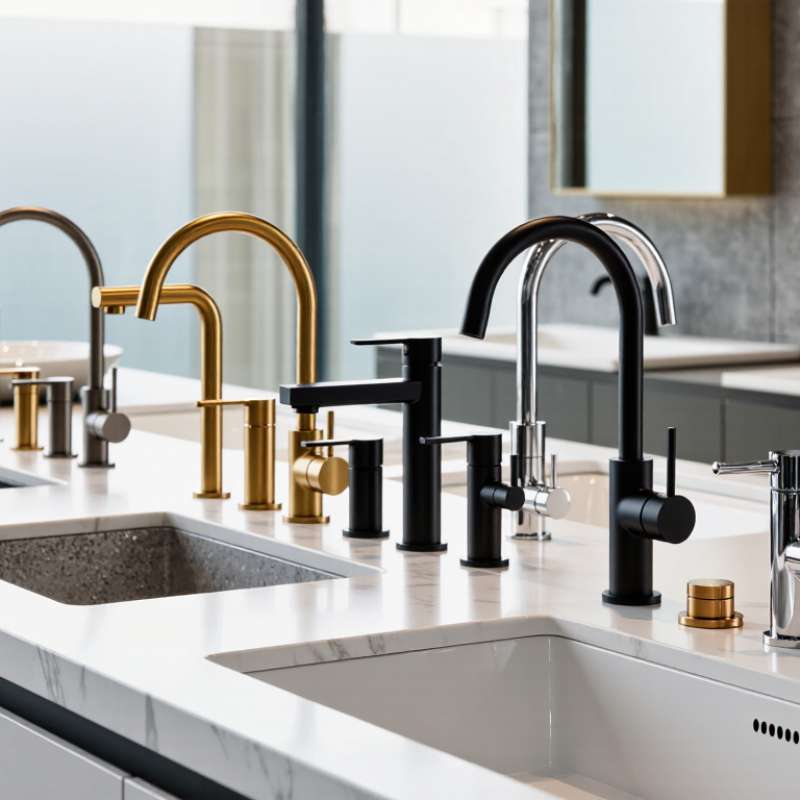
What Defines a Luxury Faucet OEM Manufacturer
10 Best Luxury Faucet OEM Manufacturers for Global Buyers
What Defines a Luxury Faucet OEM Manufacturer
A luxury faucet OEM manufacturer offers more than attractive metalwork. It combines engineering, material control, production discipline, and dependable communication. Buyers should inspect the entire process, from alloy selection to final leak testing.
A serious factory can provide traceable brass or stainless-steel batches, stable cartridge performance, and consistent surface treatment. Certifications matter too. The U.S. EPA WaterSense specification limits bathroom faucets to 1.5 gallons per minute, helping reduce water use by at least 30% compared with standard models. An experienced OEM should explain how flow control affects pressure, comfort, and compliance. Numbers reveal more than polished photographs.
Testing must be practical. Ask for pressure-cycle records, salt-spray results, endurance data, and inspection criteria for gaps around handles. NSF/ANSI/CAN 61 requirements are also relevant when components contact drinking water. A capable manufacturer should understand these requirements before production begins, not after shipment. It should also manage mold revisions, packaging tests, spare cartridges, and technical documents for different markets.
Customization separates a supplier from a true OEM partner. The factory should support drawings, sample approval, finish matching, logo placement, and controlled change management. According to the 2024 NKBA Design Trends Report, homeowners increasingly prioritize functional kitchen upgrades, not appearance alone. That finding deserves attention. Luxury is often judged by daily movement: a quiet lever, predictable temperature, and no dripping after years of use. We still overvalue showroom shine. A beautiful prototype means little if the tenth production batch feels different.
| Rank | Anonymous OEM Profile | Primary Manufacturing Region | Luxury OEM Strength | Material and Finish Capability | Quality-Control Indicators | International Compliance Scope | Typical OEM Terms | Overall Fit |
|---|---|---|---|---|---|---|---|---|
| 1 | Profile A Premium Full-Service OEM | East Asia | Complete product development, engineering support, custom tooling, and coordinated production for hotel and residential collections. | Brass and stainless steel bodies; PVD, electroplated, brushed, polished, and matte finishes. | Incoming material inspection, pressure testing, cartridge testing, surface inspection, and batch traceability. | Commonly supported: NSF/ANSI 61, ASME A112.18.1, EN 817, WRAS, WaterMark, and cUPC depending on model. | Custom packaging; private labeling; sample approval; prototype and tooling charges negotiated separately. | Excellent |
| 2 | Profile B Design-Led OEM | Western Europe | Strong design collaboration, architectural styling, low-volume development, and coordinated finish matching. | Lead-free brass options, stainless steel, ceramic components, and specialty PVD finishes. | Dimensional inspection, endurance testing, leak testing, finish adhesion checks, and documented corrective actions. | Designed around CE-related requirements, EN standards, potable-water material requirements, and market-specific approvals. | Suitable for bespoke collections; relatively higher development cost; flexible design consultation. | Excellent |
| 3 | Profile C Hospitality Specialist | East Asia | High-volume production for hotels, resorts, serviced apartments, and commercial bathroom projects. | Solid brass, stainless steel, ceramic cartridges, thermostatic components, and coordinated accessory finishes. | Flow-rate testing, pressure testing, cartridge-cycle testing, salt-spray testing, and pre-shipment inspection. | Product configurations can be prepared for ASME, CSA, cUPC, WRAS, WaterMark, and other destination-market requirements. | Project pricing; container-load planning; installation manuals; spare-parts support. | Excellent |
| 4 | Profile D Precision Metalworking OEM | East Asia | Advanced CNC machining, complex geometries, concealed systems, and tight dimensional control. | Machined brass, 304/316 stainless steel, solid metal handles, and custom PVD color development. | CMM or fixture-based dimensional checks, pressure testing, surface roughness checks, and process inspection. | Can manufacture to EN, ASME, CSA, and regional plumbing specifications when the product is engineered accordingly. | Best for technically demanding designs; tooling and engineering validation normally required. | Very Strong |
| 5 | Profile E Sustainable OEM | Southeast Asia | Water-saving collections, recycled-content initiatives, responsible packaging, and resource-efficient production. | Lead-free brass options, stainless steel, low-flow aerators, ceramic cartridges, and durable plated finishes. | Flow-rate verification, leak testing, material declarations, packaging audits, and supplier documentation. | Potential support for WaterSense-style requirements, EN standards, ASME standards, and market-specific water regulations. | Good fit for sustainability-led tenders; environmental claims should be independently documented. | Very Strong |
| 6 | Profile F Mid-to-High Volume OEM | East Asia | Stable repeat production, modular platforms, broad component sourcing, and competitive international logistics. | Brass and stainless steel bodies; polished, brushed, matte, and PVD finish options. | Incoming inspection, assembly-line checks, water-pressure testing, cosmetic inspection, and final sampling. | Models can be configured for common North American, European, Australian, and Middle Eastern requirements. | Generally suitable for established programs; custom tooling and lower MOQs depend on complexity. | Strong |
| 7 | Profile G Custom Finish OEM | South Asia | Custom colors, decorative finishing, coordinated bathroom hardware, and made-to-order appearance programs. | Brass, stainless steel, zinc components where appropriate, PVD, powder coating, electroplating, and hand-finishing. | Plating thickness checks, adhesion testing, salt-spray testing, leak testing, and appearance approval samples. | Compliance depends on final configuration; destination-market testing and potable-water documentation should be requested. | Useful for boutique collections; finish approval and production consistency are key procurement checkpoints. | Strong |
| 8 | Profile H Smart Faucet OEM | East Asia | Touchless controls, sensor faucets, thermostatic control, electronic modules, and smart-bathroom integration. | Brass or stainless steel waterway components, electronic sensors, ceramic valves, and corrosion-resistant finishes. | Electrical safety checks, sensor-cycle testing, water-tightness testing, battery or power testing, and firmware validation. | May require separate electrical and radio approvals in addition to plumbing certifications, depending on product design. | Requires software, warranty, spare-parts, and after-sales support planning in the OEM contract. | Strong |
| 9 | Profile I Boutique Bespoke OEM | Southern Europe | Small-batch collections, artisan detailing, customized handles, and architect-oriented product development. | Solid brass, stainless steel, ceramic details, hand-polished surfaces, and specialty decorative finishes. | Individual appearance inspection, dimensional checks, pressure testing, finish verification, and sample retention. | Products can be developed against applicable EN, CE-related, potable-water, and destination-market requirements. | Best for premium limited editions; longer development cycles and higher unit costs are typical. | Strong |
| 10 | Profile J Value-Premium OEM | East Asia | Balanced cost, modern styling, private-label production, and scalable collections for international distributors. | Brass and stainless steel; ceramic cartridges; standard plated, brushed, matte, and selected PVD finishes. | Basic pressure and leakage testing, assembly inspection, finish inspection, and pre-shipment sampling. | Can support common market requirements when specifications, testing, and documentation are defined before production. | Competitive for distributor programs; buyers should confirm audit records, test reports, and warranty terms. | Good |
-
- about us
- About Us
- Qualification
- Privacy
-
- Packaging products
- Hot Sale
- Outdoor Sofa Sets
- Outdoor Dining Sets
- Outdoor Loungers/Sunbeds
- Swing Chairs
- Single Chair

