
In 2026, choosing a Premium Baseball Cap for wholesale means looking beyond a clean product photo. Buyers need a cap that feels comfortable, holds its shape, and arrives consistently across every carton. Small details matter: the crown’s structure, the brim’s curve, the sweatband’s finish, and the stitching around each panel. A sample can reveal more than a long product description.
This guide explores the features that affect quality, cost, and resale potential. It considers common materials, adjustable closures, embroidery options, sizing, minimum order quantities, and production timelines. Buyers should also ask how suppliers check finished goods and handle repeat orders. Those details can help prevent surprises when a popular color needs restocking. Ask for specifics. “Premium” alone is not a measurable standard.
There is no single cap that suits every customer or market. A structured cotton cap may work well for one collection, while a lighter, softer style may fit another. Even a well-made sample can differ from bulk production, so clear specifications and pre-shipment checks deserve attention. This step takes time. It can feel tedious, and it may not eliminate every issue, but it makes decisions more grounded. The sections ahead offer a practical framework for comparing suppliers and selecting a wholesale cap that fits your quality expectations, budget, and brand plans.
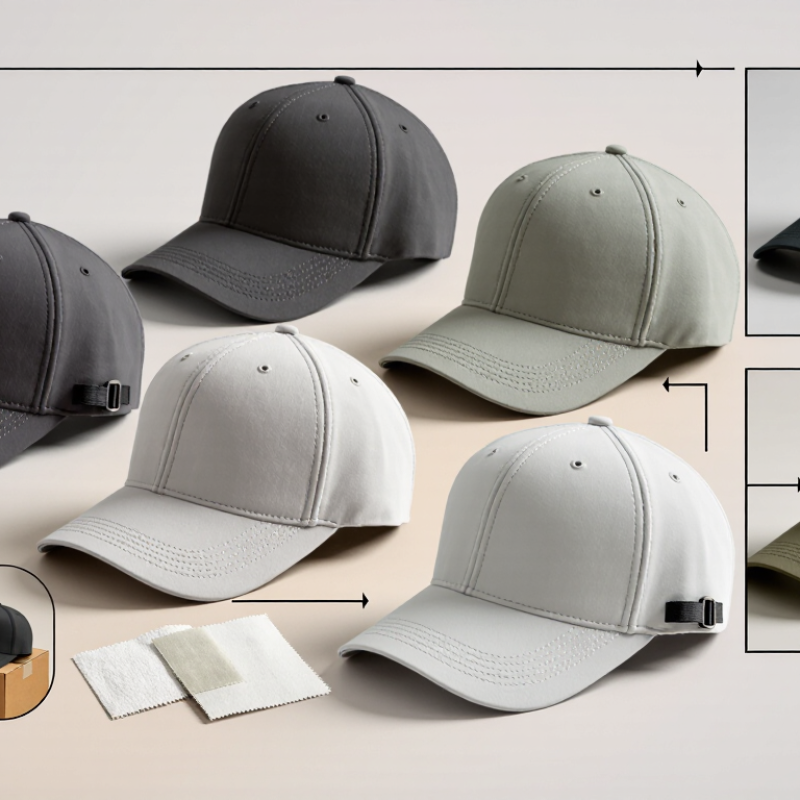
What Defines a Premium Baseball Cap in 2026?
A premium baseball cap earns its price through materials, fit, and consistent construction—not just a polished product photo. A dense, even crown should hold its shape without feeling stiff. Check the stitching around the brim, clean seam finishes, and an adjustable closure that lies flat. Fit matters. For wholesale buyers, sample several sizes and wear them for a few hours; pressure at the temples can turn a good-looking cap into slow-moving stock.
Material choice matters, but it needs context. Textile Exchange’s Materials Market Report 2024 estimates that global fiber production reached 124 million tonnes in 2023, with polyester accounting for 57 percent. That figure describes the wider textile market, not cap quality. Compare fabric weight, breathability, color consistency, and shrinkage after care testing. A recycled-content claim alone does not guarantee durability. Honestly, some “premium” labels still leave buyers guessing about performance.
Tips: Ask suppliers for fabric specifications, test samples in natural light, and inspect sweatbands after repeated wear. Record measurements across production samples, since small fit differences can frustrate customers. Check colorfastness and stitching before placing a large order. One sample is not enough.
A premium baseball cap is not defined by fabric alone. The Textile Exchange 2024 Materials Market Report estimates that global fiber production reached 124 million tonnes in 2023; polyester accounted for 57%, while cotton represented about 20%. These figures show why wholesale buyers should compare fiber content carefully. Cotton twill feels breathable and substantial, while polyester often dries faster and holds color well. A dense, even weave matters more than a fabric label by itself.
Construction decides whether that fabric performs. Check that crown panels align cleanly, seams lie flat, and the brim keeps its curve after gentle flexing. A firm but not brittle front panel helps the crown retain shape. Inspect the sweatband for soft edges and secure attachment; rough seams can irritate the forehead. Small details matter. Ask suppliers for fabric specifications and test reports, including colorfastness and seam-strength results. ASTM D5034 is one recognized method for measuring textile breaking strength, though it does not assess a finished cap on its own.
For bulk orders, review samples under consistent light and compare stitching, closure adjustment, and shape retention across several units. Recycled polyester may reduce reliance on virgin fiber, but it does not automatically guarantee durability or comfort. That distinction is easy to miss. A practical specification should set measurable tolerances for fabric weight, stitch quality, and color variation, then confirm them through pre-shipment inspection. One sample can look excellent; the full carton may tell a less flattering story.
Wholesale buyers need cap styles that match both the intended wearer and the way the cap will be used. Structured six-panel caps hold a crisp shape and provide a firm front for embroidery. Unstructured caps feel softer and more relaxed, while mesh-back trucker styles offer extra airflow. Fit matters. Check crown depth, brim shape, and closure options against your target market rather than relying on photos alone.
Customization can make a standard cap feel distinctive without adding unnecessary complexity. Embroidery works well for simple logos and text; woven labels or patches can suit designs with finer details. Choose thread colors that contrast clearly with the fabric, and confirm placement on a physical sample. Small details count. Adjustable metal, fabric, or plastic closures also affect the look and feel. A highly detailed design may look impressive on screen but appear crowded on a small front panel.
Before placing a bulk order, compare fabric weight, stitching, color consistency, and sample fit. Ask suppliers which decoration methods suit the chosen fabric, and confirm artwork size and placement in writing. Custom colors may require more planning, and not every shade will match perfectly across materials. That is worth checking early. A sample review takes time, but it can reveal an awkward brim curve or a logo that sits too low before production begins.
Premium wholesale cap sourcing starts with clear supplier evidence, not a low unit price. Ask how long the supplier has made structured caps and which steps happen in-house. Request a pre-production sample, then compare it with the approved specifications. Check crown shape, stitch density, sweatband comfort, brim symmetry, and color consistency under daylight. Small differences matter when cartons arrive.
Quality control should be documented at several stages. Ask for inspection criteria, defect limits, and recent batch records. Confirm that measurements are taken across multiple caps, not just one sample. If a supplier cites testing standards or certifications, verify the document, issuing body, scope, and expiry date. A certificate may cover fabric, not the finished cap. I would still inspect a production batch; paperwork cannot reveal every loose thread or uneven seam.
Tips: Send a one-page specification sheet with tolerances for key measurements. Approve a sealed reference sample before bulk production. Keep photos of defects and record corrective actions. One overlooked detail can return, so review the checklist after each order.
| 2026 Best Premium Baseball Cap for Wholesale Buyers? - How Can Buyers Evaluate Suppliers, Standards, and Quality Control? | |||
|---|---|---|---|
| Evaluation Area | What to Check | Suggested Buyer-Defined Benchmark | How to Verify |
| Supplier capability | Relevant cap-making experience, production capacity, subcontracting, and order lead-time planning. | Require a documented production plan, stated capacity for the requested style, and disclosure of any subcontracted processes. | Review facility records, process flow, production schedules, and a recent sample made using the proposed materials and construction. |
| Material and construction | Fiber content, fabric weight, weave, lining, sweatband, closure, visor structure, stitching, and embroidery or print details. | Approve a written specification and sealed reference sample. Set tolerances for fabric weight, dimensions, color, and placement in the purchase agreement; there is no single universal “premium cap” specification. | Compare bulk goods with the approved sample and specification. Verify fiber composition through suitable laboratory testing when needed. |
| Fit and dimensions | Head opening or size range, crown height, brim length and curve, closure adjustment, and left-to-right symmetry. | Define measurement points, measuring method, size range, and allowed tolerances before sampling; check each size and closure configuration offered. | Measure samples and production units using the same documented method. Conduct a fit check on intended wearers or a suitable fit form. |
| Color and appearance | Shade consistency, panel matching, embroidery or print alignment, loose threads, stains, puckering, and visible adhesive marks. | Set an approved color reference and visual defect criteria. If using colorfastness testing, agree the applicable method and minimum rating with the supplier before production. | Inspect under agreed lighting and compare against the approved reference. AATCC TM8 can assess color transfer by crocking; select test conditions and acceptance ratings in advance. |
| Durability and workmanship | Seam security, attachment of the sweatband and closure, visor shape retention, edge finishing, and resistance to ordinary handling. | Use the approved sample and written construction details as the baseline. Specify any wash, wear, or component-pull tests relevant to the intended use. | Review seams and attachment points during inspection. ASTM D6193 provides guidance on stitches and seams; select a test method appropriate to the cap component and intended use. |
| Product safety and labeling | Intended market, age group, fiber-content and origin information, care labeling where applicable, and any market-specific chemical restrictions. | Confirm applicable destination-market rules for the product and sales channel. Additional children’s-product requirements may apply when caps are intended for children. | Review label artwork and supporting records before production. For U.S. sales, check applicable FTC textile labeling and care-labeling requirements; assess children’s-product rules separately when relevant. |
| Quality-control plan | Incoming-material checks, in-process inspections, final inspection, defect classification, and corrective-action records. | Agree inspection stages and defect definitions. An example plan is ISO 2859-1, General Inspection Level II, single sampling, with buyer-selected AQL values such as 2.5 for major defects and 4.0 for minor defects. | Request inspection reports and corrective-action evidence. AQL is a sampling-plan parameter, not a promise that the same percentage of every shipment will be defective. |
| Sample approval and change control | Pre-production sample, material substitutions, artwork revisions, and approval responsibilities. | Require written approval of a final pre-production sample. No changes to specified materials, trims, color, or construction without buyer approval. | Keep dated approvals, specification revisions, and a retained reference sample for comparison with the finished order. |
| Note: Benchmarks in this table are purchasing guidelines, not universal product requirements. Confirm the relevant test methods, acceptance limits, and legal obligations for the destination market and intended use before placing an order. | |||
For a premium baseball cap, wholesale pricing should start with the finished specification, not a target unit price. Compare fabric weight, crown structure, stitching, closure type, and sweatband details. Small upgrades add up. Ask suppliers to quote the same specification at several quantity breaks, such as 300, 600, and 1,200 pieces. Include sample fees, packaging, freight, and any inspection costs in the landed cost. A low factory quote can look attractive until delivery charges arrive.
Set quantities against realistic sales data, seasonal timing, and storage space. Forecasts are still guesses. Review recent sell-through by color and size, then choose a first order that limits excess inventory without pushing unit costs too high. Keep a modest reserve for proven styles rather than ordering every color equally. I would also request a pre-production sample and check its fit, embroidery alignment, and color under daylight. That part is easy to underestimate.
Delivery planning needs dates, not just a promised lead time. Confirm when materials are ready, when production begins, and how long final inspection and transit may take. Add a buffer for port delays or sample revisions, especially before a seasonal launch. Agree on how changes will be approved and documented. One overlooked label detail can slow packing. It is worth checking the carton dimensions and shipping marks before mass production, even when the schedule feels tight.
