

 English
 España
 عرب
 简体中文
10 Best Touch Power Switches for Global Buyers
Choosing a Touch Power Switch is not just a matter of finding a smooth glass panel. Buyers need to consider where it will be installed, what it will control, and how it feels in daily use. A kitchen switch may face frequent fingerprints and damp hands. A bedside model may need a clear indicator that is not too bright at night. Small details matter.
This guide compares ten options for buyers sourcing products across different markets. It looks at touch response, rated voltage and load, panel materials, wiring requirements, and available dimming or smart-home features. Specifications can vary by model and region, so check the manufacturer’s documentation before ordering. Where installation requirements are unclear, ask a qualified electrician rather than guessing.
Price alone tells an incomplete story. A polished finish does not prove durability, and a long feature list may not suit a simple room. Not every model fits. This comparison highlights practical trade-offs, including compatibility, ease of installation, and the clarity of product information. Some details are hard to judge from listings alone; that limitation is worth keeping in mind. The right choice depends on the existing wiring, the intended load, and the user’s priorities. For global buyers, confirming local compatibility before purchase can prevent avoidable delays and mismatched expectations.
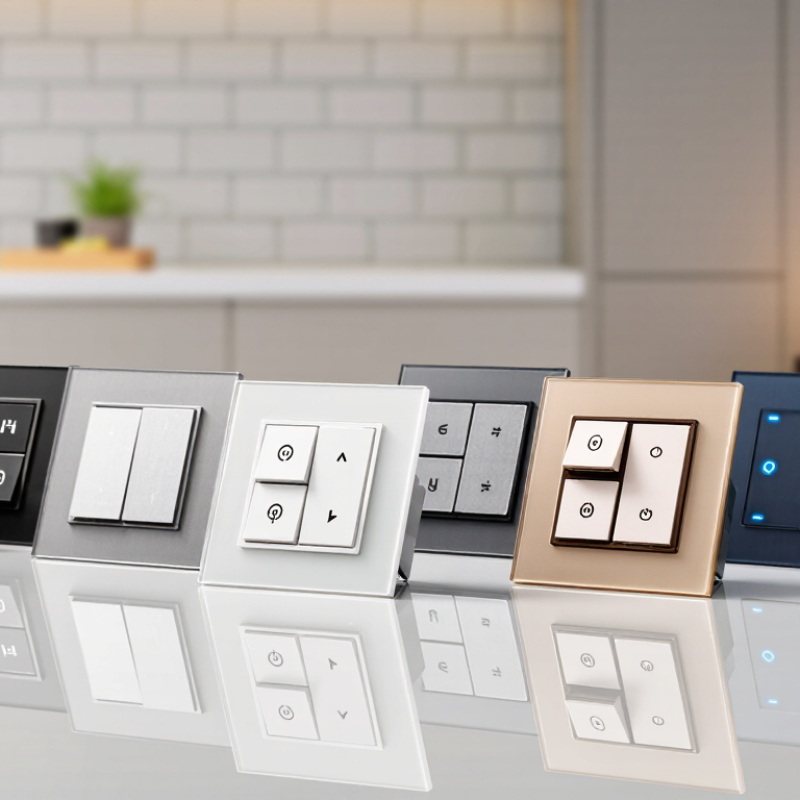
What Touch Power Switches Are and How They Work
A touch power switch replaces a moving toggle with a sensing surface, often glass or plastic. In capacitive models, a sensor tracks tiny changes in electrical capacitance when a finger approaches or touches the panel. A control circuit interprets that change, then switches the load through a relay or semiconductor. One light tap. No mechanical click. Some models also use resistive sensing, which responds to pressure rather than capacitance.
The operating idea is simple, but installation details matter. A switch must match the circuit voltage, load type, and rated current. Certain LED lamps may flicker or glow faintly if the switch and lamp are incompatible. Moisture, thick gloves, or poor grounding can also affect touch response. A 2025 MarketsandMarkets smart-home market report projected growth from $135.3 billion in 2025 to $203.2 billion by 2030. That broader forecast signals rising interest in connected controls, not proof that every touch switch is smart. Buyers should check wiring diagrams, load ratings, and whether a neutral wire is required. The panel can feel seamless. The wiring still deserves care.
10 Best Touch Power Switches for Global Buyers - What Touch Power Switches Are and How They Work
A touch power switch detects a finger touch, commonly by sensing a change in capacitance at its control surface. Its electronic controller then operates a switching element, such as a relay, MOSFET, or triac, to control a circuit. The sensing method and supported electrical load vary by design; always confirm the product’s voltage, current, load type, wiring, and regional safety approvals before purchase.
| No. | Switch Type | How It Works | Typical Use | Power and Load Considerations | Best For |
|---|---|---|---|---|---|
| 1 | Capacitive Touch Wall Switch | A touch-sensitive front surface detects a change in capacitance and signals an internal switching circuit. | Indoor lighting in homes, offices, and hospitality spaces. | Available for different mains systems; check the rated voltage, current, wiring requirements, and supported lamp types. | Buyers seeking a familiar wall-switch format with a smooth touch surface. |
| 2 | Touch Dimmer Switch | A touch control switches the light and adjusts its output level through compatible dimming electronics. | Dimmable residential or commercial lighting. | Must match the lamp and driver dimming method. Minimum and maximum load ratings differ by model. | Lighting installations that need adjustable brightness. |
| 3 | Multi-Gang Touch Panel | Separate touch zones send independent control signals to one or more switching channels. | Controlling multiple lighting circuits from one wall location. | Check the number of independently controlled channels and the per-channel load rating. | Rooms with several lighting zones or circuits. |
| 4 | Glass-Panel Touch Switch | Capacitive electrodes sense a touch through an insulating glass front panel. | Indoor lighting controls where a flat, wipe-clean surface is preferred. | Glass thickness and construction affect touch sensitivity; confirm installation and electrical ratings. | Buyers prioritizing a smooth, easy-to-clean control surface. |
| 5 | Sealed Touch Switch | A sealed touch-sensitive surface registers input without requiring a moving button to pass through the enclosure. | Locations where dust or splashes may be present, when the specific enclosure is rated for the environment. | Ingress protection depends on the complete installed product. Verify its IP rating and suitability for the location. | Installations needing a cleanable control surface; not a substitute for checking environmental ratings. |
| 6 | Low-Voltage Touch Module | A touch-sensing circuit provides a control signal to an onboard or external switching device. | Electronics projects, control panels, and low-voltage equipment. | Supply and output ratings vary widely. Confirm DC input range, output type, polarity, and current limits. | Integrators who need a touch input for a separately specified load. |
| 7 | Latching Touch Switch Module | Each touch alternates the output between on and off states, with the circuit retaining its state after release. | On/off control in compact electronic devices and panels. | Check whether the output is a relay, transistor, or other switching type, and verify its load limits. | Applications requiring toggle-style operation from a brief touch. |
| 8 | Momentary Touch Switch Module | The output is active while the touch is detected, then returns to its default state after release. | Signal inputs, user-interface controls, and trigger circuits. | Often intended as a control signal rather than direct mains-load switching; follow the module’s output specifications. | Equipment that needs a brief touch-activated command. |
| 9 | Touch Switch with Relay Output | A touch controller energizes a relay, which opens or closes an electrical circuit. | Switching compatible lighting or appliances where electrical isolation is required. | Confirm the relay’s AC/DC voltage and current ratings, load category, and any limits for inrush current. | Designs that need a touch control paired with a mechanical relay output. |
| 10 | Touch Switch with Solid-State Output | A semiconductor device switches the load electronically; AC and DC versions use different output technologies. | Electronic equipment and applications where silent switching or frequent operation is useful. | Check AC/DC compatibility, heat dissipation, leakage current, minimum load, and the specified load type. | Buyers who need silent operation and can match the output to the load. |
-
- about us
- About Us
- Qualification
- Privacy
-
- Packaging products
- Hot Sale
- Outdoor Sofa Sets
- Outdoor Dining Sets
- Outdoor Loungers/Sunbeds
- Swing Chairs
- Single Chair

