
Choosing a China Chandeliers Supplier in 2026 requires more than comparing catalog prices. It demands practical judgment, technical knowledge, and evidence. A chandelier may look impressive online, yet arrive with uneven plating, loose crystal pins, or wiring unsuitable for your market. As lighting designer Richard Kelly famously observed, “The art of lighting is the art of controlling shadows.” That principle still matters when evaluating scale, glare, beam direction, and visual comfort.
A dependable supplier should explain metal grades, crystal options, LED modules, color temperature, dimming systems, and load requirements clearly. Ask for current factory photographs, production samples, test reports, installation drawings, and a written warranty. Check whether the supplier can support your destination’s electrical and safety requirements. Certifications alone are not enough. Confirm their scope, issuing body, product model, and validity. Small details reveal experience. Look at connector quality, foam protection, carton labeling, spare parts, and how fragile arms are secured for shipping.
There is no perfect supplier. Even an experienced buyer can overlook a hidden cost or accept an attractive sample too quickly. I would request one pre-production sample and inspect it under warm and neutral light. Compare the finished piece with the approved drawing. Discuss replacement crystals before placing a large order. A trustworthy China Chandeliers Supplier welcomes detailed questions, records changes, and admits limitations. That honesty is valuable. The best decision is rarely the cheapest quotation; it is the supplier that combines consistent craftsmanship, responsive communication, documented compliance, and realistic delivery control.
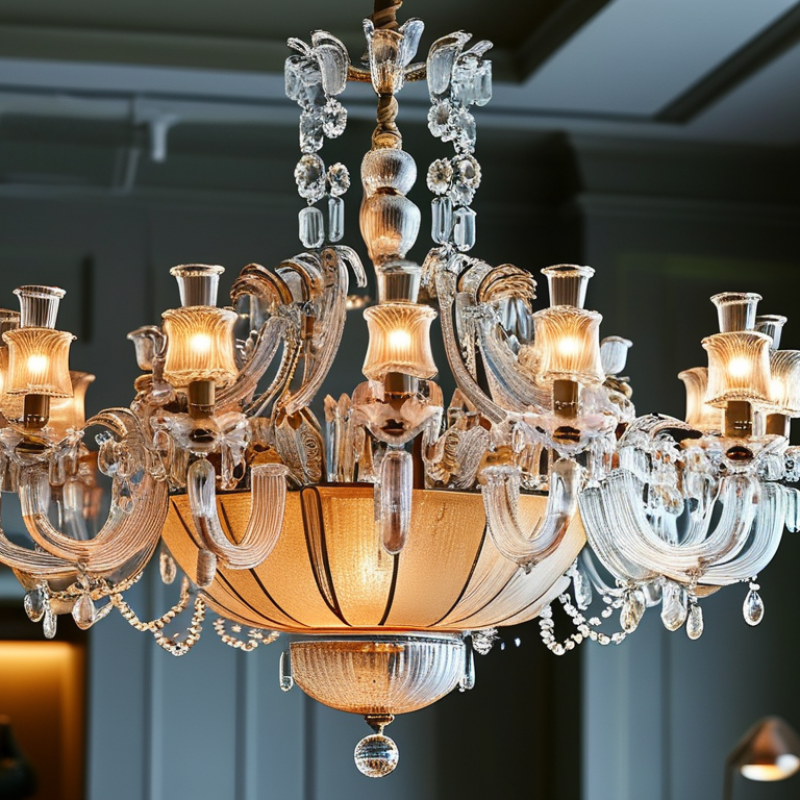
Before contacting a China chandelier supplier in 2026, define the project in measurable terms. Record room size, ceiling height, mounting position, preferred material, finish, color temperature, and dimming method. A dining room with a 2.8-meter ceiling needs different proportions from a hotel lobby. Measure twice.
Set a realistic budget, including product cost, sampling, packaging, freight, installation, taxes, and a contingency reserve. Many buyers focus only on the quotation. That is risky. A practical reserve of 10% to 15% can cover design revisions, damaged parts, or upgraded electrical components. Request a separated quotation for the frame, crystals or glass, drivers, spare parts, and testing. Vague descriptions create expensive misunderstandings.
Energy performance should influence the specification. The U.S. Department of Energy reports that LED lighting uses at least 75% less energy and lasts up to 25 times longer than incandescent lighting. Ask suppliers for LED wattage, color rendering index, rated life, driver details, and safety test documents. The International Energy Agency also identifies lighting efficiency as an important route for reducing electricity demand. Still, efficiency is not everything. A beautiful fixture can fail when glare, cleaning access, or replacement parts are ignored. I have seen budgets underestimate installation labor. That mistake deserves a second look. Choose a supplier that can provide drawings, samples, clear tolerances, production photos, and written after-sales terms before payment.
How to Choose a China Chandeliers Supplier in 2026?
Verify Supplier Experience, Factory Capacity, and Product Quality
Choosing a China chandeliers supplier in 2026 requires more than comparing online prices. Supplier experience should appear in completed projects, export records, and repeat-order procedures. Ask how many years they have produced chandeliers, not merely traded lighting products. Request photos of installations, drawing revisions, and sample approvals. Strong suppliers explain metal selection, surface treatment, wiring checks, and packing methods clearly. Vague answers deserve caution.
Factory capacity must match your order, finish, and delivery window. During a video audit, inspect cutting, welding, polishing, assembly, and storage areas. Count active production lines, but also ask who supervises them. A large workshop can still miss small details. Review monthly output, peak-season capacity, lead times, and backup plans for glass or electrical components. Request a production schedule with inspection points. It should show dates, not promises. Look closely.
Product quality becomes clearer through an approved sample. Check frame alignment, socket stability, coating consistency, glass edges, and cable labeling. Ask for material specifications, inspection records, and relevant testing documents. Independent inspection is useful before shipment, especially for large or customized orders. I would also test one packed unit after simulated handling. Small defects matter. They may reveal loose screws or weak foam protection. My checklist would not be perfect, and supplier claims can change under pressure. Keep written tolerances, approved drawings, and payment milestones. Trust grows from evidence, not polished showroom language.
Evidence-based supplier due-diligence scorecard for commercial chandelier sourcing
| Evaluation Area | Data Dimension | Evidence to Request | Objective Acceptance Criteria | Verification Method | Priority |
|---|---|---|---|---|---|
| Supplier Experience | Legal operating history | Business license, unified social credit code, registered address, and current company registration information | Company information is consistent across official registration records, quotations, contracts, and bank-account details | Check the Chinese National Enterprise Credit Information Publicity System and compare all documents | High |
| Supplier Experience | Chandelier product experience | Product catalogue history, dated project references, production photographs, and previous export documentation with sensitive information removed | Evidence specifically covers chandeliers or decorative luminaires rather than only unrelated lighting products | Request dated evidence and contactable trade references where permitted | High |
| Supplier Experience | Export-market capability | Destination countries, shipping records, packing lists, customs documents, and market-specific compliance files | Supplier can demonstrate experience with the electrical, labelling, packaging, and documentation requirements of the target market | Match sample documents with the proposed product specification and destination country | High |
| Factory Capacity | Production process coverage | Process flow covering metalwork, surface finishing, glass or crystal handling, wiring, assembly, inspection, and packing | Critical processes are controlled internally or assigned to identified, qualified subcontractors with documented inspections | Conduct a live video audit or independent factory inspection | High |
| Factory Capacity | Monthly output and capacity allocation | Monthly capacity by model or product family, current order loading, production schedule, and planned capacity for the buyer’s order | Capacity is stated in units and lead time, with separate figures for standard models and custom models | Compare capacity statements with production records, work orders, and the proposed delivery schedule | High |
| Factory Capacity | Lead-time control | Sample approval timeline, production lead time, inspection date, packing date, and shipping-readiness date | Dates are documented in the purchase contract; delays, change approvals, and corrective actions have a defined process | Review recent anonymized production schedules and include milestone dates in the contract | High |
| Factory Capacity | Quality-control staffing and equipment | QC organization chart, inspection procedures, calibrated electrical testers, torque tools, continuity testers, and packing inspection records | Incoming, in-process, and final inspections are documented; measuring equipment has valid calibration records | Check equipment labels, calibration certificates, inspection forms, and sample records during the audit | High |
| Product Quality | Electrical safety standard | Test report or technical file for the exact model, wiring diagram, rated voltage, rated frequency, power, and lamp-holder specification | Documentation addresses the applicable requirements of IEC 60598-1 and any relevant product-particular standard for the target market | Confirm that the report model, construction, components, and ratings match the production sample | High |
| Product Quality | Market compliance | Declaration of Conformity, applicable test reports, technical documentation, labels, and user instructions | Compliance documents are issued for the exact product configuration and target market; no unsupported certification marks are used | Check certificate scope, model number, applicant, test laboratory, dates, and applicable regulations | High |
| Product Quality | Ingress protection claim | IP test report where an IP rating is claimed, including the tested enclosure and product configuration | Any IP rating is supported by testing under IEC 60529; the physical design matches the tested sample | Compare the report, product drawings, seals, cable entries, and production sample | Conditional |
| Product Quality | Light performance | Photometric report, lumen output, correlated colour temperature, colour rendering data, beam distribution, and rated lifetime information | Measured data is provided for the final LED module, driver, and luminaire configuration rather than for a different component | Use an independent laboratory or verify the report’s model, test conditions, equipment, and measurement date | High |
| Product Quality | Material and finish consistency | Material specifications, coating or plating process, colour sample, surface-finish standard, and approved reference sample | Visible finish, dimensions, colour, glass or crystal type, and hardware match the approved sample and purchase specification | Use a signed golden sample, colour reference, dimensional drawing, and incoming-material inspection | High |
| Product Quality | Mechanical safety and installation | Installation manual, suspension-load data, mounting hardware specification, ceiling fixing requirements, and assembly instructions | Installation instructions state product weight, fixing method, electrical connection requirements, and required professional installation where applicable | Review engineering drawings and conduct a physical assembly and load-support inspection | High |
| Quality Management | Nonconformity and corrective action | Defect classification, corrective-action reports, replacement policy, warranty terms, and spare-parts list | Critical defects are defined; corrective actions include root cause, responsible person, deadline, and effectiveness verification | Review anonymized corrective-action records and write the remedy process into the contract | High |
| Order Protection | Pre-shipment inspection | Inspection checklist covering appearance, dimensions, electrical safety, accessories, quantity, labels, and packaging | Inspection is completed against the approved sample and purchase order before shipment; critical defects must be zero | Use an independent inspection company or buyer-approved inspection procedure | High |
| Order Protection | Packaging and transport risk | Packaging specification, carton dimensions, gross weight, drop-test method where applicable, inner protection, and loading plan | Fragile components are individually protected; packaging is suitable for the agreed transport mode and handling conditions | Approve a packed sample and inspect carton strength, internal protection, markings, and loading photographs | High |
| Commercial Fit | Customisation control | Engineering drawing, bill of materials, finish sample, approved change order, and revision-control record | No production change is made without written approval; every revision has a date, version number, and responsible approver | Compare the final sample, drawing, bill of materials, and mass-production records | Conditional |
| Commercial Fit | Total landed-cost transparency | Unit price, tooling, sample fee, packaging, inspection, inland transport, export charges, freight assumptions, and payment terms | Quotation clearly separates one-time costs, recurring costs, taxes, shipping assumptions, and validity period | Request a line-item quotation and compare it with the purchase contract and commercial invoice | High |
Material quality should be checked before visual appeal. Brass offers strength and a warm, aged finish. Aluminum reduces weight and shipping pressure. Glass and crystal create sharper reflections, but they need careful edge inspection. Ask for material specifications, coating thickness, load testing, and corrosion results. A product photograph cannot prove durability. The U.S. Department of Energy reports that LED technology continues improving energy efficiency, so compatible LED drivers deserve equal attention.
Design flexibility matters for hotels, villas, and retail projects. Request CAD drawings, color samples, lighting simulations, and a physical prototype. Confirm maximum dimensions, ceiling structure, cable length, dimming method, and replacement parts. Grand View Research identifies decorative lighting as a continuing growth segment, but market growth does not guarantee supplier reliability. Customization can also increase mistakes. That part is easy to underestimate.
Tips: Compare three suppliers using the same checklist. Verify IEC 60598-1 test evidence and destination-market certifications, such as CE, UKCA, or UL where applicable. Check whether certificates match the exact model, not a similar fixture. Review ISO 9001 records, factory inspection reports, packaging tests, and random pre-shipment inspections. Ask about MOQ, lead time, spare components, and warranty terms in writing. One small issue remains: suppliers may describe “crystal” differently. Define the material clearly before approving samples.
When choosing a China chandelier supplier in 2026, compare landed cost, not only the factory quotation. Request unit price, packaging, export documents, inspection fees, and payment terms separately. UNCTAD’s Review of Maritime Transport 2024 states that ships carry over 80% of global merchandise trade by volume. Freight risk matters. Ask for FOB, CIF, and DDP quotations, then compare insurance, port charges, customs duties, and inland delivery. A cheap FOB price may become expensive after destination fees.
Minimum order quantities should match your sales forecast and cash flow. Ask whether the MOQ applies per design, finish, or total order. Some suppliers accept mixed models, but charge more for small batches. Confirm lead time in writing: sample production, approval, mass production, inspection, and shipping should be listed separately. The World Bank’s Logistics Performance Index 2023 evaluates customs, infrastructure, shipment arrangements, and timeliness. These factors can affect delivery more than a supplier’s promise.
For ocean freight, request a recent rate validity period because prices change quickly. Confirm carton dimensions, gross weight, container loading plans, and replacement procedures for damaged glass. I would not trust “fast delivery” without a production schedule. One imperfect detail remains: suppliers may quote optimistic timelines during peak seasons. Build a two-week buffer, and require progress photos before final payment.
Recommended evaluation weighting for pricing, minimum orders, lead times, and shipping terms
For a practical supplier comparison, pricing should account for more than the unit quotation. A balanced evaluation gives 30% importance to total cost, 20% to minimum order flexibility, 25% to production lead-time reliability, and 25% to clear shipping terms. Confirm whether prices include packaging, export documentation, insurance, and freight before placing an order.
How to Choose a China Chandeliers Supplier in 2026?
A reliable supplier should provide a detailed contract before production begins. Specify dimensions, materials, finishes, lighting specifications, packaging, delivery dates, and payment stages. Attach approved drawings and clear product photographs. Vague wording creates expensive disputes later.
Quality inspections should cover more than appearance. Request checks during production and before shipment. Inspect frame alignment, surface finish, wiring, crystal or glass parts, and carton protection. Ask for dated photographs, test records, and an independent inspection when the order is large. My first checklist was too general. It missed dimmer compatibility and ceiling-load details. That mistake changed how I review technical documents now. Small details matter.
The warranty should state its duration, coverage, exclusions, and response time. Confirm who pays for replacement parts and shipping. Ask how the supplier handles damaged components, missing screws, or installation questions. A dependable service team keeps spare parts available and provides practical installation instructions. Test their communication before ordering by sending specific questions. Slow or unclear replies may become worse after payment. Do not rely only on promises. Record every agreement in the contract, including after-sales procedures and acceptable repair timelines. Some suppliers may resist these details, but that hesitation deserves careful thought.
