How to Choose Galvanized Steel Strip in 2026?
Choosing Galvanized Steel Strip in 2026 starts with the job it must perform, not the lowest price per tonne. A strip used for a roof panel faces different demands from one stamped into an appliance bracket. The coating, steel grade, thickness, width, and surface finish all affect performance. Small differences matter. A coil that looks uniform at delivery may behave differently at a tight bend or during spot welding.
The scale of the steel sector makes careful specification important. World Steel Association’s World Steel in Figures 2024 reports global crude steel production of about 1.89 billion tonnes in 2023. That figure describes the wider steel industry, not galvanized strip alone, but it shows the size and complexity of the supply chain. Buyers should compare coating mass, dimensional tolerances, mechanical properties, and documentation against the intended application. For example, a fabricator forming narrow channels should check edge condition and bending requirements, not just nominal thickness. Ask suppliers for current test certificates and clarify which standard and coating designation apply; requirements can differ by market and product specification.
Price still matters, of course. Yet choosing on price alone can invite rework, coating damage, or inconsistent forming results. There is no universal “best” coil. The right choice depends on exposure, fabrication steps, service life, and acceptable risk. Some specifications remain imperfect proxies for real performance. That deserves a closer look. This guide explains how to assess Galvanized Steel Strip in 2026, compare supplier claims, and identify the details worth verifying before an order is placed.
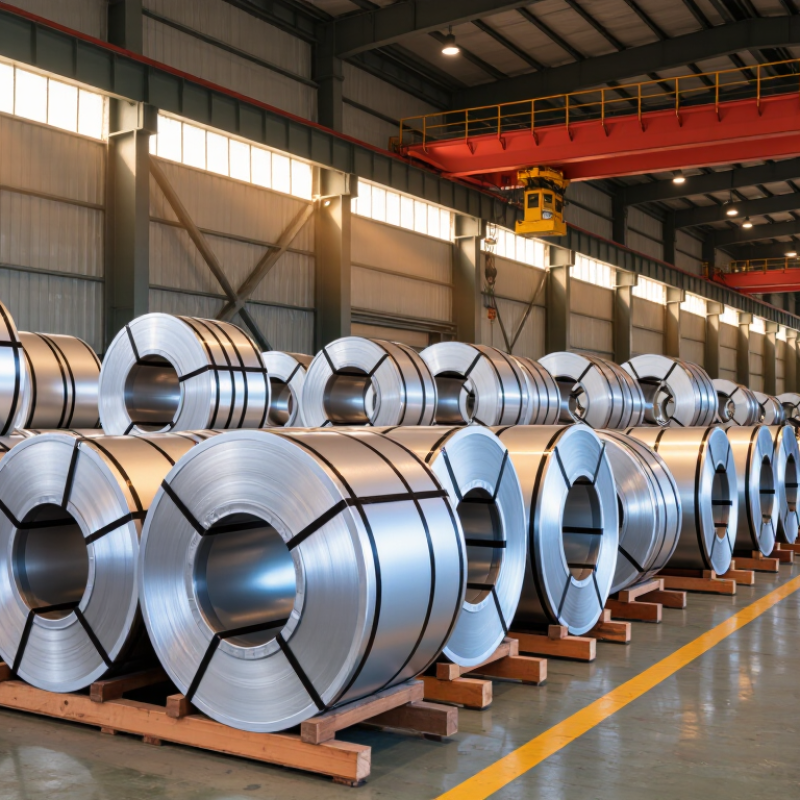
Define Galvanized Steel Strip by Base Steel, Thickness, Width, and Coating
Choosing galvanized steel strip in 2026 starts with four measurable details: base steel, thickness, width, and coating. Each affects forming, fit, corrosion resistance, and cost. Details matter. Identify the strip’s job before comparing quotations: a bent bracket, a duct seam, and an outdoor enclosure place different demands on the material.
Base steel influences strength and how well the strip bends or stamps. Ask for the steel grade and intended forming conditions, not just a general description. Thickness affects stiffness and finished-part dimensions. Confirm how it is measured, since specifications may treat coating thickness differently.
Width should match the tooling and part layout; even a small mismatch can create scrap or uneven edges.
The zinc coating helps protect exposed steel, but a higher coating mass is not automatically the right choice. Match it to exposure, expected service life, and forming needs. Check whether the stated coating mass applies to both sides combined or each side. That detail is easy to overlook. Compare samples when appearance or surface finish matters, and inspect edges after cutting or bending. A specification can look complete on paper yet miss a production constraint, so review the actual process before approving the strip.
Compare ASTM A653 G90 and EN 10346 Z275: 275 g/m² Total Zinc
How to Choose Galvanized Steel Strip in 2026?
ASTM A653 G90 and EN 10346 Z275 are often compared because both specify a nominal total zinc coating mass of 275 g/m² across both sides. This is a useful starting point, not proof of identical performance. G90 is an ASTM coating designation, while Z275 belongs to the EN standard. Sampling, tolerances, and test procedures may differ, so confirm the applicable standard and inspection documents before ordering.
Consider the finished part, too. A strip bent around a tight radius may expose vulnerable areas, while cut edges can corrode sooner than coated surfaces. Check coating distribution on each side, surface finish, forming requirements, and any paint or welding process. For humid or coastal service, the surrounding environment matters as much as the coating designation. I would not select by label alone; real conditions can be less predictable than a specification sheet suggests.
Tips: Ask for coating-mass test results and clarify whether the quoted value is total for both sides. Inspect sample bends and cut edges. Small checks help.
Match Coating Mass to Corrosion Exposure and Expected Service Conditions
How to Choose Galvanized Steel Strip in 2026?
Match Coating Mass to Corrosion Exposure and Expected Service Conditions
Coating mass should reflect where the strip will work, not simply the highest available grade. A dry, heated interior may need less zinc protection than a damp workshop with frequent condensation. Near salt spray, exposed edges and trapped moisture can accelerate corrosion. Small details matter.
Check whether the stated coating mass covers both strip faces, and confirm the applicable product specification. A heavier coating can extend protection, but it may affect forming, welding, or surface appearance. For deep bends, discuss the forming process with the supplier and inspect trial parts for cracks or coating damage. There is no universal best value.
Consider the full service cycle: storage, fabrication, installation, and maintenance. A strip stored outdoors before use may face harsher conditions than its final indoor location suggests. Cut edges deserve attention. Zinc can protect nearby steel to a degree, but edge exposure still needs evaluation, especially in persistent wetness or industrial atmospheres. It is easy to over-specify coating mass and miss drainage or design flaws. I would review exposure, expected life, and upkeep together, then verify the choice against test data and the project specification.
Select ASTM A653 Steel Grades from 33 to 80 ksi Minimum Yield Strength
How to Choose Galvanized Steel Strip in 2026?
For structural applications, choose the ASTM A653 steel grade by matching its minimum yield strength to the part’s loads and forming needs. ASTM A653/A653M specifies structural grades including 33, 37, 40, 50, and 80 ksi—approximately 228, 255, 276, 345, and 550 MPa. These are minimum yield values, not promises of identical performance across every thickness or production route. Check the applicable specification and the steel’s mill test certificate.
A 33 ksi strip may suit light brackets or formed panels where easy shaping matters. Heavier supports may call for 50 ksi, while 80 ksi can help reduce section thickness in load-bearing parts. Higher strength is not automatically better. Tight bends, punched edges, and welding can change what works in practice. I would still test a sample. ASTM’s grade data establishes the strength baseline; it does not replace a forming trial. Compare actual thickness, coating designation, bend radius, and the supplier’s certified mechanical results before ordering. One detail is easy to miss: the finished part’s geometry can matter as much as the grade number.
Verify Zinc-Coating Mass Using ASTM A90/A90M and Review Coil Tolerances
How to Choose Galvanized Steel Strip in 2026?
ASTM A90/A90M describes a gravimetric method for measuring zinc or zinc-alloy coating mass. A laboratory removes the coating from a measured sample, then calculates its mass per unit area. Confirm that the purchase specification names the required coating class and acceptance limit; the test method itself does not set those limits. Check the units. A report may state total coating mass across both faces, so clarify whether the requirement applies to both sides together or separately.
Ask how samples were taken from the coil and request the test location, measured area, result, and test date. One small coupon cannot prove every section is uniform. A single coupon should not stand in for an entire coil; that shortcut can mislead. Review thickness and width tolerances against the agreed product standard and order, including where measurements are taken. Edge variation, camber, and flatness can affect slitting or feeding, even when average dimensions appear acceptable.
For a receiving check, measure several points across the strip with calibrated tools, and record the coil number and readings. Compare actual values with the specified minimums and maximums, not a supplier’s general description. Look for damaged edges, loose wraps, and visible coating marks under steady light. This inspection is useful, but it cannot replace a documented coating-mass test. Small details matter.


 English
 España
 عرب
 简体中文

