
A patio can look inviting at noon and become unusable when the sun shifts or rain arrives. A Louvered Pergola offers adjustable shade, but the best model depends on more than appearance. Blade movement, frame strength, drainage, controls, and installation all shape daily performance. A smooth remote is useful; a stable frame matters more.
Houzz’s 2024 U.S. Outdoor Trends Study tracks homeowner projects and design choices for outdoor spaces. It provides helpful market context, but it does not test pergola brands or prove that one design suits every home. That distinction matters. Buyers should compare product specifications, warranty terms, and installation requirements rather than rely on staged photographs or broad “all-weather” claims. Details matter.
This guide examines what to check before buying, including manual and motorized louvers, aluminum construction, rain management, wind ratings, and smart controls. It also considers how patio size, nearby walls, and local weather affect the choice. A pergola exposed to gusts needs different planning from one tucked beside a sheltered garden. Ask the seller for documented performance ratings and clear service terms. If those details are missing, pause and verify them. Even a premium unit can disappoint when its dimensions, drainage, or installation do not fit the site. The right choice is not automatically the most expensive one; it is the model whose tested features match the space and the way you actually use it.
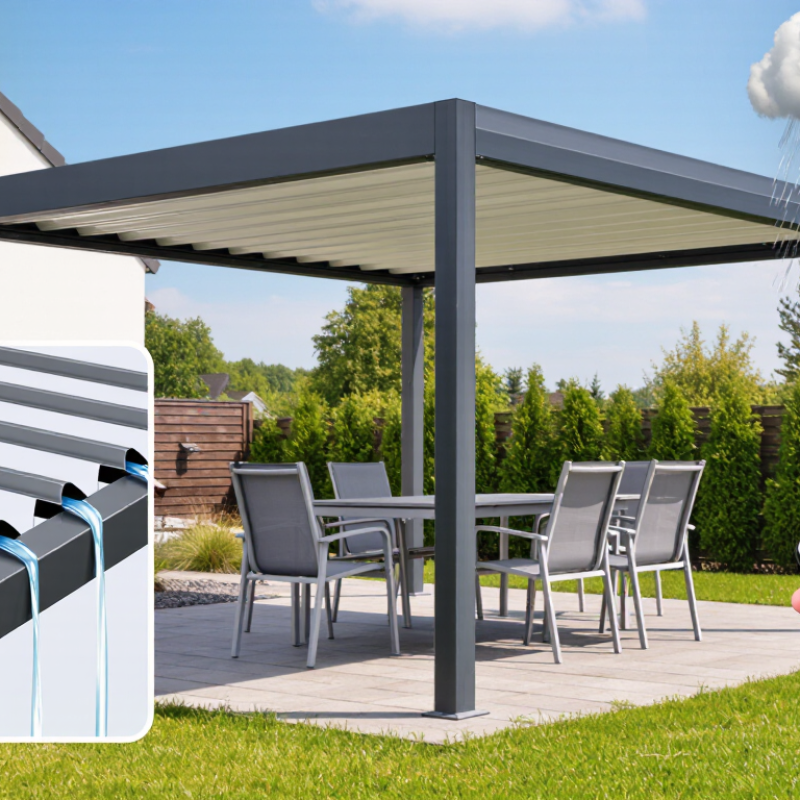
A louvered pergola has a roof made of adjustable slats, rather than fixed rafters or fabric. The slats rotate to admit sunlight, create shade, or open the roof to the sky. In many designs, linked louvers move together by hand crank or motor. When closed, their overlapping edges direct rain toward built-in channels and downspouts. That is the basic idea. The details matter: a blocked gutter can still send water onto the patio, and wind-driven rain may pass through some systems. Check how the roof drains before choosing one.
The appeal fits a broader outdoor-living trend. In its 2023 Residential Landscape Architecture Trends Survey, the American Society of Landscape Architects reported that 76% of respondents identified outdoor living spaces as a popular residential feature. That figure describes design interest, not pergola performance. For performance, check the product’s documented wind and snow ratings, installation requirements, and local design conditions. ASCE 7-22 provides industry guidance for calculating environmental loads on structures, but it does not certify a particular pergola. A practical test is to watch water drain during a hose test and confirm where it exits. I would also check whether louvers can stay open in gusty weather; overlooking that detail can turn a useful roof into a maintenance headache.
What Is the Best Louvered Pergola to Buy?
Which Features Matter Most When Choosing a Pergola
The best pergola fits your climate, daily routine, and outdoor space—not just your patio’s dimensions. Check whether the louvers tilt smoothly and close tightly, and ask how rainwater drains through the frame. A gutter that spills beside a doorway can make a polished design frustrating. Small details matter. Look for documented wind-load ratings, corrosion-resistant finishes, and clear guidance on snow or wind limits. “All-weather” alone is not enough.
Shade performance depends on orientation and design. The U.S. Department of Energy reports that exterior awnings can reduce solar heat gain by up to 65% on south-facing windows and 77% on west-facing windows. Those figures describe awnings, not pergolas, so they should not be treated as a pergola’s guaranteed performance. Still, they show why sun direction matters. Consider adjustable louvers, local weather exposure, and whether manual or motorized controls suit your use. I would not choose motorization alone; it is an easy feature to overvalue.
Tips: Ask for written test data, warranty terms, and installation requirements before buying. Check where water exits during heavy rain. Compare the cost of repairs, too. A cheaper frame may look sensible today, but replacement parts can be hard to find.
| Pergola Configuration | Louver Operation | Weather Protection | Maintenance | Best Fit | Key Checks Before Buying |
|---|---|---|---|---|---|
| Manual aluminum | Hand crank or lever; no electrical connection required. | Adjustable shade and airflow. Rain protection depends on louver closure, seals, drainage, and installation. | Generally low; periodically clean the frame, louvers, and drainage channels. | Buyers who want a relatively simple system and do not mind adjusting it by hand. | Check operating effort, louver angle range, gutter design, finish warranty, and required anchoring. |
| Motorized aluminum | Electric motor, usually controlled by a switch or remote; some systems offer app control. | Convenient adjustable shade. A closed roof may channel rain into built-in gutters, but it is not automatically a fully sealed roof. | Low to moderate; keep drainage clear and follow the manufacturer’s motor and electrical-care instructions. | Frequent use, larger installations, or anyone who values push-button adjustment. | Check power requirements, manual operation during outages, sensor options, motor warranty, and access for servicing. |
| Motorized aluminum with weather sensors | Motorized operation with optional rain, wind, or sun sensors, depending on the system. | Can respond automatically to selected conditions. Sensors do not replace appropriate storm preparation or structural ratings. | Moderate; sensors and controls may need setup, cleaning, or troubleshooting. | Users seeking automated adjustment and willing to maintain electronic controls. | Confirm which sensors are included, how thresholds are set, and what the system does during power or network failure. |
| Freestanding aluminum | Manual or motorized, depending on the selected configuration. | Performance depends on the roof design, drainage, site exposure, and secure footing. | Generally low; inspect fasteners and keep gutters and drains clear. | Patios, gardens, or pool areas away from a suitable house wall. | Check foundation requirements, permitted installation surface, post locations, and site-specific wind and snow-load documentation. |
| Wall-attached aluminum | Manual or motorized, depending on the selected configuration. | Can extend outdoor coverage from a building; the wall connection must be properly designed and weather-detailed. | Generally low; inspect the wall connection, seals, and drainage. | A patio beside a house where the wall is suitable for attachment. | Confirm wall construction, attachment details, flashing needs, permits, and whether professional installation is required. |
| Custom-size louvered system | Manual or motorized; configuration varies by project. | Can be designed around a specific space, but protection depends on documented system performance and correct installation. | Varies with materials, mechanisms, and access to components. | Irregular layouts or projects with specific clearance and coverage requirements. | Get written drawings, dimensions, load information, drainage plans, installation scope, and warranty terms before ordering. |
Selection note: No configuration is best for every site. Verify local permit requirements and obtain project-specific wind and snow-load information; performance varies by design, size, anchoring, exposure, and installation. Follow the manufacturer’s guidance for opening or securing louvers during severe weather.
A louvered pergola’s frame material affects upkeep, weight, and how it feels in your yard. Powder-coated aluminum resists rot and usually needs only occasional washing. Check the frame’s stated wall thickness; a light sample can feel less reassuring in exposed, windy spaces. Timber brings warmth and suits natural settings, but it needs periodic sealing and careful checks around joints. Not always an easy trade-off.
Operating systems matter just as much. A manual crank is simple and avoids wiring, but opening wide louvers can take effort. Motorized systems are convenient when rain arrives suddenly or the pergola is used daily. Ask how the motor is protected from moisture and whether controls still work during a power outage. A well-made system should move smoothly, without a jerky start or uneven gaps.
Look closely at drainage, too. Water should travel through the louvers into channels and away from seating areas, not drip onto the table edge. I still find comparisons less tidy than a “best” list suggests: a durable frame cannot fix poor installation, and a smart motor cannot make a weak structure sturdy. Ask for material specifications, maintenance instructions, and details about installation before choosing.
Material affects structural weight; the operating system affects convenience and complexity.
Typical material density (kg/m³): teak is shown as a representative hardwood; actual wood density varies by species and moisture content. Density alone does not determine pergola strength or total weight, which also depend on design and profile. For operation, a manual crank is a simple, lower-complexity option; a motorized system adds push-button convenience, while sensor or smart controls add automatic adjustment and additional components. Compare warranties, wind ratings, drainage, and maintenance requirements before buying.
The best pergola is one that fits how you use your outdoor space, not just its dimensions on paper. Measure the patio, then mark the proposed footprint with tape or chairs. Leave room to pull out dining chairs and walk around furniture. A 10-by-12-foot structure may suit a compact seating area, while a larger dining setup needs more clearance. Measure twice. Also check overhead obstacles, such as eaves, branches, and utility lines.
Match the style to your home and the way sunlight moves across the yard. Clean, straight lines often complement modern exteriors; softer colors can blend with gardens and traditional homes. Adjustable louvers give you control over sun and shade, but consider where rainwater will drain when the blades are closed. Small details matter. A layout that looks balanced in a sketch can feel crowded once you add a grill or planters. That is easy to overlook.
Tips: Sketch the furniture footprint before choosing a size. Check the pergola’s height against nearby windows, and note the direction of afternoon sun. If measurements feel close, scale down the furniture plan or reconsider the location.
What Is the Best Louvered Pergola to Buy?
A louvered pergola is only as dependable as its installation. Before choosing a model, ask how the installer will check ground conditions, measure the opening, and anchor the posts. Details matter. Request an itemized quote that separates the structure, motor, electrical work, and site preparation. Confirm who handles each part and whether the crew has completed similar installations. Photos of finished projects can help, but ask about one with a layout like yours.
Read the warranty before comparing prices. Check coverage periods for the frame, finish, louvers, and motor; they may differ. Ask whether labor, travel, and replacement parts are included, and what routine care is required to keep coverage valid. Small print counts. Get answers in writing, especially about salt air, standing water, and wind-related exclusions. If a salesperson cannot explain a clause plainly, pause and ask for clarification.
Long-term value includes upkeep, not just the purchase price. Compare the cost of cleaning, occasional adjustments, and likely motor or control repairs over several years. Ask whether common parts can be ordered separately and how service requests are handled after installation. A lower quote may leave out drainage work or electrical connections. Even careful estimates can miss a site-specific complication, so keep some budget flexibility.
