What Are Decorative Boards and What Are They Used For?
Decorative Boards are panels designed to add color, pattern, texture, or a finished surface to interior spaces. They may use MDF, plywood, particleboard, or other cores, covered with materials such as laminate, veneer, or decorative films. The exact construction varies. A smooth, pale oak-look board might suit a kitchen cabinet, while a textured panel can add depth behind a reception desk.
These boards appear in furniture, wall cladding, shelving, wardrobes, shop fittings, and interior partitions. Their practical value depends on more than appearance. Core material, thickness, surface finish, edge treatment, and installation method all affect how a board performs. A surface that wipes clean easily may work well in a busy room, but it does not automatically make the whole panel waterproof or scratch-proof.
Looks matter. So do details.
The term “Decorative Boards” covers many products, and the label can be confusing. I would not treat it as a performance rating. Check the manufacturer’s specifications for moisture resistance, cleaning guidance, emissions information, and suitable applications before choosing a board. For example, a panel intended for dry living areas may not be suitable beside a sink or in a humid bathroom. Small differences matter. This guide explains what decorative boards are, how common types differ, and where they are typically used, helping you compare appearance with practical needs.
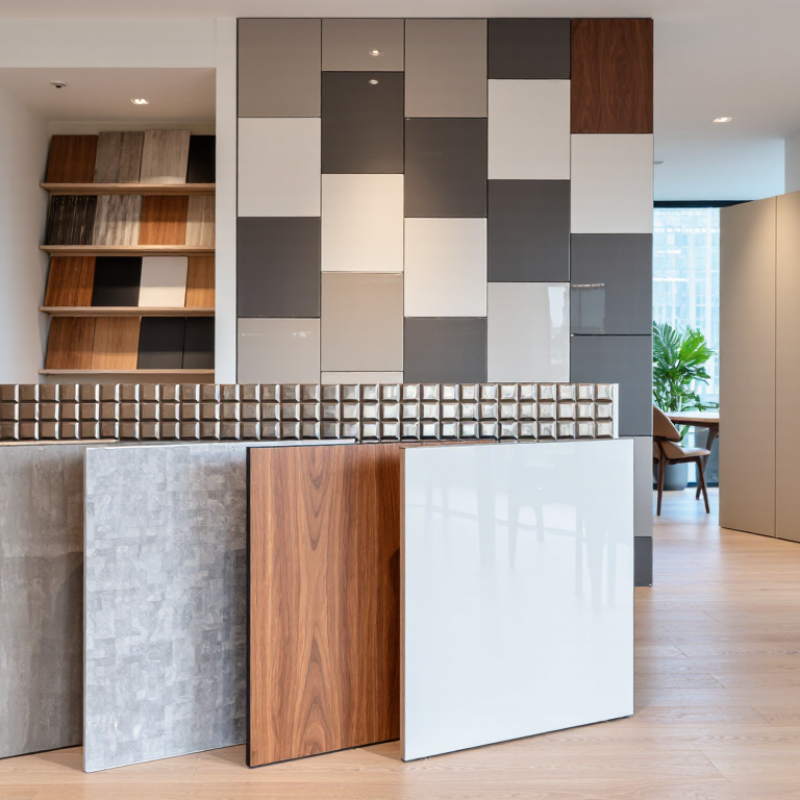
What Decorative Boards Are and How They Are Defined
Decorative boards are flat panels designed to give interior surfaces a finished appearance. They may be made from wood, wood-based composites, plastic, or other sheet materials, with a visible surface such as veneer, laminate, printed film, paint, or texture. The core provides thickness and stability; the outer layer supplies much of the color, pattern, and feel. In practical terms, a board is usually chosen as material for a larger surface, not as decoration on its own.
The phrase is broad, and that can be confusing. Some boards are intended for cabinetry and shelving, while others serve as wall panels, furniture faces, or room dividers. A pale oak-pattern panel can create a consistent look across cupboard doors. A grooved panel adds shadow and depth to a plain wall. Decorative boards are not automatically structural, moisture-proof, or suitable for every room. Their performance depends on the core, finish, edge treatment, and installation conditions. A sample may look smooth under showroom lights, yet appear warmer or glossier beside a window. Check the specification and inspect a real sample when possible. Small differences matter.
Common Materials and Types of Decorative Boards
Decorative boards combine a structural core with a visible surface finish. MDF has a smooth, even face, so it works well for painted panels and routed details. Particleboard is often used inside furniture, where a laminate or melamine surface provides a ready-to-clean finish. Plywood has layered construction and can show an attractive edge, while solid wood boards offer natural grain but may move with changes in humidity. Each has trade-offs.
Common surface types include wood veneer, melamine, high-pressure laminate, and printed decorative film. Veneer gives a real-wood appearance, but its thin layer needs gentle care. Melamine is practical for shelves and cabinets; high-pressure laminate is generally more resistant to wear. Fluted or slatted boards add texture to wall panels, while perforated or grooved designs may help soften sound when paired with suitable backing. The terminology is not always consistent between suppliers. Check the edges. A decorative face can look durable while an exposed core remains vulnerable to moisture. For kitchens or bathrooms, confirm the board’s moisture rating and installation requirements, then inspect a sample under the room’s actual lighting. That matters.
What Are Decorative Boards and What Are They Used For?
Typical thickness examples for common panel cores and decorative surface materials
MDF, particleboard, and plywood are commonly used as panel cores for furniture, cabinetry, and interior fit-outs. High-pressure laminate (HPL) and wood veneer are decorative surface layers applied to a substrate. The thicknesses shown are representative examples, not fixed specifications; actual products vary.
How Decorative Boards Are Made and Finished
Decorative boards are made by bonding a surface layer to a stable panel, often MDF, plywood, or particleboard. The core is cut to size, then sanded to remove rough spots and help the finish adhere. Moisture matters. Panels intended for damp rooms need suitable materials and carefully sealed edges; ordinary boards can swell if water reaches the core.
The decorative layer may be wood veneer, printed paper, or a resin-based laminate. Veneer is pressed onto the panel, while laminates are bonded under controlled heat and pressure. Some boards receive paint or a clear protective coating instead. Each method affects the final texture, shine, and resistance to scratches. The surface is trimmed, and the edges are finished with matching tape or another protective strip. Small defects can still appear. A slight color shift between the face and edge is easy to miss under workshop lighting, so inspection under natural light is useful. Finished boards are checked for flatness, clean corners, and consistent color before they are packed. A careful finish helps, but it cannot make every core equally durable.
Where Decorative Boards Are Used in Buildings and Furniture
Decorative boards are flat panels finished with printed paper, laminate, paint, or a thin wood veneer. In buildings, they often cover interior walls, ceilings, and reception counters.
A textured panel can add warmth to a plain hallway, while a smooth, light-colored surface can make a small office feel brighter. They are also used on built-in cupboards and room dividers. The core material matters: standard particleboard may swell if water reaches an unsealed edge, so it is not suitable for every damp area.
Furniture is another common use. Kitchen cabinets, wardrobes, desks, shelves, and drawer fronts can all use decorative boards.
Their consistent surfaces make it easier to match panels across a room, and many are simple to wipe clean. Still, a convincing wood pattern is not real timber. Scratches may expose the core, and heavy shelves need suitable support. A finish that looks perfect in a sample can also appear different under warm room lighting.
Tips: Check the panel’s intended use, edge sealing, and cleaning instructions before choosing it. View a sample beside the room’s actual lighting. Small detail, big difference.
How to Choose Decorative Boards for Different Projects
Decorative boards include veneered plywood, medium-density fibreboard (MDF), particleboard, and laminate-faced panels. Choose by where the board will live, how it will be finished, and what loads it must carry. For a painted cabinet door, smooth MDF gives a clean surface and crisp routed edges. For shelving that may hold heavy books, check the panel’s thickness, span, and support plan; a decorative finish cannot strengthen a weak core. In a kitchen or bathroom, confirm the product’s moisture rating and seal exposed edges. Moisture-resistant does not mean waterproof.
Indoor air quality matters, too. The U.S. Environmental Protection Agency’s TSCA Title VI limits formaldehyde emissions to 0.05 parts per million for hardwood plywood, 0.09 for particleboard, and 0.11 for MDF. Check the product documentation for applicable compliance information; the figures describe emissions, not durability or overall safety. For a visible wall panel, compare sample colors under the room’s actual lighting and inspect seams at eye level. Small details show. Measure twice. A frequent shortcut is choosing by price alone, but cheaper boards may need more edge treatment or support. I would still leave a spare offcut for testing paint, screws, and adhesive before installation.


 English
 España
 عرب
 简体中文

