
2026 How to Choose a Selectorized Machine for Your Gym

A Selectorized Machine can make strength training more approachable, especially for beginners who need clear movement paths and simple load changes. But choosing equipment by appearance alone can leave a gym with machines that look impressive and feel awkward in daily use. In 2026, buyers should compare intended users, available floor space, adjustability, service support, and total ownership costs. The best choice depends on how the machine will be used, not just its feature list.

Fit matters. A tall member should be able to set the seat and range of motion without strain, while a smaller user should reach the handles comfortably. Ask staff to test the machine with different body types. Check whether weight increments suit your training goals, whether labels are easy to understand, and whether moving parts feel stable under controlled use. A polished finish is not proof of long-term durability; that is an easy mistake to make. Review the warranty, parts availability, cleaning needs, and maintenance schedule before ordering.

This guide explains how to assess these details and compare machines for commercial gyms, studios, and smaller facilities. Manufacturer specifications are useful, but they cannot predict every user’s comfort. Whenever possible, arrange a hands-on trial and record feedback from both members and trainers. A short test may reveal an awkward adjustment or cramped footprint that a brochure misses. There is no universal winner. Choose equipment that fits your space, budget, training plan, and ability to maintain it reliably.
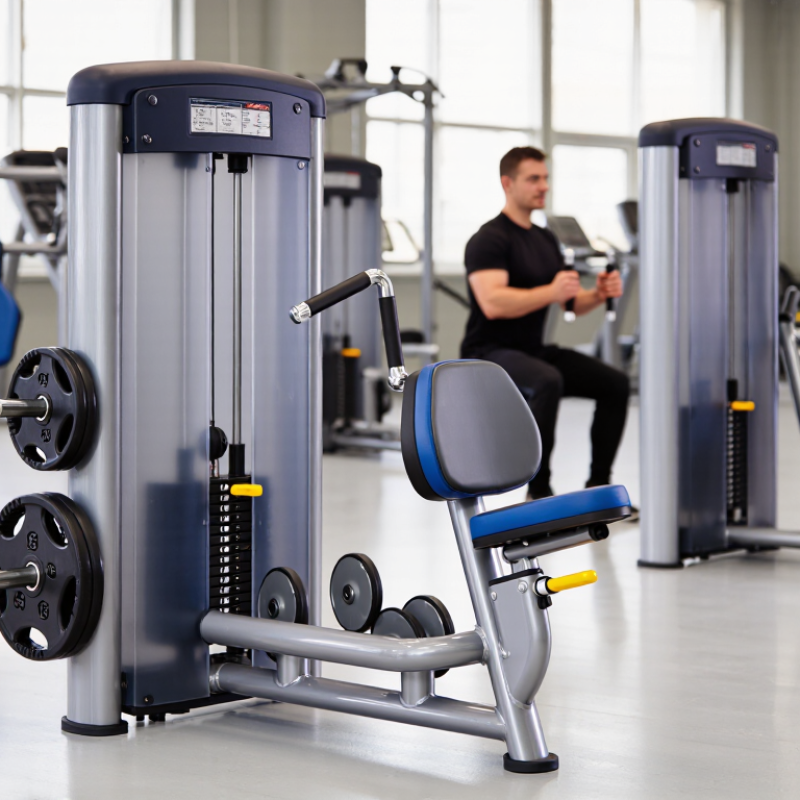
2026 How to Choose a Selectorized Machine for Your Gym

Understand What Selectorized Machines Are and How They Work

A selectorized machine uses a weight stack connected to handles or pads by cables and pulleys. You choose resistance by placing a pin beneath the desired plates. During a repetition, the stack lifts and lowers inside its frame. The selected load is easy to read, which makes weight changes quick between users. Simple idea. The feel depends on more than the number on the stack.

The machine’s lever arms and cams shape how resistance changes through the movement. A chest press may feel harder near one point, while another design keeps the effort more even. Seat, backrest, and handle adjustments help align your body with the machine’s intended path. In practice, small fit differences matter: a seat set too low can make a press feel cramped. A fixed path can also feel awkward for some users. That is worth testing.

Before adding a machine to a gym, try its full range of motion with a light load. Notice whether the handles move smoothly and whether the start position feels comfortable. Check that the pin sits fully in the stack and that cables show no visible fraying. Those checks do not replace scheduled maintenance, but they can flag obvious issues. A machine can look sturdy and still feel wrong for its intended users. Test it, adjust it, and pay attention to what feels off.

2026 How to Choose a Selectorized Machine for Your Gym — Understand What Selectorized Machines Are and How They Work

A selectorized machine uses a pin to select a load from a weight stack. Cables and pulleys transfer that resistance to the machine’s moving arms or pads.

Illustrative planning ratings, not measured industry statistics. Actual ease of use, footprint, exercise options, and independent limb movement vary by machine design.

Assess Your Gym’s Users, Training Goals, and Space

Choosing a selectorized machine starts with the people who will use it. Observe your gym during its busiest hour: note which muscle groups members train, how long they wait, and whether beginners need help adjusting seats or weight stacks. Small details matter. Ask trainers what movements members avoid or repeat, but compare their feedback with actual usage. One confident opinion is not a demand forecast.

Set clear training goals before comparing machine types. A strength-focused facility may need heavier resistance and durable adjustment points, while a general fitness gym may benefit from easy-to-follow settings and a range of exercises. Check that the machine supports the body sizes and mobility levels of your users. Seat positions, handles, and starting resistance can make a machine welcoming—or frustrating. There is no perfect configuration for everyone, and that is worth admitting.

Measure the intended floor area, then include room for entry, movement, and safe use. Check doorways and delivery routes, too. A machine that fits on paper may crowd a walkway once users sit down and extend their limbs. Leave space for routine cleaning and maintenance. A tidy floor plan can still miss peak-hour congestion, so test the layout with tape before ordering. Revisit your assumptions after observing the gym in use.

Match Machine Types to Exercises and Movement Patterns

Choose selectorized machines by the movement they train, not by the body-part label on a floor plan. The American College of Sports Medicine’s 2025 Worldwide Survey of Fitness Trends ranked traditional strength training fifth among 45 trends. That ranking supports keeping resistance work visible, but it does not tell you which machines to buy. Map your program’s patterns: horizontal push and pull, vertical push and pull, knee-dominant work, hip extension, and trunk control. Start there.

Then match each machine’s path and setup to its exercise. A chest press should allow seat adjustments so the handles meet users near mid-chest. A seated row should support a stable torso and a full reach without shoulder shrugging.

Leg presses and knee extensions train different patterns; they are not interchangeable just because both load the legs. Check adjustment range, entry clearance, and whether users can reach the start position without twisting.

Small details matter. Watch several members test the equipment, not just your strongest lifter. A tidy movement map can still mislead: bodies differ, and a machine that fits one person may feel awkward to another. Keep floor space for alternatives.

Compare Adjustability, Safety, Durability, and Maintenance

A selectorized machine should fit the people who will use it, not just the floor plan. Check whether the seat, back pad, and starting position adjust quickly without awkward reaches. Test the range of motion with users of different heights. Fit matters more. A stack with small weight increments can help beginners progress steadily, while clear labels make changes easier between sets. If adjustment points are hard to find, even a well-built machine may sit unused.

Safety deserves a hands-on check. Look for a selector pin that locks firmly, guarded moving parts, stable feet, and cables without fraying or exposed strands. Test the machine slowly before adding weight. It should move smoothly, with no sudden catching or clunking. Ask staff to inspect it on a regular schedule and record faults, rather than relying on a quick visual glance. Small problems can be easy to miss.

For durability, inspect welds, pivots, upholstery seams, and high-contact surfaces. A sturdy frame matters, but so do parts that can be replaced without taking the whole machine out of service. Compare the maintenance instructions and access to wear components before buying. Wipe-downs are simple; cable and pulley checks need more care. One imperfect point: a longer warranty does not guarantee less downtime. Track actual service needs after installation, then reconsider whether your original choice was right.

Plan Your Budget, Layout, and Supplier Support

Budget the full installation, not just the machine price. Include delivery, assembly, flooring, and replacement cables or pads. The Health & Fitness Association’s 2024 U.S. Health & Fitness Consumer Report counted 72.9 million U.S. fitness-facility members in 2023. That broad demand makes durable, frequently used equipment worth evaluating carefully. Still, a popular chest-press station may sit idle if your members prefer lower-body training. Review usage patterns before ordering.

Map the room with actual measurements. Record machine footprints, seat-adjustment space, and clear walking routes; mark them on the floor with tape. Leave clearance. A crowded aisle can make routine cleaning and member movement awkward. I would also check ceiling height and doorway width before delivery. It sounds obvious, yet these details are easy to miss on a spreadsheet.

Supplier support affects operating costs after installation. Ask for written warranty terms, local service coverage, spare-part lead times, and technician response targets. Request a sample maintenance schedule, then check whether staff can perform basic inspections safely. Compare quotes using the same delivery and service assumptions. One uncomfortable question: who handles a broken cable on a busy Monday? If the answer is vague, the lowest bid may not be the lowest-cost choice.

2026 How to Choose a Selectorized Machine for Your Gym — Plan Your Budget, Layout, and Supplier Support

Planning guide for commercial fitness facilities. Budget figures are indicative U.S. dollar estimates for new commercial-grade equipment; actual prices depend on configuration, freight, installation, and local market conditions.

Planning Area What to Evaluate Practical Planning Reference Budget, Layout, or Purchasing Implication
Training needs Member experience, training goals, and the movements missing from the current floor Prioritize frequently used movement patterns such as chest press, lat pulldown, leg extension, leg curl, and seated row. Choose equipment to address gaps in the existing program rather than duplicating low-use stations.
Equipment type Single-station machine versus multi-station unit Single-station machines suit focused, high-traffic exercises. Multi-station units can provide several exercises in one footprint. Compare the cost per usable exercise and the expected wait time at each station, not just the purchase price.
Indicative purchase budget Commercial-grade selectorized equipment, excluding special site work A planning allowance of about $2,000–$6,000 per single-station unit is common; higher-spec configurations may cost more. Multi-station units may require roughly $5,000–$15,000 or more. Request an itemized quote showing equipment, freight, installation, taxes, and any required accessories separately.
Floor footprint Machine dimensions and the space needed for safe access Many single-station units occupy approximately 4–7 ft by 4–7 ft (1.2–2.1 m by 1.2–2.1 m), but dimensions vary by exercise and design. Use the exact manufacturer’s dimensions for the selected model and include the operating area, not just the frame footprint.
Circulation and access Member flow, loading access, and unobstructed movement around equipment Allow practical clearance for entry, seat adjustment, pin selection, and full movement through the exercise range. Follow applicable local accessibility and fire-safety requirements. Draw the machine’s working envelope on the floor plan and keep aisles, exits, and accessible routes clear.
Room layout Grouping machines by training area and exercise sequence Place related upper-body, lower-body, and cable stations in logical zones while preserving clear sightlines and circulation routes. Confirm the layout against doorways, columns, ceiling height, flooring, and the delivery path before ordering.
Weight-stack selection Stack capacity, increments, and user range Choose a stack that suits the facility’s users and exercise. Check the listed stack weight and whether the machine uses a pulley ratio that changes the resistance felt at the handle. Compare the actual resistance profile and available increments; do not assume the stack label equals handle resistance.
Fit and adjustability Seat range, start-position adjustment, handles, and ease of use Test whether intended users can set up securely, reach the controls, and align their joints with the machine’s movement path. Include a hands-on evaluation where possible, especially for facilities serving a wide range of body sizes or abilities.
Construction and maintenance Frame stability, upholstery, cables, pulleys, guards, and replacement parts Review the maintenance schedule, wear components, parts availability, and warranty terms for the complete unit. Estimate lifetime ownership cost, including routine inspection, repairs, and expected replacement of wear items.
Supplier support Delivery, installation, staff orientation, and after-sales service Confirm who handles delivery, assembly, anchoring if required, initial inspection, and service requests in the facility’s location. Get response-time expectations, labor rates, parts lead times, and service coverage in writing before purchase.
Warranty review Coverage by component and exclusions Check separate warranty terms for the frame, moving parts, upholstery, cables, and labor; coverage can differ by component and use. Confirm whether the warranty applies to commercial use and whether shipping or on-site labor is included.
Budget contingency Costs beyond the equipment line item Allow for freight, installation, floor preparation, access constraints, taxes, and possible disposal of old equipment. Keep a contingency in the project budget and obtain a site-specific delivered-and-installed quote before approval.
Final comparison Whole-life value across shortlisted options Compare usable exercises, footprint, adjustability, warranty, service access, and expected maintenance—not price alone. Use a consistent checklist for every quote and verify all dimensions and service commitments before placing an order.

Contact Us
