2026 How to Choose the Best Suction Pool Cleaner?
In the ever-evolving world of pool maintenance, selecting the right Suction Pool Cleaner is essential. Industry expert Jane Smith states, “A good suction cleaner can save you hours of cleaning time.” This echoes the common struggle pool owners face when it comes to effective cleaning solutions.
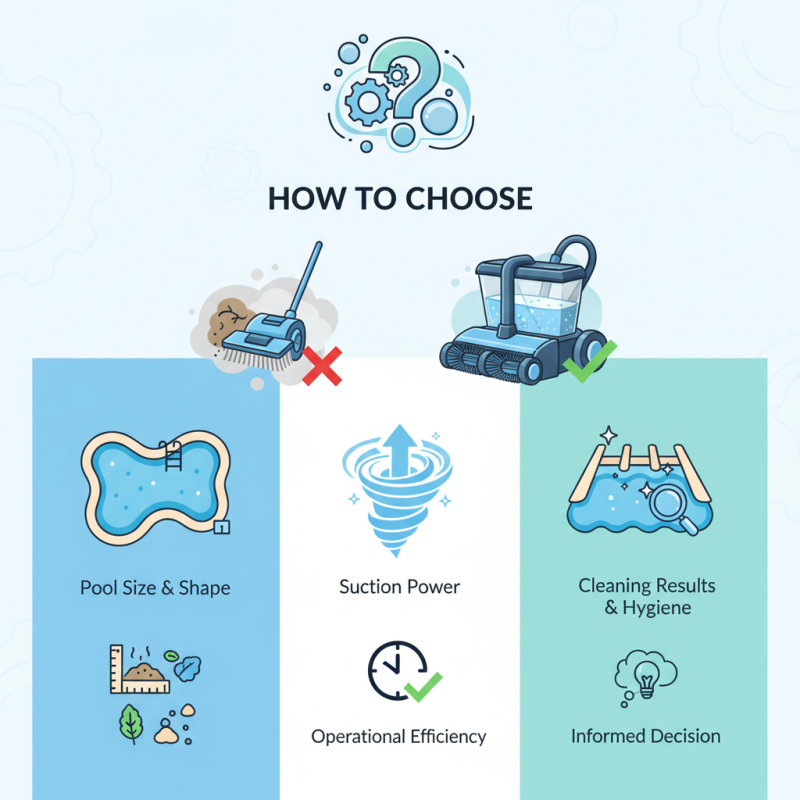
The market is flooded with options, each promising to make your pool cleaning effortless. However, not all Suction Pool Cleaners are created equal. Variances in design, suction power, and operational efficiency can impact cleaning results. Many people overlook these factors and later find themselves dealing with residual debris or inadequate cleaning.
It’s crucial to reflect on your pool’s specific needs. Consider the size and shape of your pool before making a choice. A poorly chosen Suction Pool Cleaner may lead to frustration and wasted money. Remember, the right cleaner should not only address the visible dirt but also enhance the overall hygiene of your pool. Making an informed decision is key.
Understanding Different Types of Suction Pool Cleaners
Suction pool cleaners come in various types, each designed for different pool environments. Some models have a simple design. Others feature advanced technology. The basic concept is the same: they use the pool’s filtration system to draw in debris while moving across the pool floor.
One major type is the diaphragm suction cleaner. These cleaners are known for their reliability. They have fewer moving parts, which means a lower chance of malfunction. However, they can struggle with larger debris like leaves. It’s essential to consider the types of debris in your pool before choosing this option.
Another type is the impeller suction cleaner. This cleaner can handle larger particles better than diaphragm models. Yet, they often require more maintenance. They may get stuck in corners or have trouble navigating tight spaces. Reflect on your pool size and shape to find the right fit. Each type has its pros and cons, and knowing these details can help you make an informed choice.
Evaluating the Size and Shape of Your Pool
When choosing a suction pool cleaner, consider the size and shape of your pool. A small, rectangular pool will have different needs compared to a large, freeform pool. The cleaner’s design should match the pool's contours for better coverage. If you have steps or benches, the cleaner must navigate those areas effectively.
Evaluate your pool’s dimensions. A compact cleaner may struggle in a sprawling space. Some models work well in tight corners but may overlook larger areas. You might need to try a few options. This trial and error can be frustrating. It’s important to find the right fit for your unique pool environment. Make notes on what works and what doesn't.
Testing different cleaners can reveal their strengths and weaknesses. Not every cleaner performs equally well in varying depths. If you have a shallow area, a powerful suction may be overkill. Yet, in deeper areas, it could struggle. Balancing power and efficiency is essential for a satisfactory cleaning routine. Reflecting on your pool's specific challenges will aid in your decision-making process.
Key Features to Consider in Suction Pool Cleaners
When selecting a suction pool cleaner, several key features deserve attention. Firstly, consider suction power. Strong suction is crucial for effective cleaning. It ensures debris, leaves, and dirt are removed from different surfaces. You want a cleaner capable of navigating various pool shapes easily.
Another important aspect is the design of the cleaner. Look for a device that can reach corners and edges while remaining compact. A cleaner that struggles with tight spots may leave behind stubborn dirt. Pay attention to hose length, too. An adequately long hose allows the cleaner to access distant areas without hassle.
Finally, consider the ease of maintenance. Some models require frequent part replacements or complicated cleaning rituals. This can be a drawback. It's wise to research user experiences. A cleaner that works effectively but is a hassle to maintain isn't ideal. Reflecting on these aspects will help ensure you choose the best suction pool cleaner for your needs.
2026 How to Choose the Best Suction Pool Cleaner?
This chart illustrates key features to consider when choosing the best suction pool cleaner in 2026. Each feature is scored on a scale from 1 to 10, highlighting the importance of suction power, filter type, ease of use, price, and warranty.
Assessing Your Budget for Suction Pool Cleaners
When choosing a suction pool cleaner, your budget is key. The price range for these devices can vary widely. Some models are very affordable, while others could cost a small fortune. Spending too little may mean sacrificing quality. The cheapest options might not do a thorough job. It’s essential to find a balance between cost and effectiveness.
Consider the maintenance costs too. Filters and other parts can add up over time. Sometimes, a lower-priced cleaner can lead to higher expenses later. Look at reviews and user experiences to assess long-term value. Not all models will suit your pool type, so evaluate features based on your needs.
You might feel overwhelmed by all the choices available. It’s easy to fixate on price, but that isn’t the only factor. Think about the size of your pool and how often you clean it. Will you need a robust model for heavy debris? Or a simpler one for light maintenance? Reflect on these aspects before making a decision.
Maintenance and Care Tips for Suction Pool Cleaners
Maintaining a suction pool cleaner is crucial for optimal performance. Regular cleaning of the filter and the unit itself is essential. Accumulated debris can cause blockages, reducing efficiency by up to 30%. According to industry reports, a clean filter can enhance the suction power significantly. This leads to a more effective cleaning routine and extends the lifespan of the cleaner.
Another aspect to consider is the importance of inspecting the hose regularly. Torn hoses can hinder movement and decrease suction. Some reports indicate that a damaged hose could render the unit ineffective within weeks. Regularly check for leaks or cracks. It may seem trivial, but neglecting this can lead to costly repairs.
Furthermore, the pool's water chemistry plays a role in cleaner performance. Poor pH levels and high chlorine can damage the rubber components of the cleaner. Routine checks of chemical balance in the water can prevent deterioration. Skipping these checks, however minor they seem, may lead to long-term damage. Investing time in maintenance can save money and trouble down the road.


 English
 España
 عرب
عرب 简体中文
简体中文
