What Is an Outdoor Patio Set and What Types Are Available?

An Outdoor Patio Set is a coordinated group of furniture designed for open-air living. It may include chairs, a table, cushions, or a sofa. On a small balcony, a two-chair bistro set can leave room to move. A larger deck may suit a dining table or sectional. The best choice depends on space, weather exposure, and how people actually use the area. That sounds simple. It isn’t always.

Market data gives useful context, but it cannot choose a set for every home. Grand View Research estimated the global outdoor furniture market at USD 50.86 billion in 2023 and projected 5.2% annual growth from 2024 to 2030. That figure covers outdoor furniture broadly, not patio sets alone. It suggests strong interest, not proof that any style or material will last. Common types include bistro sets, conversation sets, dining sets, and modular sectionals. Materials range from teak and aluminum to steel, resin, and wicker-style finishes. Each has trade-offs: metal can feel hot in direct sun, while natural wood may need regular care. No material is maintenance-free.

This guide explains what defines a patio set and how its main types differ. It also considers scale, seating, materials, and upkeep, with practical details in mind. A set that looks generous online can crowd a narrow patio. Measure the space, including room to pull out chairs. The useful choice is not always the most impressive one.
What Is an Outdoor Patio Set and What Types Are Available?

What Defines an Outdoor Patio Set?

An outdoor patio set is a coordinated group of furniture designed for use in an open-air space. It usually includes seating and a table, though some sets add a bench, footstool, or side table. The defining feature is how its pieces work together: they support everyday activities such as dining, reading, or sharing a drink outdoors. A small bistro set may suit a balcony, while a larger dining set can anchor a broad patio. That matters.

Materials help determine whether a set fits its setting. Aluminum is relatively light and easy to move; wood offers a warmer look but may need periodic care. Woven synthetic materials can feel comfortable, while metal surfaces may heat up in direct sun. Cushions add softness, but they need a dry place between uses. Not always. A patio set is not automatically weatherproof just because it is made for outdoor use. Check care instructions, drainage, and how the furniture handles wind and rain. Measure the available space, too; chairs need room to pull back without scraping a wall or blocking a walkway. A set that looks right in a showroom can feel cramped at home.

Common Components and Materials

An outdoor patio set usually combines a table, chairs, and sometimes a bench or lounge seat. Cushions, protective feet, and weather-resistant fasteners complete the setup. Grand View Research estimated the global outdoor furniture market at USD 50.4 billion in 2023, indicating substantial demand across materials and styles. The figure covers outdoor furniture broadly, not patio sets alone. Small details matter.

Aluminum frames are light and resist rust, though scratched coatings can expose the metal. Steel feels solid and handles frequent use, but damaged finishes may corrode in damp conditions. Teak and other durable woods bring warm grain; they still need cleaning and may weather to a softer gray. Resin wicker is woven over a supporting frame, so check for tight, even strands. High-density polyethylene lumber is another option, often chosen for its low-maintenance surface. Cushions should use outdoor-rated covers and quick-drying filling; after rain, even good fabric needs airflow. ASTM International’s weathering standards help manufacturers evaluate material performance, but test results do not reproduce every patio’s sun, salt, or moisture. I would not treat “weather-resistant” as maintenance-free. Inspect joints and fasteners each season.

How Patio Sets Differ by Seating and Layout

An outdoor patio set is more than a group of matching chairs. Its seating and layout determine how people use the space, from quick breakfasts to long evenings with friends. A compact bistro set usually pairs two chairs with a small table. It suits a narrow balcony or a quiet corner, but leaves little room for serving dishes. Measure the walkway before choosing one. A chair that blocks the door gets annoying fast.

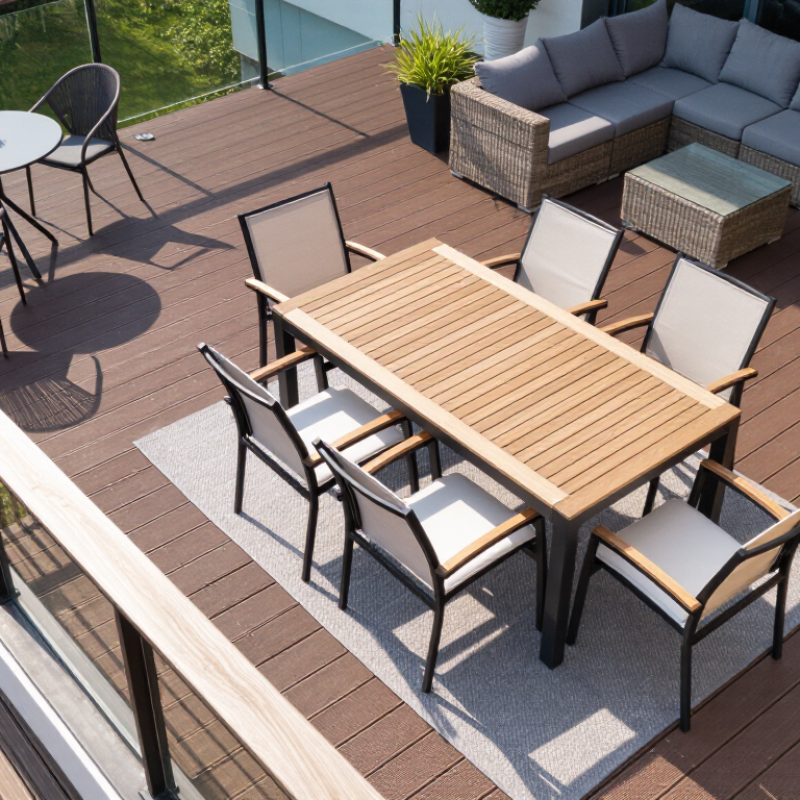
Conversation sets often include a low table and several lounge-style seats. They encourage relaxed seating, though the low surface may not work well for meals. Dining sets have a taller table and upright chairs, making them better for outdoor meals or projects. Check that people can pull chairs out without bumping a railing or wall. Small detail. Big difference.

Sectional sets can shape a larger patio into a defined gathering area. Their connected seats fit corners neatly, but they are harder to rearrange when needs change. Separate chairs offer more flexibility, while benches can add places to sit without using much space. Think about how many people usually visit, not just the largest gathering of the year. And be honest about storage: cushions left in rain or strong sun may need more care than expected. A layout that looks spacious in a photo can feel crowded once a table, chairs, and walking paths are all in place.

What Is an Outdoor Patio Set and What Types Are Available? - How Patio Sets Differ by Seating and Layout

Patio Set Type Typical Seating Common Layout Typical Pieces Best Suited For Space Considerations
Bistro set Usually 2 people Two chairs arranged around a small table Two chairs and a compact café-style table Coffee, casual meals, or a small outdoor nook A compact option for balconies, porches, and small patios; check chair clearance when measuring.
Conversation set Often 4–6 people Chairs and a sofa or loveseat grouped around a low table Sofa or loveseat, chairs, and a coffee table Relaxed conversation and informal entertaining Allow space to walk around the seating and to pull chairs away from the table.
Outdoor dining set Commonly 4–8 people Chairs placed around a dining-height table Dining table and matching chairs; some sets include an umbrella opening Meals, outdoor work, and gatherings centered on a table Plan for chair pull-back space as well as the table footprint; larger tables need more room.
Sectional set Often 5–8 people, depending on configuration L-shaped or U-shaped seating, sometimes arranged as separate modules Corner and armless sections, end pieces, and a low table Group lounging and making use of a broad patio area Measure the full assembled arrangement and leave a clear route around it; modular pieces may allow alternate layouts.
Lounge or chaise set Usually 1–4 people, depending on the set Reclining loungers arranged side by side or around a small side table Chaise lounges or adjustable loungers, sometimes with side tables Sunbathing, reading, and reclining Check the extended recline length and allow room to adjust or move around each lounger.
Adirondack-style set Often 2–4 people Individual, angled-back chairs facing a shared low table or open view Adirondack-style chairs with a side table or small coffee table Relaxed seating on decks, lawns, porches, or around a fire area The chairs can be deep and wide, so leave enough space for comfortable entry and movement.

Note: Seating counts and space needs are typical examples, not fixed standards. Always check the listed product dimensions and measure the intended patio area before choosing a layout.

Major Types of Outdoor Patio Sets

Major Types of Outdoor Patio Sets

Outdoor patio sets generally fall into dining, lounge, bistro, and sectional styles. Each suits a different space and routine. A dining set pairs a table with upright chairs for meals, board games, or a laptop under shade. Measure chair clearance, too; a table that fits alone may leave little room to pull seats out.

Lounge or conversation sets usually combine low chairs or a sofa with a coffee table. They work well on a deck where people gather with drinks, though deep cushions can take longer to dry after rain. Bistro sets are smaller: typically a compact table and two chairs for balconies or narrow patios. Small, but useful. Sectional sets arrange modular seats around a corner, creating room for guests without scattering separate chairs across the patio.

Material and layout matter as much as the label. Check the frame, cushion fabric, and care instructions against sun exposure and local weather. The Outdoor Furniture Market report from Grand View Research valued the global market at $50.01 billion in 2023 and projected a 5.2% compound annual growth rate from 2024 to 2030. This broad market figure does not show which set type fits a particular home. That distinction is easy to miss. A simple layout sketch and measurements can prevent buying a set that crowds the door or blocks a walkway.

Major Types of Outdoor Patio Sets

Seating capacity varies by design and configuration. Bistro sets are typically suited to two people, while dining, conversation, sectional, and bar-height sets can accommodate larger groups.

Factors That Shape Patio Set Selection

Patio-set selection starts with the space, not the showroom. Measure the usable area, including room to pull out chairs and walk past a table. On a narrow balcony, a compact bistro set may work better than a full dining group. Leave a clear path to the door. Details matter.

Climate shapes material choices. Aluminum is light and easy to move, but lightweight frames can shift in strong wind. Dense hardwood feels solid, though it needs periodic care. Woven resin can handle moisture, but cushions still need somewhere dry during prolonged rain. The National Oceanic and Atmospheric Administration’s local climate normals can help buyers check typical temperatures and precipitation. Averages are useful, but a sudden storm does not follow a monthly average.

Use and upkeep matter just as much. The American Society of Landscape Architects’ 2024 residential trends survey identifies outdoor dining and living areas among popular design features. Grand View Research estimated the global outdoor furniture market at about $50.4 billion in 2023, underscoring the category’s broad reach—not a guarantee of quality. Compare frame construction, cushion drying time, and replacement-part availability. A polished materials chart can still miss the everyday hassle of storing wet cushions. That deserves thought.

Contact Us