
10 Pop Up Canopy Buying Tips for Global Buyers

Buying a Pop Up Canopy for international use involves more than comparing colors and prices. The right choice depends on where it will be used, how often it will travel, and who will assemble it. A canopy that suits a calm market stall may not be suitable for a windy outdoor event. Small details matter.

Start with the footprint, peak height, and packed dimensions. Check whether the frame uses steel or aluminum, and ask how joints and replacement parts are handled. Fabric weight, water resistance, UV protection, and seam construction also affect day-to-day performance. Ask for product specifications and test documentation rather than relying on broad claims. No canopy is perfect. Even a sturdy model can become frustrating if its carry bag is oversized or setup requires too many hands.

Global buyers should also consider shipping protection, lead times, minimum order quantities, and communication across time zones. Confirm what is included: sidewalls, stakes, ropes, weights, or only the canopy top and frame. Requirements for materials, labeling, and product documentation can vary by destination, so verify details with the supplier and relevant local authorities. A polished catalog image is helpful, but it cannot show every weak point. Request clear photos, setup instructions, and answers about warranty coverage before placing an order.

These ten buying tips offer a practical way to compare options and ask better questions. Some trade-offs remain. The goal is not to find a flawless canopy, but one that fits your event, climate, budget, and logistics with fewer surprises.
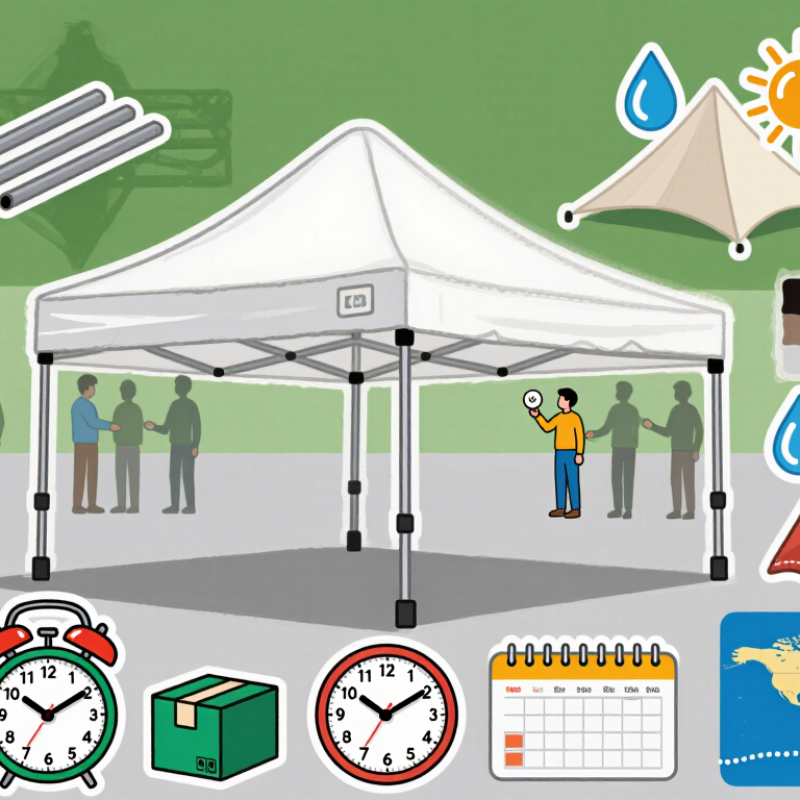
10 Pop Up Canopy Buying Tips for Global Buyers

Assess Canopy Use, Capacity, and Regional Conditions

A pop-up canopy should match the job, not just the product photo. For a weekend market, check the table footprint, customer flow, and space needed for boxes or a chair. For a family gathering, shade coverage may matter more than a tall peak. Measure twice. A canopy that fits the ground but blocks a walkway is still the wrong size.

Tips: Estimate capacity from the people and equipment you will actually shelter. A 3-by-3-meter canopy can suit a small vendor setup, but crowded tables reduce usable space. Check the packed weight and frame setup time, too. Wind changes everything. In exposed coastal areas or open fields, secure anchoring and a suitable wind rating matter; never assume a canopy is safe in gusts.

Regional conditions shape the choice. Strong sun calls for dependable UV protection, while frequent rain makes roof seams, drainage, and fabric care more important. In humid climates, dry the canopy fully before storage to limit mildew. Cold-weather use may require extra clearance for snow, though many pop-up frames are not designed for snow loads. I have seen buyers focus on fabric first and regret ignoring transport weight. It is an easy detail to miss. Check local weather patterns and the setup surface before ordering.

Compare Frame Materials, Fabric Quality, and Weather Resistance

For global buyers, a pop-up canopy works best when its frame, fabric, and intended use are considered together. Steel frames are often sturdy and affordable, but they add weight and may corrode where coatings are damaged. Aluminum is lighter for transport, though thin tubes can flex under pressure. Check the joints, leg locks, and availability of replacement parts. Small details matter.

Tips: Compare tube thickness, not just frame material. Ask how water resistance was tested. Check whether the canopy includes ground anchors.

Fabric weight alone does not reveal quality. Look for tightly woven material, reinforced corners, and sealed seams; these areas often face the most strain. A UV rating can help when shade is needed for long outdoor events. For rain, a sloped canopy sheds water better than a flat one. One easy-to-miss point: wind ratings can use different test methods, so compare conditions carefully. Even a well-built canopy is not a safe shelter in severe weather. Secure it on suitable ground, and take it down when conditions exceed its stated limits. I would not rely on a product label alone.

10 Pop Up Canopy Buying Tips for Global Buyers - Compare Frame Materials, Fabric Quality, and Weather Resistance

Buying Tip What to Compare Useful Facts and Benchmarks What to Verify Before Ordering
1. Choose the right frame material Steel, aluminum, or fiberglass components Steel is generally strong and economical but can be heavier and may corrode if its protective finish is damaged. Aluminum is lighter and naturally forms a corrosion-resistant oxide layer. Fiberglass is often used for flexible poles or smaller structures rather than heavy-duty pop-up frames. Ask for the frame material, tube dimensions, wall thickness, finish, and total product weight. Compare complete frame specifications, not material name alone.
2. Inspect joints and connectors Joint design, fasteners, and replacement parts Frequent folding puts stress on hinges, sliders, and fasteners. Reinforced joints and replaceable components can make routine maintenance easier, but construction quality varies between models. Request close-up photos or a parts diagram. Confirm whether corner fittings, sliders, pins, and fasteners can be replaced and whether spare parts are available.
3. Assess fabric construction Fiber, fabric weight, weave, and coating Polyester is commonly used for portable canopy tops because it is relatively light and dries faster than many heavier fabrics. Fabric weight may be listed in g/m² or oz/yd²; a higher number alone does not prove better performance, since weave, coating, and workmanship also matter. Get the fabric composition and weight with its units. Ask whether the stated weight includes the coating and request a sample or product specification sheet.
4. Check waterproofing claims Water-resistance rating, coating, and seams A water-resistance or hydrostatic-head result is meaningful only when the test method and result are stated. Coated fabric can resist rain, while needle holes and poorly finished seams may still allow water through. Ask for a test report or stated rating and its test method. Check whether seams are sealed or otherwise treated, and follow the supplier's care instructions to protect the coating.
5. Compare UV protection carefully UV test results, fabric coverage, and color UV protection depends on factors such as fabric construction, color, and treatment. A UV or UPF claim should be supported by a named test method; fabric coverage does not eliminate all reflected or indirect exposure. Request the test standard and report for any UV claim. Confirm whether the result applies to the finished fabric and whether sidewalls are included.
6. Evaluate wind resistance realistically Anchoring, frame design, sidewalls, and test conditions Wind performance depends on the complete setup, including anchoring, ground type, canopy size, and whether sidewalls are fitted. There is no single wind-speed figure that applies to every pop-up canopy or installation. Ask for documented test conditions and the recommended anchoring method. Follow the use instructions and take the canopy down when conditions exceed its stated limits or become unsafe.
7. Confirm size and usable clearance Footprint, peak height, side height, and leg adjustment A commonly sold 10 ft × 10 ft canopy has a nominal footprint of about 100 sq ft (9.3 m²). Sloping roof edges and frame placement mean the covered usable area at head height can be smaller than the footprint. Confirm dimensions in both metric and imperial units, plus peak and eave heights. Check the packed dimensions and whether the site has enough clearance for legs and anchoring.
8. Compare portability and setup Packed size, carry method, assembly, and setup time A heavier frame may be harder to transport, while a very light design may have different durability trade-offs. Setup time depends on the design, user experience, and whether the canopy is assembled by one person or a team. Request the packed weight and folded dimensions. Review the setup instructions or demonstration and check whether the carry bag and required accessories are included.
9. Check drainage and weather limits Roof slope, water pooling, and operating guidance A sloped roof can help water drain, but fabric can sag and collect water if tension is poor or the canopy is not installed correctly. Pop-up canopies should not be assumed to be suitable for snow, severe storms, or unattended use. Ask for setup guidance, drainage recommendations, and written weather-use limits. Do not allow water or snow to accumulate on the roof.
10. Verify compliance and after-sales support Relevant market rules, documentation, warranty, and parts Requirements differ by destination and intended use. A material or fabric test does not automatically certify the whole canopy, and warranty coverage varies by seller and product. Identify the destination market and intended use before ordering. Request applicable test documents, written warranty terms, care instructions, and confirmation of replacement-part availability.

Check Dimensions, Setup Systems, Portability, and Storage

A canopy’s listed dimensions describe its overall footprint, not always the shaded space beneath it. Measure the area where people will sit, including room for chairs to slide back. Check both the canopy top and the distance between its legs. A frame can fit a patio on paper yet crowd a doorway or serving table. Small details matter. Leave clear space around the setup, too.

Setup systems vary. Some frames use push-button locks, while others require sliding joints or coordinated lifting. Look for clear instructions and parts you can reach without awkward stretching. Test the canopy at home before an event; a dry run can reveal a stubborn latch or missing component. I still find product descriptions easy to overtrust. A quick hands-on check tells you more.

For portability, compare the packed length and weight with your vehicle, not just the product’s open size. A wheeled bag helps across a parking lot, but it may not fit a narrow trunk. Check whether poles, canopy fabric, and stakes pack together or need separate storage. Dry every component before packing it away, and keep small parts in a labeled pouch. Test it at home. A compact package is useful, though lifting it alone may still be awkward.

Pop-Up Canopy Sizes: Compare Covered Area

Compare common canopy footprints to help assess coverage, portability, and storage needs. Areas are calculated from the listed dimensions; actual usable space may be smaller because of frame legs and canopy shape.

Covered area is approximate: 10 × 10 ft = 9.29 m², 10 × 15 ft = 13.94 m², and 10 × 20 ft = 18.58 m². Check packed dimensions and setup requirements before choosing a size.

Verify Safety Standards, Certifications, and Import Requirements

A canopy’s fabric, frame, and anchoring system need evidence that matches its intended use. EN 13782:2015 addresses safety requirements for temporary tent structures, but it is not a universal certificate for every pop-up canopy. Ask a qualified testing body whether the standard applies to your model, size, and setup. Request test reports showing the exact fabric, frame, and configuration tested. Check flame-performance requirements with the destination authority; rules can vary by venue and market. A neat certificate may cover a different product revision. This is easy to miss.

Before shipping, confirm the destination’s import documents, labeling rules, product classification, and any required conformity assessment. Match the invoice and packing list to the goods, including fabric composition, quantities, and country of origin. OECD’s 2015 analysis estimated that fully implementing the Trade Facilitation Agreement could reduce trade costs by 14.3% on average. Clear paperwork helps prevent avoidable delays, though it does not replace product compliance. Ask the supplier for current reports and a production sample; inspect stitching, sharp frame edges, and anchor points. Small mismatches matter.

Evaluate Suppliers, Pricing, Warranty, and After-Sales Support

Choosing a pop up canopy supplier starts with clear specifications, not a low quote. Ask for frame dimensions, tube thickness, fabric weight, seam details, and packed size. Request recent inspection records or a sample you can open and close several times. Check how the legs lock and whether replacement connectors are available. Small details matter.

Compare the full delivered cost. A low unit price can hide bulky cartons, costly freight, setup fees, or limited spare parts. Ask suppliers to separate product, packaging, shipping, and tooling charges. Confirm the quote’s currency, quantity breaks, production timeline, and payment milestones in writing. Then compare like with like. I have seen buyers focus on fabric price and overlook carton dimensions, which changed the freight estimate.

Read the warranty before approving a purchase. Check its duration, covered parts, exclusions, claim documents, and who pays return shipping. Ask whether damage from ordinary setup or faded fabric is covered; vague wording can become a real problem. After-sales support deserves a practical test. Send a specific question about a missing leg cap and note the response time. Can the supplier provide photos, repair instructions, and replacement parts? A fast reply helps, but consistency matters more. Keep the answers and agreed specifications together, even if the process feels repetitive.

Contact Us
