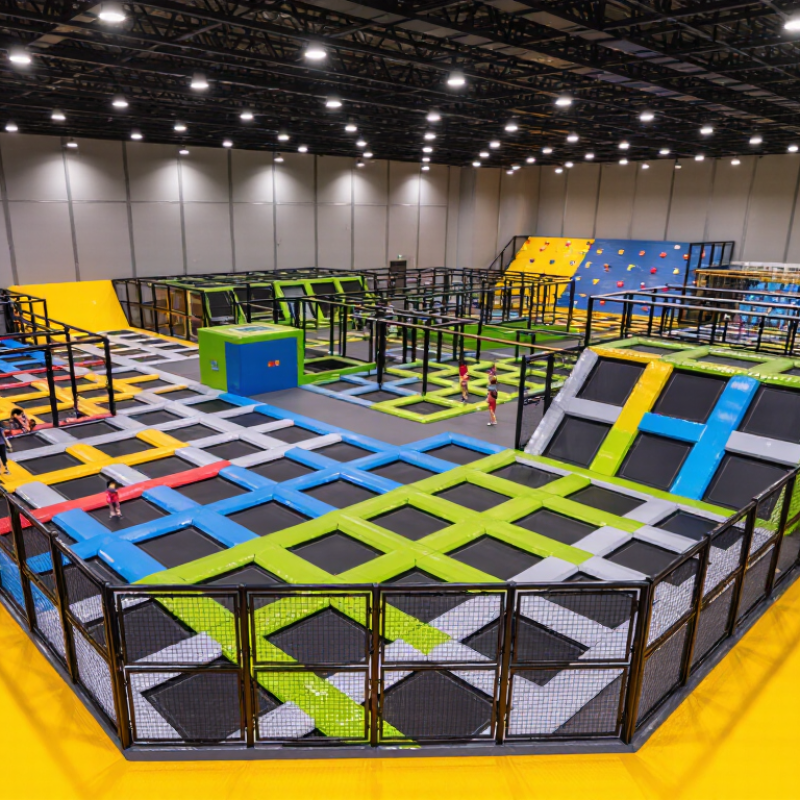
China Top 10 Indoor Trampoline Park Design Manufacturers

China’s indoor amusement industry is becoming more design-led, safety-conscious, and export-oriented. Indoor Trampoline Park Design Manufacturing now combines architectural planning, structural engineering, equipment fabrication, and visitor-flow analysis. The opportunity is substantial. IAAPA’s 2023 Global Economic Impact Study estimated that the global attractions industry supported about 1.3 million jobs and generated approximately US$241 billion in economic activity. These figures explain why investors increasingly examine manufacturers beyond attractive equipment catalogs.

Industry reports from Grand View Research and Fortune Business Insights also identify indoor recreation as a growing segment, supported by urban family entertainment and experience-based consumption. Yet growth alone does not guarantee a successful park. A 3,000-square-meter venue still needs clear sightlines, controlled entry points, suitable ceiling height, impact-absorbing surfaces, and practical maintenance access. Small details matter. A misplaced column can disrupt circulation. A weak evacuation plan can damage the entire investment.

This introduction presents ten notable Chinese manufacturers involved in trampoline park design and production. The evaluation considers engineering capability, customization, material quality, installation support, certification awareness, and international project experience. ASTM F2970 and relevant European safety requirements provide useful reference points, although local regulations must guide every final design. Manufacturer claims also deserve verification through drawings, factory inspections, project photographs, and client feedback. No ranking is flawless. Some suppliers communicate brilliantly but lack long-term evidence. Others deliver dependable structures but present outdated portfolios. That difference deserves attention. A visually exciting park should also feel stable under busy weekend use, from the first jump to the final cleaning shift.

China Top 10 Indoor Trampoline Park Design Manufacturers

Industry Overview and Definition of Indoor Trampoline Park Design

Indoor trampoline park design refers to planning a safe, engaging activity environment inside a commercial building. It includes site layout, trampoline zones, protective padding, platforms, climbing features, lighting, and visitor circulation. Manufacturers in China often provide design drawings, equipment production, installation guidance, and maintenance documents. Their work connects architecture with sports engineering. Not just colorful walls.

A professional design begins with the building’s ceiling height, floor capacity, entrances, emergency routes, and expected visitor volume.

Designers then separate areas for jumping, younger children, training, and staff supervision. Load calculations and impact protection matter more than visual novelty.

Materials should resist repeated use, surface friction, cleaning chemicals, and temperature changes.

A loose seam can become a serious maintenance issue. This detail is easy to overlook.

China’s leading indoor trampoline park design manufacturers commonly serve shopping centers, family entertainment venues, and independent operators. Reliable suppliers explain testing methods, installation tolerances, inspection schedules, and replacement procedures before a contract is signed.

They should also adapt designs to local building codes and fire-safety requirements, rather than copying one standard layout. Practical experience helps, but it is not enough by itself. Designs still need documented calculations and trained installation teams. Some proposals look impressive on paper yet leave blind corners near active zones. That weakness deserves honest review before opening.

Evaluation Criteria for Ranking Chinese Design Manufacturers

Ranking Chinese indoor trampoline park design manufacturers requires more than attractive renderings. We examine verified project experience, engineering depth, and the safety logic behind each layout. Site evidence matters. Reviewers should inspect completed venues, not only digital portfolios. Photographs, opening dates, floor plans, and client references help confirm real delivery. A manufacturer with five suitable projects may deserve more trust than one with twenty unrelated designs.

Technical expertise forms the next measure. The assessment considers traffic flow, fall zones, ceiling clearance, anchoring methods, and emergency access. Designers should explain how equipment loads interact with the building structure. They should also provide material specifications, maintenance schedules, and inspection records. Clear drawings are useful. Vague promises are not. However, scoring can become subjective when documentation differs between suppliers. That weakness should be recorded rather than hidden.

Authority and reliability depend on communication after the contract is signed. We compare response times, revision control, installation supervision, staff training, and warranty procedures. A strong team answers technical questions with evidence, not sales language. Independent safety reviews and local code awareness improve confidence, especially for crowded family venues. Cost still matters, but the lowest quotation can conceal thinner padding, weaker support, or expensive changes. I would leave room for uncertainty. Unresolved points should remain visible in the scorecard.

China Top 10 Indoor Trampoline Park Design Manufacturers — Evaluation Criteria for Ranking

This weighted evaluation model focuses on the factors commonly used when comparing indoor trampoline park design manufacturers: safety compliance, design capability, customization, engineering quality, project delivery, and after-sales support. The percentages represent the suggested importance of each criterion in a structured ranking process and do not show data from any individual company or brand.

Profiles of China’s Top 10 Indoor Trampoline Park Designers

China’s top ten indoor trampoline park designers represent different strengths rather than one identical formula. One team focuses on compact urban parks, using vertical layouts and clear sightlines. Another specializes in family entertainment centers, separating toddler zones from high-energy attractions. A third develops sports-oriented spaces with deeper landing areas and adjustable training equipment. Their portfolios often include reception planning, circulation routes, emergency exits, lighting, and acoustic treatment.

Several designers are known for modular construction methods, which can reduce installation time and simplify future changes. Others emphasize themed interiors, combining padded walls, climbing features, foam pits, and colorful wayfinding. One profile stands out for detailed load calculations and material testing. Another gives strong attention to cleaning access, drainage, and daily inspection routines. Experienced teams usually study ceiling height, floor loading, visitor age groups, and local approval requirements before preparing drawings. That practical step prevents attractive concepts from becoming expensive revisions.

The remaining designers tend to combine visual planning with operational advice. They may provide staff sightline studies, queue layouts, maintenance schedules, and risk-control documents. Reliable manufacturers should explain material specifications and provide installation records, rather than relying on impressive images alone. No design is flawless. Some proposals still overuse decoration or underestimate staffing needs. That deserves honest review. A dependable designer welcomes independent checks, revises weak details, and supports the park after handover. For buyers, the strongest profile is not simply the most creative one, but the team that can connect engineering, visitor experience, safety planning, and long-term maintenance.

Design Services, Safety Standards, and Project Capabilities

China’s top 10 indoor trampoline park design manufacturers should be judged beyond attractive renderings. Strong design services begin with site surveys, traffic-flow studies, structural calculations, and equipment zoning. Designers must separate toddlers, beginners, and advanced jumpers. Clear sightlines help staff respond quickly. Flooring should reduce impact around platforms, edges, and landing zones.

Safety standards require documented discipline. ASTM F2970 covers commercial trampoline court design, installation, operation, maintenance, and inspection. ISO 45001 principles can strengthen risk-control procedures and staff training. A 2023 injury analysis published in the Journal of Pediatric Orthopaedics reported that trampoline-park injuries often involved fractures and lower-limb trauma. This finding makes landing surfaces and supervision more important than decorative themes. The International Association of Amusement Parks and Attractions also emphasizes operator training, inspections, and emergency planning in its safety guidance.

Tips: Ask each manufacturer for inspection records, load calculations, evacuation drawings, and maintenance schedules. Request a full-scale safety review before construction. Project capability matters too. Experienced teams should manage factory production, installation, testing, and staff handover. Their portfolio should show different floor areas, ceiling heights, and visitor volumes. A perfect concept image proves little. I would also question unclear claims about “zero risk”; indoor recreation always needs continuous monitoring, replacement planning, and honest review.

China Top 10 Indoor Trampoline Park Design Manufacturers - Design Services, Safety Standards, and Project Capabilities

Rank Anonymized Manufacturer Profile Core Design Services Typical Project Scale Safety and Compliance Framework Engineering Deliverables Manufacturing Capability Installation Support Best-Fit Project Type Capability Rating
1 Profile A Concept planning 3D layout Custom theming Large indoor parks; approximately 2,000–5,000 m² ASTM F2970 design reference; EN 1176 and EN 1177 considered where applicable; project-specific risk assessment CAD layouts, equipment schedules, safety-zone plans, anchoring details, installation drawings Trampoline courts, dodgeball courts, climbing features, ninja-course elements, soft-play zones Factory testing, packing plans, on-site assembly guidance, commissioning checklist Multi-attraction family entertainment centers ★★★★★
2 Profile B Space planning Theme integration Egress planning Medium to large venues; approximately 1,200–4,000 m² ASTM F2970 operational principles; applicable local fire, building, accessibility, and occupancy requirements Floor plans, circulation studies, emergency-exit coordination drawings, material specifications Modular trampoline systems, foam pits, airbags, wall trampolines, toddler activity areas Remote technical support and optional installation supervision Retail malls and destination leisure venues ★★★★★
3 Profile C Turnkey design Budget optimization Brand-neutral interiors Compact to medium parks; approximately 600–2,500 m² Equipment-specific inspection procedures; impact-attenuating surfaces evaluated against applicable EN 1177 or equivalent requirements Space-efficiency studies, bill of quantities, construction interfaces, maintenance access plans Standard trampoline grids, sports courts, foam pits, balance equipment, soft obstacles Pre-installation instructions, spare-parts list, operator handover documents First-time operators and budget-controlled developments ★★★★☆
4 Profile D Architectural coordination Structural interface design MEP coordination Large commercial projects; approximately 2,500–6,000 m² Coordination with local building codes, fire-safety provisions, accessibility rules, and venue-specific engineering reviews Structural loading information, reflected ceiling coordination, service-clearance drawings, phased installation plans Heavy-duty trampoline frames, elevated platforms, climbing walls, multi-level attractions Project management coordination with contractors and local consultants New-build entertainment complexes ★★★★★
5 Profile E Sports-oriented design Activity zoning Performance layout Medium venues; approximately 800–3,000 m² ASTM F2970 reference for trampoline-court design and operation; documented inspection and maintenance procedures Activity zoning plans, user-flow diagrams, equipment specifications, routine-inspection schedules Performance trampolines, slam-dunk lanes, dodgeball courts, training zones, reaction games Technical manuals, operator training materials, replacement-component guidance Sports clubs, training centers, and active entertainment venues ★★★★☆
6 Profile F Children’s attraction design Age-based zoning Visual theming Small to medium parks; approximately 500–2,000 m² Age and height separation, protective padding, controlled access, visibility planning, and applicable playground-safety references Child-safe layout plans, supervision-point locations, padding schedules, cleaning and maintenance access plans Toddler trampolines, soft-play structures, mini climbing features, slides, interactive play elements Installation manuals and staff orientation support Family entertainment centers with strong children’s programming ★★★★☆
7 Profile G Renovation planning Equipment replacement Capacity improvement Existing venues; approximately 400–2,500 m² refurbishment scope Site-specific condition survey, equipment inspection, fall-zone review, and compliance gap assessment As-built verification, replacement schedules, phased construction plans, shutdown-minimization strategy Replacement trampoline beds, padding systems, foam-pit upgrades, barrier systems, flooring improvements Survey reports, retrofit instructions, maintenance recommendations, spare-parts planning Park upgrades and operational-life extensions ★★★★☆
8 Profile H Export project design Documentation support Container planning International projects; approximately 800–4,000 m² Applicable destination-country standards identified during design; product documentation and risk-control records prepared per project Multilingual drawings, packing lists, installation sequences, inspection forms, operation manuals Modular attractions designed for efficient shipping and on-site assembly Remote supervision, video guidance, and optional local installation teams Overseas investors and franchise-style developments ★★★★☆
9 Profile I Interactive attraction planning Technology integration Revenue-zone planning Medium to large venues; approximately 1,500–4,500 m² Physical safety review combined with electrical, access-control, emergency-stop, and operational risk assessments Interactive-zone layouts, power and data coordination, equipment interface schedules, operator-control plans Interactive trampolines, projection games, reaction walls, scoring systems, climbing and challenge zones System commissioning support and operating-procedure documentation Technology-led entertainment and high-repeat-visit venues ★★★★☆
10 Profile J Custom fabrication Small-footprint design Fast-track planning Compact venues; approximately 300–1,500 m² Equipment risk assessment, protective-padding specifications, user segregation, and applicable local safety requirements Concept drawings, shop drawings, material lists, installation sequence, basic maintenance schedule Compact trampoline courts, soft-play combinations, climbing panels, modular obstacle courses Standardized installation packages and remote after-sales support Hotels, community venues, small malls, and mixed-use developments ★★★☆☆

Note: This anonymized comparison uses industry capability categories rather than company or brand names. ASTM F2970, EN 1176, and EN 1177 are referenced as applicable safety frameworks; final compliance requirements should be confirmed with the local authority, project engineer, fire consultant, and qualified safety inspector.

How to Select the Right Chinese Trampoline Park Manufacturer

China Top 10 Indoor Trampoline Park Design Manufacturers

Selecting a Chinese trampoline park manufacturer requires more than comparing prices. Start by checking factory experience, project photos, production capacity, and export history. Ask for drawings with exact dimensions, material specifications, and safety zones. A reliable supplier should explain how steel frames, springs, foam blocks, nets, and floor padding are tested. Request current test reports from recognized laboratories, not only attractive catalog images.

Visit the factory if possible. Watch how workers weld joints, inspect seams, and package equipment. Small details matter. Check whether foam has consistent density and whether exposed edges receive durable protection. Ask for load-testing procedures and installation instructions. The manufacturer should also understand your building height, emergency exits, customer flow, and local safety requirements. A copied layout may fit badly.

Communication reveals professional reliability. Send the same project brief to several companies and compare their technical replies. Look for clear quotations, realistic production schedules, replacement-part policies, and written warranty terms. Request references from similar indoor parks, then ask those operators about delays, installation support, and after-sales response. A cheap offer can become expensive after shipping or redesign. I have seen attractive proposals hide missing anchoring work and unclear taxes. That mistake is easy to repeat. Keep payment milestones linked to drawings, production checks, and final inspection. Do not rush the decision.

Contact Us