

 English
 España
 عرب
 简体中文
Top Antique Dressing Tables for Sale
An Antique Dressing Table can bring warmth, useful storage, and a strong sense of history to a bedroom. The best choice is not always the most ornate one. Look closely at its proportions, construction, and condition before deciding whether it suits your space.
This guide explores notable antique dressing tables for sale, from graceful Victorian designs to simpler, finely made examples. It explains how wood species, joinery, hardware, and mirror condition can help you assess a piece. Check the table’s width and depth, then compare them with the available floor space. Small details matter. A drawer that sticks or a mirror with foxing may affect everyday use, though some buyers value these signs of age. Ask sellers for clear photographs, measurements, condition notes, and any available history. Descriptions such as “antique” can be used loosely, so supporting records and expert opinions are worth considering. If authenticity or value is uncertain, consult a qualified appraiser rather than relying on a listing alone. No checklist removes every doubt. Older furniture can have repairs that are difficult to spot, and honest sellers may still lack complete records. With patient research, you can find a dressing table that fits your room, budget, and expectations.
What Defines an Antique Dressing Table
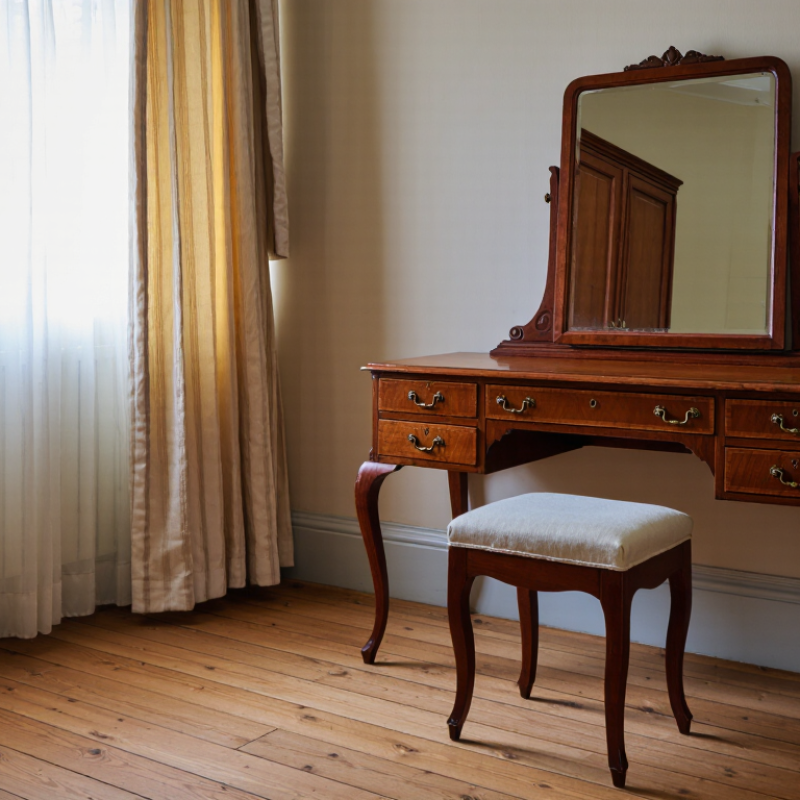
An antique dressing table is more than an old table with a mirror. It was designed for grooming, often with a raised mirror, small drawers, and a surface for everyday objects. In U.S. customs classification, the age benchmark for antiques is 100 years. That is a useful reference, not proof of authenticity. Age alone is imperfect evidence. Look closely.
The USDA Forest Products Laboratory’s Wood Handbook (2021) puts wood’s fiber saturation point at roughly 25–30% moisture content. Below that level, changing moisture can cause wood to shrink or swell, so slight drawer gaps or uneven surfaces may reflect decades of movement. They are not automatic proof of age. Check for hand-cut dovetails, old screw slots, worn drawer runners, and mirror silvering that has darkened at the edges. A replacement knob may be honest; a polished surface can also hide repairs. The Antiques Trade Gazette’s auction reports can help show how condition affects the trade, but sale prices vary widely by period, maker, and provenance. Provenance means a documented ownership history. Ask for records, and treat confident claims without them cautiously. Some details remain uncertain.
| Period | Typical design features | Common materials and finishes | Mirror and storage | Useful identification clues |
|---|---|---|---|---|
| Georgian 1714–1830 | Often restrained and symmetrical, with straight lines or cabriole legs depending on the date and regional style. | Mahogany, walnut, and other locally available hardwoods; polished or veneered surfaces are common. | May have a separate adjustable mirror, sometimes set on a small table with drawers. | Look for hand-cut construction details, age-consistent wear, and hardware appropriate to the piece; later repairs are possible. |
| Victorian 1837–1901 | Frequently larger and more ornate, with carved details, shaped fronts, or decorative legs. | Walnut, mahogany, rosewood, and oak appear in period furniture; veneers and contrasting inlays may be used. | Often features a large tilting mirror supported by uprights, along with several drawers. | Check that the mirror frame, supports, and table show compatible construction and wear rather than assuming they were originally together. |
| Edwardian 1901–1910 | Generally lighter in appearance than many Victorian examples, with elegant proportions and comparatively restrained ornament. | Mahogany, satinwood, and other decorative hardwoods; pale finishes and fine inlay can be found. | May have a framed central mirror and smaller drawers or side compartments. | Style alone cannot confirm age; examine joinery, finish, hardware, and documented history where available. |
| Art Nouveau c.1890–1910 | May feature flowing lines, asymmetry, and plant-inspired decoration, reflecting the broader Art Nouveau movement. | Wood, glass, and occasionally metal accents; materials vary by maker and region. | Mirror shapes and frames may echo the curved, organic forms of the design. | A flowing silhouette can suggest the style, but does not by itself establish a precise date or authenticity. |
| Art Deco 1920s–1930s | Often geometric, streamlined, and symmetrical, with bold shapes and a more modern profile. | May use hardwood veneers, lacquer, glass, or contrasting materials; combinations vary considerably. | Typically designed with a broad mirror and practical drawer storage; some designs have a built-in appearance. | Assess the construction and condition as well as the geometric styling, since later furniture may imitate the look. |
| What defines an antique? The term commonly refers to an item at least 100 years old, although definitions and marketplace rules can vary. Confirm age, originality, condition, and any restoration before purchase. | ||||
-
- about us
- About Us
- Qualification
- Privacy
-
- Packaging products
- Hot Sale
- Outdoor Sofa Sets
- Outdoor Dining Sets
- Outdoor Loungers/Sunbeds
- Swing Chairs
- Single Chair

