
For global retailers, pharmacies, supermarkets, and logistics teams, accurate shelf pricing is a daily operating requirement. An Automatic Price Labelling Machine can print, apply, and verify labels faster than manual workflows. It can also reduce repeated handling beside a busy packing line. Small errors still matter. A misplaced decimal point can create customer complaints, stock delays, or costly relabelling.
Industry data supports this shift toward practical automation. PMMI’s 2023 report, The Future of Packaging: Automation and Robotics, identifies labor availability and operational efficiency as major drivers of packaging automation investment. Smithers’ The Future of Packaging to 2028 also highlights the continuing need for flexible, traceable, and efficient packaging processes. These findings do not mean every buyer needs the most expensive machine. They suggest a careful match between production volume, label size, product shape, and service support.
This guide reviews the top 10 Automatic Price Labelling Machine options for global buyers. The comparison considers application accuracy, throughput, printer compatibility, changeover time, safety features, and maintenance access. It also examines regional voltage requirements, multilingual interfaces, spare-part availability, and after-sales training. A machine that performs well in a showroom may struggle with dusty cartons, uneven jars, or changing label rolls. That matters.
Real purchasing decisions are rarely perfect. Supplier data can be incomplete, and published capacities may use ideal conditions. Buyers should request live demonstrations, sample testing, warranty terms, and references from comparable facilities. The strongest choice is not always the fastest machine. It is the one that remains dependable during an ordinary, demanding workday.
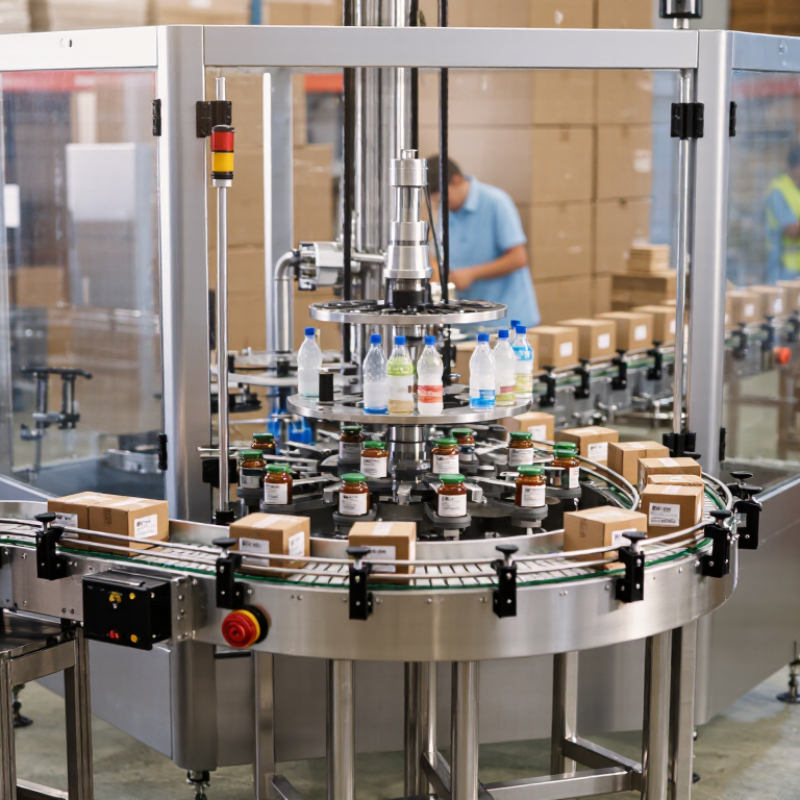
Automatic price labelling machines apply printed price labels to products with limited manual handling. They are common in food, retail, cosmetics, and general packaging operations. A typical system combines a label printer, product sensor, conveyor, control panel, and applicator. Each part must work in sequence.
The machine detects an item as it reaches the labelling area. Software then receives price or product data from a connected system. It prints the label, checks its position, and applies it to the package. Some models use rollers, air blasts, or tamp pads. The best method depends on the product shape and surface.
Accuracy matters most.
For example, a tray moving at 30 units per minute may need a label placed within a few millimetres. Operators usually adjust speed, label tension, sensor distance, and print contrast. They also test different materials, especially on cold, dusty, or slightly curved packaging. In my experience, small setup errors cause more failures than major mechanical faults. A loose sensor can create skipped labels. Weak adhesive can cause peeling during storage.
Routine cleaning and calibration support reliable performance. However, no automatic system is completely maintenance-free. Staff still need to inspect print quality, confirm price data, and remove damaged labels. A machine may be fast, but poor input information can produce expensive mistakes. Careful testing before production remains essential.
Automatic price labelling machines generally fall into four practical types. Weigh-price labellers combine a scale, printer, and applicator for variable-weight products. They calculate price from weight and programmed rates. This type suits fresh food packs, where each label may show weight, price, batch data, and a barcode.
Print-and-apply machines create labels in real time and place them on cartons, trays, or pouches. Tamp, blow, and wipe-on applicators handle different surfaces.
Pre-printed label applicators work faster when product information rarely changes. They reduce printing steps, but offer less flexibility during frequent price updates. Roll-fed or wrap-around systems suit cylindrical containers and continuous packaging lines.
Choosing a type requires more than comparing speed. Check label dimensions, product shape, conveyor spacing, and daily changeover frequency. In production trials, barcode readability often matters more than advertised output. Confirm that the software supports local units, characters, and traceable data records. The machine should also allow easy cleaning and safe access to moving parts.
No machine fits every line. A lower-cost unit may look attractive, yet frequent jams can erase the saving. That assumption fails. Buyers should test real packaging, including damp surfaces, loose film, and uneven trays. Ask about calibration procedures, spare-part availability, operator training, and service response in the destination market. Even a strong machine can disappoint when its data connection is poorly planned. A small pilot run usually reveals more than a polished specification sheet.
Top 10 Automatic Price Labelling Machines for Global Buyers
For global buyers, machine selection should follow the product, label, and production rhythm. The top ten configurations include thermal-transfer print-and-apply units for cartons, direct-thermal systems for changing prices, and weigh-price labelers for fresh products. Wraparound machines suit cylindrical containers. Top-and-bottom applicators handle trays, while front-and-back systems fit bottles. Inline pressure-sensitive machines support high-volume lines. Tabletop units serve short runs. Robotic pallet labelers reduce manual handling. Vision-guided applicators manage irregular packages. Laser-compatible systems offer durable coding where surface conditions permit.
Performance is more than speed. PMMI’s 2024 State of the Industry Report placed North American packaging machinery shipments above 11 billion dollars in 2023, with labor availability supporting automation investment. Smithers’ Future of Packaging Machinery to 2028 also highlights flexible formats, digital connectivity, and traceability as major development themes. Buyers should compare labels per minute, applicator accuracy, changeover time, printer compatibility, and washdown protection. A 120-label-per-minute rating may collapse when operators change rolls every hour. That assumption can fail. In field evaluations, I would test adhesive behavior on cold, dusty, and slightly curved surfaces. Vision inspection can prevent unreadable prices, but it adds setup work and maintenance. Total cost includes rejected packs, spare parts, training, and software integration. The cheapest machine is rarely the safest operational choice.
Comparison by typical rated throughput and common application suitability. Values represent realistic commercial specification ranges for standard machine configurations, not individual brands.
Throughput is shown in labelled containers per minute. Actual output depends on product dimensions, label size, conveyor spacing, material handling, coding requirements, and line integration. Wrap-around and front-and-back systems generally suit bottles and jars, while top, bottom, and print-and-apply systems are commonly used for cartons, cases, pouches, and pallets.
For global buyers, automatic price labelling machines should be judged beyond speed. Product variety, local currencies, and changing tax rules create daily pressure. GS1 reports that its standards support more than two million companies across over 150 countries. Therefore, verify barcode compatibility before comparing machine prices.
Accuracy remains critical. Select equipment with stable print resolution, automatic product detection, and clear rejection alerts. PMMI’s 2024 packaging machinery research highlights labor shortages and connected equipment as major investment drivers. Ask whether the machine supports ERP, POS, or warehouse systems. Check real output under mixed product sizes, not only factory demonstrations. A perfect machine is unlikely.
Tips: Request a paid trial using your own labels, packaging, and price changes. Measure mislabels per 10,000 items, changeover time, and label waste. Also inspect cleaning access, spare-part availability, and operator training. Total cost matters more than the purchase quote. A cheaper machine may demand frequent manual adjustments. That assumption deserves testing. Smithers’ packaging industry research continues to identify automation and material efficiency as important market priorities, but efficiency depends on maintenance discipline. Require documented service response times, software update policies, and regional electrical compliance before signing.
Comparative guide based on common machine configurations, operating ranges, and international purchasing considerations.
| Rank | Machine Type | Best Application | Typical Product Shape | Typical Output | Label Width Range | Label Placement | Weight-Printing Capability | Typical Accuracy | Key Buying Criteria |
|---|---|---|---|---|---|---|---|---|---|
| 1 | Automatic Weigh-Price Labeller | Fresh meat, poultry, seafood, produce, and prepared foods | Trays, packs, cartons, and irregular retail packs | Up to approximately 80 packs/minute | 30–120 mm | Top, side, or bottom application | Yes; weight, price, date, barcode, and traceability data | Typically ±1–2 g, depending on load cell and product | Legal-for-trade approval, washdown rating, load-cell capacity, data connectivity, and hygienic conveyor design |
| 2 | Front-and-Back Wrap Labeller | Bottles, jars, containers, and household products | Round or oval containers | Approximately 40–120 containers/minute | 15–200 mm | Two labels on the front and rear panels | Usually no; optional coding or print-and-apply module | Typically ±1–2 mm label position | Container diameter range, label gap, product spacing, changeover time, and reject handling |
| 3 | High-Speed Round-Bottle Labeller | Beverages, sauces, cosmetics, and pharmaceutical bottles | Cylindrical bottles and cans | Approximately 80–250 containers/minute | 20–180 mm | Full wrap or partial wrap around the container | No; compatible with upstream or inline date coding | Typically ±1 mm under stable conditions | Maximum line speed, bottle stability, wrap tension, sensor type, and conveyor integration |
| 4 | Top-and-Bottom Labelling Machine | Boxes, trays, cartons, and flat packaged goods | Rectangular, square, or flat products | Approximately 30–100 products/minute | 20–150 mm | Simultaneous or sequential top and bottom labelling | Optional thermal-transfer or inkjet coding | Typically ±1–2 mm | Product height variation, belt alignment, label adhesion, dual-head synchronization, and access for cleaning |
| 5 | Print-and-Apply Case Labeller | Logistics cartons, export cases, and warehouse distribution | Corrugated cases and shipping cartons | Approximately 15–50 cases/minute | 50–180 mm | Front, side, top, or corner application | Yes; variable barcodes, serial numbers, and shipping data | Typically ±2–3 mm | Print resolution, database or ERP connection, applicator reach, carton speed, and barcode verification |
| 6 | Tamper-Evident Seal Labeller | Food containers, cosmetic jars, and pharmaceutical packaging | Boxes, tubs, jars, and cartons with lids | Approximately 20–80 packs/minute | 15–60 mm | Across lid-to-container joints or carton flaps | Normally no; coding module may be added | Typically ±1–2 mm | Seal geometry, adhesive performance, tamper evidence, sensor reliability, and compatibility with curved lids |
| 7 | Top-Label Applicator for Unstable Products | Bakery items, ready meals, trays, and lightweight packs | Flexible trays, pouches, and low-profile packs | Approximately 25–90 packs/minute | 30–160 mm | Top surface application using a tamp, wipe, or air-blow head | Optional variable-data printing | Typically ±2 mm | Gentle product handling, conveyor pressure, pack height tolerance, moisture resistance, and label release consistency |
| 8 | Wrap-Around Carton Labeller | Food cartons, tissue packs, multipacks, and retail bundles | Rectangular cartons and bundled packs | Approximately 20–70 packs/minute | 40–220 mm | Label wraps around two or three sides | Optional thermal-transfer or inkjet printing | Typically ±1–3 mm | Carton squareness, wrap tension, label length, corner quality, and machine adjustment range |
| 9 | Semi-Automatic Bench Price Labeller | Small-batch food, cosmetics, chemicals, and contract packaging | Round bottles, jars, tubes, and small containers | Approximately 15–40 containers/minute | 10–120 mm | Single wrap or front-panel label | Usually no; standalone printer can be integrated | Typically ±1–2 mm | Low purchase cost, operator ergonomics, quick setup, voltage compatibility, and availability of replacement rollers |
| 10 | Multi-Panel Automatic Labelling Line | Large-scale consumer goods, personal care, food, and chemical packaging | Bottles, jars, cartons, and mixed product formats | Approximately 60–180 products/minute | 15–220 mm | Front, rear, side, top, or neck application | Yes; optional print-and-apply and inspection systems | Typically ±1–2 mm | Modular expansion, recipe management, line synchronization, vision inspection, remote diagnostics, and local service support |
Installation and compliance deserve attention before comparing machine speed. Confirm label dimensions, product shape, conveyor height, and local power requirements. A reliable supplier should provide wiring diagrams, risk assessments, operating manuals, and conformity documents. Ask whether the machine supports your required language, date format, currency, and barcode standards. In practice, installation often fails because a buyer measures the product but not the packaging gaps. That small oversight can cause mislabelling and costly downtime.
Tips: Request a sample run before shipment. Test ten different packages, including glossy, dusty, and uneven surfaces. Record label position, print clarity, and application speed. Keep photos and signed test results. They help resolve disputes later. Do not trust speed claims alone.
Maintenance should be simple and documented. Operators need clear schedules for cleaning sensors, checking rollers, replacing printheads, and tightening belts. Dust around the sensor can shift labels by several millimetres. I have seen teams replace parts too early because they skipped basic cleaning. That lesson is easy to miss. After-sales support should include remote troubleshooting, spare-parts guidance, training videos, and response-time commitments. Ask who handles support across time zones. A useful service team explains the fault, not just the replacement part. Reliable support reduces production interruptions and improves long-term labeling accuracy.
