
China Top Outdoor Sleeping Bag Manufacturers?

Choosing a reliable Chinese manufacturer requires more than comparing catalog photos and low quotations. An Outdoor Sleeping Bag must balance warmth, weight, packability, moisture resistance, and long-term comfort. A factory may advertise a -10°C rating. That number can mean little without testing conditions, fill weight, and user assumptions. This guide introduces selected China-based manufacturers and the qualities that deserve closer inspection. It considers down and synthetic insulation, shell fabrics, baffle construction, zipper performance, sizing, and customization capacity. Practical buying experience matters.

Strong suppliers usually provide clear technical sheets, consistent samples, production photos, and traceable quality checks. Independent certifications can support confidence, but paperwork alone cannot replace physical inspection. Look for realistic temperature labeling, seam consistency, clean stitching, tested water repellency, and responsive after-sales communication. Factory visits, third-party inspections, and sample testing can reveal weaknesses hidden by polished websites. Still, no shortlist is perfect. One supplier may excel at expedition bags but struggle with lightweight summer models. Another may offer excellent customization while missing delivery expectations. These trade-offs deserve honest attention. The following overview balances manufacturing experience, product evidence, and buyer feedback, while recognizing that specifications can change between seasons and orders. It aims to help importers, outdoor brands, retailers, and serious travelers ask better questions before signing a production agreement. A careful decision begins with evidence.
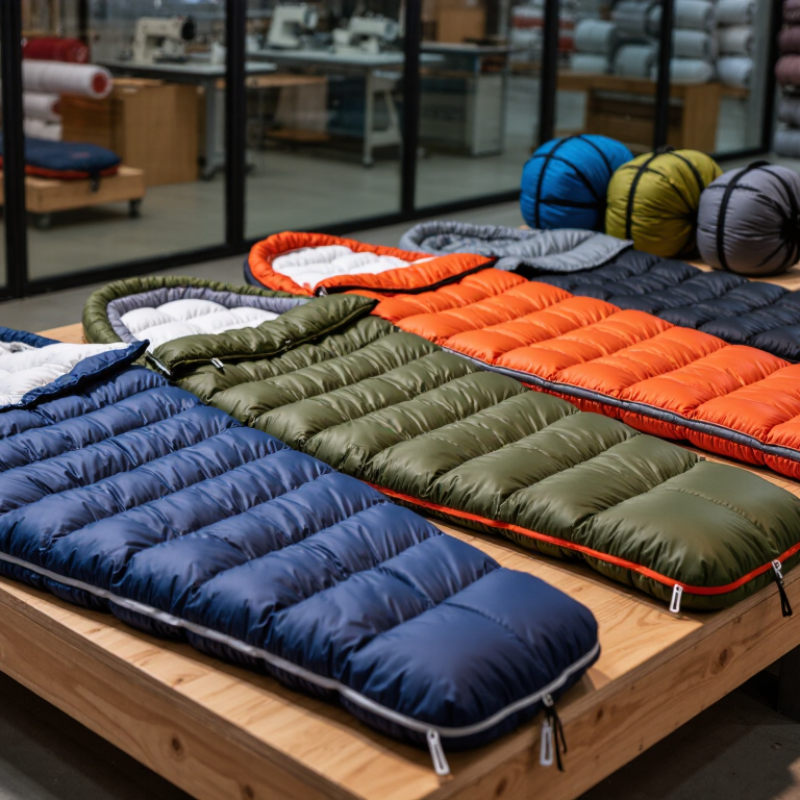
China Top Outdoor Sleeping Bag Manufacturers?

China’s Leading Outdoor Sleeping Bag Manufacturers

China’s leading outdoor sleeping bag manufacturers combine large-scale production with practical field experience. Many have spent years refining bags for hiking, camping, mountaineering, and humid outdoor conditions. Their factories commonly produce summer, three-season, and winter sleeping bags with down or synthetic insulation. Experienced teams understand that warmth depends on more than filling weight. Construction, stitching, hood design, and zipper protection also matter.

Reliable manufacturers usually support material testing, sample development, and quality inspections. They check insulation distribution, fabric strength, seam performance, and compression recovery. Some facilities use temperature chambers or field trials to assess thermal performance. However, testing methods can differ between factories. Buyers should request clear data, inspection records, and sample approval before placing larger orders. No factory is perfect. Small issues may appear during bulk production, especially with sizing or color consistency.

Tips: Ask about insulation origin, fabric coatings, fill power, and minimum order quantities. Request a physical sample with measured dimensions and weight. Test the zipper, hood adjustment, and packed volume yourself. Review factory audits and production timelines. A useful supplier should explain weaknesses honestly, not only present polished photographs. Also, confirm care instructions and packaging details before production begins.

Key Factors for Evaluating Chinese Sleeping Bag Manufacturers

Evaluating Chinese sleeping bag manufacturers requires more than comparing prices. A reliable supplier should explain fabric specifications, insulation composition, stitching methods, and testing procedures clearly. Ask for recent production samples, not only showroom pieces. Small details matter. Check zipper smoothness, seam consistency, hood adjustment, and compression recovery after unpacking.

Request evidence for thermal performance, water resistance, colorfastness, and material safety. Test reports should identify the laboratory, testing date, and sample description. Certifications can support credibility, but they do not replace independent verification. Review the manufacturer’s quality control system from incoming fabric inspection to final carton checks. Traceable batch records are especially useful when defects appear months later.

Production capacity also deserves careful examination. Compare the quoted minimum order quantity with actual line capacity and seasonal lead times. A factory may promise fast delivery during a quiet month, then struggle before winter. Visit the facility when possible, or arrange a live video inspection. Speak with the technical team, not only sales staff. Their answers reveal practical knowledge. Be cautious with vague claims about warmth ratings. A beautiful sample can hide weak filling distribution. I have learned that clear documentation often matters more than polished presentations. Some evaluations remain imperfect. Recheck assumptions.

Main Types of Outdoor Sleeping Bags Made in China

China’s outdoor sleeping bag factories produce several practical designs for different climates and sleeping habits. The main types include summer bags, three-season bags, winter bags, and expedition models. Three-season bags remain popular because they balance warmth, weight, and packing size.

Mummy sleeping bags reduce empty space around the body and improve heat retention. Rectangular bags offer easier movement but usually lose warmth faster. Chinese manufacturers commonly use synthetic insulation for damp conditions and lower-cost products. Down insulation provides better compressibility, but moisture control becomes more demanding.

Small details matter.

Grand View Research estimates the global camping equipment market will continue growing at over 6% annually through the decade. That demand supports wider production of lightweight and technical sleeping bags in China. Buyers should check fill weight, fabric breathability, zipper performance, and tested temperature ratings. ISO 23537 provides a useful reference for sleeping bag thermal testing, although factory results can vary.

From practical sampling experience, a bag rated for 0°C may feel comfortable only with suitable clothing and a warm sleeping pad. This is often overlooked. Some product pages also describe comfort limits too confidently. Reliable suppliers should provide material specifications, laboratory reports, stitching photos, and inspection records before bulk production.

Manufacturing Standards, Materials, and Quality Certifications

China’s leading outdoor sleeping bag manufacturers should be judged by measurable standards, not factory photographs. ISO 23537 defines thermal testing for sleeping bags, including comfort and lower-limit temperatures. Reliable factories should provide laboratory reports, calibrated equipment records, and batch traceability. EN 13537 remains useful in markets that still reference its testing framework, although buyers should confirm the required regional standard.

Materials affect both warmth and long-term performance. High-fill-power duck or goose down can reduce weight, but moisture control and ethical sourcing require verification. Responsible Down Standard certification can support traceability, while recycled polyester shells may reduce dependence on virgin materials. Textile Exchange reported 124 million tonnes of global fiber production in 2023, showing why material transparency matters. Still, recycled content does not automatically mean better durability.

Quality systems such as ISO 9001 can improve production consistency. They do not guarantee a warm sleeping bag. Factory audits should check baffle stitching, zipper alignment, seam leakage, and filling distribution. A few grams of uneven insulation can create a cold strip near the shoulder. I have seen paperwork look stronger than the product sample. That gap deserves attention. Request independent test reports, certification scope, production dates, and random pre-shipment inspections. A responsible Chinese manufacturer should explain failures openly, not hide behind certificates.

China Top Outdoor Sleeping Bag Manufacturers? - Manufacturing Standards, Materials, and Quality Certifications

Evaluation Dimension Industry-Recognized Requirement Common Manufacturing Practice Recommended Verification Evidence Quality Impact
Thermal Performance Testing ISO 23537 specifies requirements and test methods for the thermal performance and related characteristics of adult sleeping bags. Manufacturers use laboratory testing to establish comfort, limit, and extreme temperature ratings for applicable sleeping-bag designs. Current laboratory report, test sample identification, test method, and temperature-rating results. Improves comparability between products and reduces the risk of misleading temperature claims.
Quality Management System ISO 9001 is a quality-management-system standard covering controlled processes, documented procedures, corrective action, and continual improvement. Production is managed through incoming-material inspection, approved specifications, in-process checks, and final inspection. Valid certificate, certification scope, issuing body, expiry date, and factory-site details. Supports consistent production and traceable quality-control procedures.
Shell Fabric Common technical fabrics include tightly woven nylon or polyester, selected for low weight, abrasion resistance, and controlled air permeability. Fabric is inspected for weight, color, defects, tear strength, seam compatibility, and coating or finish consistency where applicable. Material specification, composition report, GSM result, colorfastness testing, and fabric inspection records. Affects durability, packability, moisture resistance, and overall product weight.
Down Insulation Down performance is commonly assessed by fill power, down-to-feather ratio, moisture content, cleanliness, and oxygen-related measures under applicable testing methods. Down is sorted, blended to specification, weighed by chamber, and distributed into baffled or sewn-through compartments. Independent fill-power report, fill-weight record, down composition test, batch traceability, and responsible-sourcing documentation where claimed. Determines warmth-to-weight ratio, compressibility, loft retention, and moisture sensitivity.
Synthetic Insulation Common fills use polyester fibers engineered for loft, resilience, drying speed, and thermal insulation. Fiber batts or loose-fill systems are cut, layered, quilted, and checked for uniform thickness and weight distribution. Fiber composition, insulation weight per size, thickness or loft record, wash-performance data, and batch inspection results. Provides reliable wet-weather performance and generally easier care than untreated down.
Construction and Baffles Baffle design should maintain insulation distribution and limit cold spots while matching the intended temperature rating. Common constructions include sewn-through channels for lighter products and separated box-style baffles for higher-loft insulation. Pattern approval, chamber dimensions, stitch density, insulation-distribution check, and finished-product measurement. Influences heat retention, weight, durability, and resistance to insulation migration.
Seam and Stitching Control Critical seams should meet approved construction specifications for stitch density, seam allowance, strength, and appearance. Factories use standardized sewing operations, thread specifications, bartacks, zipper reinforcement, and seam inspection. Sewing specification, seam-strength test, needle-damage inspection, defect-rate records, and approved reference sample. Reduces down leakage, seam failure, zipper-area damage, and dimensional inconsistency.
Zippers and Trims Zippers, cords, toggles, snaps, and webbing should be compatible with the design load, temperature range, and intended use. Components are checked for smooth operation, dimensional consistency, pull strength, corrosion resistance where relevant, and secure attachment. Component specification, pull-test records, cycle testing, incoming inspection, and functional inspection of finished goods. Affects usability, service life, repairability, and customer safety.
Chemical Safety OEKO-TEX Standard 100 is a product-safety certification framework that tests textiles and components for specified harmful substances. Materials and trims are sourced against restricted-substance requirements, with testing performed according to the product class and certification scope. Certificate number, product class, covered components, validity, and laboratory test report. Helps demonstrate control of regulated or potentially harmful substances in finished products.
Recycled Content The Global Recycled Standard provides requirements for recycled-material content verification, chain of custody, social practices, and chemical restrictions within its scope. Recycled polyester or nylon is tracked through approved suppliers and documented from input material to finished product. Valid transaction or scope documentation, product certificate, recycled-content percentage, and supply-chain records. Improves credibility of recycled-content claims and supports supply-chain traceability.
Down Responsible Sourcing The Responsible Down Standard addresses animal-welfare requirements and chain-of-custody controls for certified down and feathers. Certified down is segregated or controlled through documented sourcing, processing, storage, and production records. Valid facility or product scope, transaction records, supplier certificates, and material traceability documents. Supports ethical-sourcing claims and reduces the risk of undocumented down content.
Final Inspection and Sampling Acceptance sampling should be based on a documented inspection plan, agreed defect classification, and defined sample size or AQL criteria. Finished bags are checked for dimensions, weight, appearance, workmanship, accessories, packaging, labeling, and functional performance. Inspection report, defect photographs, measurement records, corrective-action report, and shipment-release approval. Reduces shipment defects and confirms that production matches the approved sample and specification.
Factory Traceability Effective traceability links raw-material batches, production lots, inspection records, and shipment information. Lot codes, barcode labels, production orders, material records, and retained samples are used to identify production history. Lot-tracking procedure, sample labels, production records, retention policy, and mock-recall results. Enables faster investigation, targeted corrective action, and more reliable after-sales support.

How to Select and Source a Reliable Chinese Manufacturer

Selecting a reliable Chinese outdoor sleeping bag manufacturer requires more than comparing factory prices. Grand View Research reported that the global sleeping bags market was valued at approximately USD 1.4 billion in 2023. Demand is growing, but inconsistent quality remains a sourcing risk.

Start with technical verification. Request production photos, fabric specifications, insulation weight, stitching samples, and test reports. Confirm compliance with ISO 23537, which covers sleeping bag performance and testing methods. Ask whether the factory tests warmth, compression recovery, water resistance, and zipper durability in controlled conditions. A sample should be inspected after repeated packing, not only when it arrives.

Look closely at materials, too. Textile Exchange’s 2024 Materials Market Report estimated recycled polyester represented about 14% of global polyester production in 2023. Ask for transaction certificates or valid material documentation when recycled content is claimed. Do not accept vague sustainability language.

Visit the factory if possible. Check cutting rooms, filling equipment, warehouse moisture control, and final inspection records. Production capacity should match your order size. A factory promising everything may be hiding weak controls. I once considered a low-cost supplier with excellent samples, but its bulk inspection process was unclear. That was a warning.

Use a written quality agreement. Include tolerance limits, insulation weight, color standards, packaging details, and corrective-action rules. Keep payment milestones tied to inspection results. A reliable manufacturer welcomes measurable checks, even when the discussion feels slower.

Contact Us
