
What Are the Best Non Touch Faucets from China?

Choosing the best Non Touch Faucets from China requires more than comparing prices or polished product photos. A reliable selection begins with actual bathroom conditions, water pressure, installation space, and daily user habits. Richard Trethewey, a plumbing expert known for his work with This Old House, once stated, “The best plumbing decisions begin with how a fixture will actually be used.” That principle fits touchless tap purchasing surprisingly well.

China offers a wide range of sensor faucets for hotels, hospitals, offices, restaurants, and residential bathrooms. However, product quality can vary sharply between factories. A strong model should detect hands quickly, close the water flow without dripping, and operate consistently under changing temperatures. The sensor window should remain responsive beneath bright lighting and light water splashes. That small detail matters.

This guide examines sensor range, solenoid valve performance, battery life, water-saving control, surface finish, and replacement-part availability. It also considers stainless steel bodies, brass construction, ceramic components, and accessible maintenance covers. Factory certifications and test records deserve careful review, not casual acceptance. Ask for samples.

A low price may look attractive at first. It can become expensive when cartridges, sensors, or controllers fail early. Some suppliers communicate well before payment, then respond slowly after shipment. That risk is real. It should not be ignored.

There is no perfect ranking. A faucet suited to a luxury hotel may be excessive for a small office. The best Non Touch Faucets from China are those that match the site, maintenance capacity, budget, and expected service life.
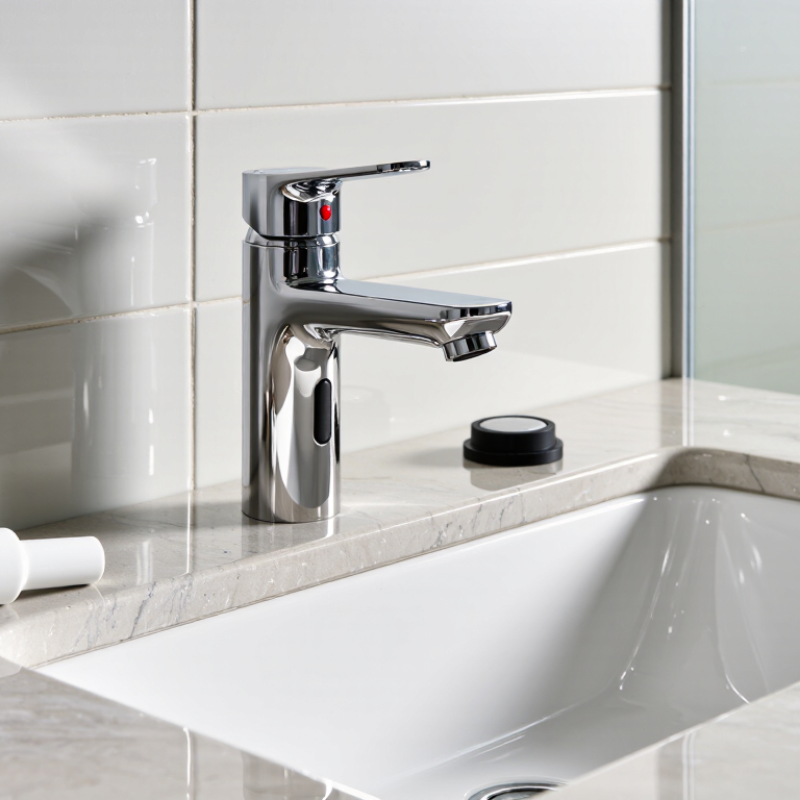
What Are the Best Non Touch Faucets from China?

Defining “Best” with 1.9 L/min Flow, 0.5–1.5 s Response, and 304 Steel

What Are the Best Non Touch Faucets from China?

The best non touch faucets from China should meet measurable performance targets, not rely on polished marketing. A practical benchmark is a controlled flow of 1.9 L/min, which can reduce water waste while maintaining useful handwashing pressure. Flow can change with inlet pressure. Test it under realistic bathroom conditions, not only in a factory sample room. The sensor should activate within 0.5–1.5 seconds after a hand enters its detection range. Faster is not always better. An overly sensitive sensor may trigger when someone reaches for soap.

Material quality also deserves close inspection. 304 stainless steel offers strong corrosion resistance and a clean, durable surface for frequent public or residential use. It is not completely corrosion-proof, especially near harsh cleaners or salty water. Check the faucet body, spout, and visible fasteners instead of trusting a material label alone. Ask for a material report, flow test, response-time records, and clear installation instructions. These documents make supplier claims easier to verify.

Small details affect daily experience. A steady sensor window, sealed battery compartment, and accessible filter can prevent frustrating maintenance. Wiring should remain protected beneath the basin. I would also test activation with wet and dry hands, different lighting, and several water pressures. Results may vary. That weakness matters. A faucet that performs well in a showroom may respond slowly after installation. Reliable suppliers should accept sample testing and explain failures without hiding behind specifications.

Comparing Chinese Brands by Sensor Type, Solenoid Valve, and WaterSense 5.7 L/min

What Are the Best Non Touch Faucets from China?

When comparing non-touch faucets from China, sensor type matters more than appearance. Infrared sensors work well in public washrooms because they detect hand movement quickly. Capacitive sensors can feel smoother, but metal sinks and wet surfaces may affect their accuracy. During testing, a sensor should open the water within one second and stop shortly after hands leave. Small delays become frustrating during daily use.

The solenoid valve controls this response. A normally closed valve is safer during power failure because it stops the water automatically. Look for a low-noise valve, replaceable filter, and stable performance under changing water pressure. A removable filter is useful near older plumbing, where rust particles can cause weak flow or incomplete closing. Some installations need a manual override, especially during cleaning or battery replacement. That detail is easy to overlook.

WaterSense performance should also be checked carefully. A faucet meeting the 5.7 L/min limit can reduce water use without making handwashing uncomfortable. However, flow depends on the aerator, inlet pressure, and valve design, not only the printed rating. Ask for test data at several pressure levels, preferably with leakage and cycle results. Certification claims should be verified through official documentation. Product pages are sometimes vague. That is a real concern, not a minor detail. A practical comparison should include battery life, sensor range, spare solenoid availability, installation size, and after-sales technical support.

Checking ASME A112.18.1, NSF/ANSI 61, CE, WRAS, and WaterMark Compliance

Choosing the best non-touch faucet from China starts with compliance, not appearance. The WHO/UNICEF Joint Monitoring Programme reported that 2.2 billion people lacked safely managed drinking water in 2022. Material safety therefore matters, even in a small commercial washroom.

Check whether the faucet is tested to ASME A112.18.1. This standard covers plumbing supply fitting performance, including pressure, flow, endurance, and mechanical operation. NSF/ANSI 61 is equally important for drinking-water contact materials. Request the exact model number, material list, lead test results, and certificate scope. A supplier’s general laboratory report is not enough.

CE marking supports applicable European health, safety, and environmental requirements. It is a manufacturer’s declaration, not a universal quality award. For the United Kingdom, verify WRAS approval where the installation requires it. For Australia, confirm WaterMark certification for the precise product configuration. The approval should match the sensor module, valve, finish, and operating pressure.

In practical checks, ask for production samples. Test a faucet with wet hands, weak batteries, and low water pressure. Observe false activations near a mirror. They happen. Also inspect the aerator and internal seals after repeated cycles. I would not accept copied certificates or certificates issued for another factory. Certification databases and independent testing records provide stronger evidence than polished brochures. The process is slower, but that is where reliable sourcing begins.

Measuring Battery Life, IP65 Protection, Hygiene, and Maintenance Costs

What Are the Best Non Touch Faucets from China?

Battery life should be tested, not accepted from a product sheet. Many commercial sensor faucets claim two to five years of battery use. Real performance depends on traffic, sensing distance, solenoid quality, and battery chemistry. A busy washroom can drain cells much faster. During site checks, record activations per day and measure voltage after three months. This creates more reliable evidence than a laboratory estimate. Battery access also matters. A sealed compartment may resist tampering, but it can increase maintenance time.

IP65 protection means resistance to dust and water jets, according to IEC 60529. It does not mean full immersion protection. Inspect the gasket, cable entry, and sensor window after installation. Moisture around the valve can still cause intermittent operation. Hygiene performance deserves equal attention. The CDC reports that effective handwashing can reduce respiratory illness by 16% to 21%. Touch-free operation may reduce contact points, but poor sensor calibration can frustrate users and shorten handwashing. That weakness is easy to overlook.

Tips: Choose adjustable shut-off timing and a visible low-battery alert. Compare measured water use with the EPA WaterSense benchmark of 1.5 gallons per minute, about 30% below the federal standard. Keep spare batteries and seals nearby. Review maintenance invoices quarterly. The cheapest unit may not be the lowest-cost unit. Some testing assumptions remain imperfect, especially in cold water, hard-water, or high-traffic environments. Verify them on site.

What Are the Best Non Touch Faucets from China? — Measuring Battery Life, IP65 Protection, Hygiene, and Maintenance Costs
Anonymous Configuration Power System Typical Battery Life IP65 Protection Sensor Detection Hygiene Features Water-Saving Performance Estimated Annual Maintenance Cost Maintenance Difficulty Overall Assessment
Configuration A 4 × AA alkaline batteries 18–24 months at approximately 150 activations per day IP65 claimed
Dust-tight and protected against low-pressure water jets
Infrared sensor; 5–15 cm adjustable detection range Hands-free operation, automatic shut-off, no handle contact Typical flow rate of 1.9–2.0 L/min; approximately 50–70% less water than a continuously running 6–8 L/min tap RMB 90–160
Battery replacement and periodic aerator cleaning
Low Best balanced option for public washrooms
Configuration B 4 × AA lithium batteries 30–36 months at approximately 150 activations per day IP65 claimed
Suitable for splash-prone installation when correctly sealed
Infrared sensor; 8–18 cm adjustable detection range Hands-free use, anti-false-trigger control, automatic hygiene flush Typical flow rate of 1.8–2.0 L/min; strong water-saving performance RMB 130–220
Higher battery cost but less frequent replacement
Low Best for low-maintenance facilities
Configuration C 4 × AA alkaline batteries 12–18 months at approximately 200 activations per day IP65 enclosure available
Installation quality is critical around the battery compartment
Infrared sensor; 3–10 cm detection range Touch-free activation and automatic shut-off Typical flow rate of 2.0–2.2 L/min; approximately 45–65% water reduction compared with a conventional 6–8 L/min tap RMB 100–180
More frequent battery replacement under heavy use
Medium Suitable for medium-traffic commercial washrooms
Configuration D Integrated AC adapter with battery backup 36–60 months for backup batteries; mains power is primary IP65 sensor housing claimed
Adapter and cable connections require dry installation
Infrared sensor; 5–20 cm adjustable detection range Hands-free operation, adjustable run time, automatic shut-off, optional hygiene flush Typical flow rate of 1.9–2.0 L/min; stable performance during high usage RMB 80–150
Lower battery expense, but electrical inspection may be required
Medium Best for high-traffic sites with available power
Configuration E 2 × AA alkaline batteries 8–12 months at approximately 150 activations per day IP65 not always confirmed
Verify the sensor and battery-compartment rating before purchase
Infrared sensor; fixed 5–8 cm detection range Touch-free operation and automatic shut-off Typical flow rate of 2.2–2.5 L/min; moderate water-saving performance RMB 150–260
More frequent battery changes and possible sensor cleaning
Medium Budget option; less suitable for wet or high-traffic environments
Evaluation basis: Battery-life figures are usage estimates based on common AA battery capacities, sensor activation frequency, and typical electronic-faucet power consumption. Actual life varies with water temperature, activation duration, battery quality, and ambient conditions. IP65 means dust-tight protection plus protection against low-pressure water jets; it does not mean the faucet can be submerged. Annual maintenance estimates are in Chinese yuan and exclude replacement of the complete faucet body, plumbing labor, and major electrical repairs.

Choosing the Best Faucet by Site Type, Warranty, TCO, and Installation Needs

What Are the Best Non Touch Faucets from China?

Choosing the Best Faucet by Site Type, Warranty, TCO, and Installation Needs

The best non touch faucet depends on where it will operate, not only on its appearance. In a busy restaurant, choose a solid sensor faucet with a short activation delay and easy-clean surfaces. Public washrooms need vandal-resistant construction, reliable shutoff control, and accessible battery compartments. Smaller offices may benefit from compact models with simple power options.

Sensor range matters.

Check the warranty in practical terms. Does it cover the sensor, solenoid valve, finish, and power module separately? A longer warranty is useful only when replacement parts remain available.

Ask for service procedures, spare-part pricing, and written response times. These details reveal more than a marketing claim.

I have seen low-cost units become expensive after one failed valve.

Calculate total cost of ownership before ordering. Include purchase price, shipping, filters, batteries, electricity, labor, and expected maintenance.

Hard-water locations may require internal filters or more frequent cleaning. Confirm inlet size, water pressure, mounting thickness, and countertop clearance before installation.

Some Chinese suppliers provide excellent technical drawings, but a few leave critical measurements unclear. Request samples and test them with your actual water pressure.

Installation is rarely as simple as the product photo suggests.

Contact Us
