
Why Are Bun Feet Sofa Legs Popular?

Bun Feet Sofa Legs bring a quiet sense of character to a sofa. Their rounded shape softens straight upholstery lines and gives the frame a grounded, traditional profile. Furniture designer Charles Eames captured why small details matter: “The details are not the details. They make the design.” He was not speaking specifically about bun feet, but the idea fits: a sofa’s feet can change how its whole silhouette feels.

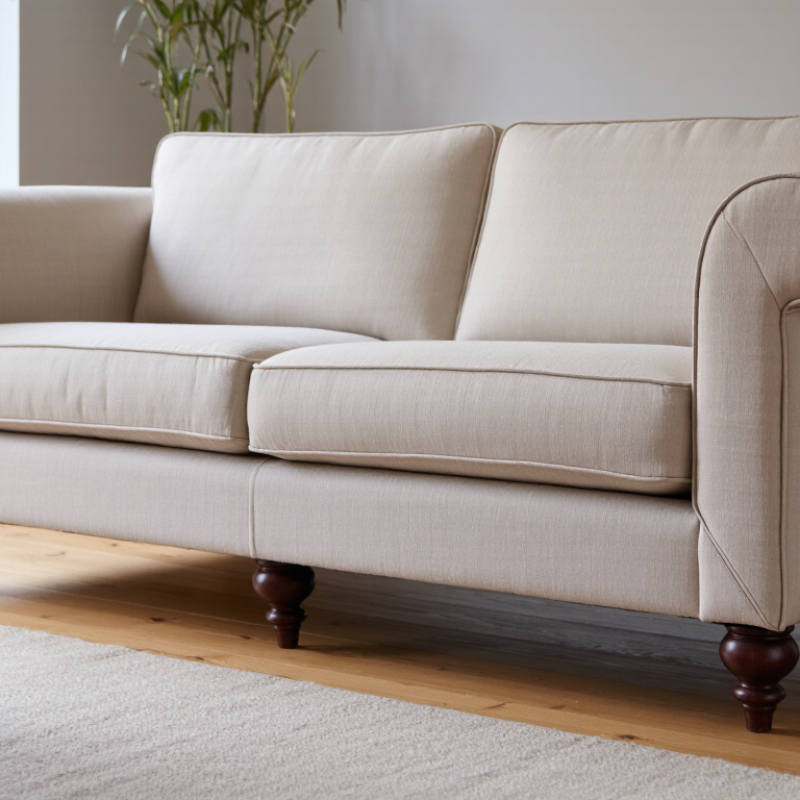
Look closely at a living-room sofa with turned wooden feet. The curves may echo a coffee table, while a dark finish can frame pale fabric like a neat border. Bun Feet Sofa Legs also lift the sofa above the floor, making the base easier to see and the piece feel less bulky. Small detail. Big effect. Their appeal is practical as well as visual, though the result depends on scale, material, and the room around them.

They are not right for every interior. A low, minimalist room may call for slimmer, straighter legs, and rounded feet can make vacuuming beneath some sofas awkward. That trade-off is worth noticing. The best choice balances appearance with daily use: check the leg height, attachment, finish, and weight rating before buying or replacing parts. This guide explores why Bun Feet Sofa Legs remain popular, what styles they complement, and what to consider before choosing them. Popularity alone is not proof of quality; fit and construction matter just as much.
Why Are Bun Feet Sofa Legs Popular?

What Bun Feet Sofa Legs Are and How They Are Designed

Why Are Bun Feet Sofa Legs Popular?

What Bun Feet Sofa Legs Are and How They Are Designed

Bun feet are short, rounded sofa legs with a broad, gently curved profile. Their shape often resembles a flattened ball or bun, with a narrower section where the leg meets the sofa frame. This compact design gives the base a grounded look without drawing attention away from the upholstery. Small detail. Big effect. Bun feet may be carved from wood or made from other sturdy materials, depending on the sofa’s construction.

Their design balances appearance with support. A wider bottom can help distribute weight across the floor, while the upper section needs a secure connection to the sofa frame. The curve may be subtle or more pronounced, changing how traditional or contemporary the sofa feels. Finish matters, too: a dark stain can create contrast beneath pale fabric, while a natural finish brings out visible wood grain. Still, looks alone do not prove stability. Check the attachment and weight rating, especially when replacing existing legs.

Tips: Measure the mounting point and leg height before choosing replacements. Use floor protectors on wood or tile. A sofa that rocks may need its legs checked, not just tightened by guesswork.

How Bun Feet Support and Elevate a Sofa

Bun feet support a sofa through a short, broad contact point beneath each corner. Their rounded profile can soften the visual transition from upholstery to floor, while the raised base leaves a visible strip of space underneath. That gap can make vacuuming easier. It also exposes the legs to bumps and loose joints, so appearance alone tells little about stability.

Material matters. The USDA Forest Products Laboratory’s Wood Handbook reports an average bending strength of about 14,300 psi for clear red oak at 12% moisture content. That is a wood-property benchmark, not a load rating for a finished sofa leg. A foot’s dimensions, grain direction, fastener, and connection to the frame all affect real-world performance. Small details count.

For a useful testing reference, ANSI/BIFMA X5.4-2020 covers strength, stability, and durability tests for public and lounge seating. It is not a guarantee for every residential sofa, but it highlights why the whole assembly matters. Check that each foot sits flat, its attachment feels secure, and the sofa does not rock on a level floor. A slightly uneven leg can still cause trouble. And a decorative bun foot cannot compensate for a weak frame.

Why Are Bun Feet Sofa Legs Popular? - How Bun Feet Support and Elevate a Sofa

Feature How Bun Feet Work Why It Matters for a Sofa
Rounded, compact shape Bun feet have a short, rounded profile, often with a broader body that narrows toward the point where it attaches to the furniture. Their traditional shape gives a sofa a finished, furniture-like appearance without the long, exposed look of taller legs.
Weight support The feet transfer the sofa’s weight through their attachment points to the floor. The sofa frame, joints, number of feet, and their placement all affect how the load is supported. Well-attached feet help keep the sofa supported, but the bun shape alone does not determine its load capacity.
Added floor clearance Each foot raises the sofa by the height of the foot, creating space between the lower frame and the floor. Clearance can make it easier to clean beneath the sofa. The usable gap depends on the foot height and the design of the sofa’s base.
Visual balance The low, rounded profile creates a solid-looking transition between the sofa body and the floor. This makes bun feet a popular choice for traditional, transitional, and other designs that suit a substantial, grounded appearance.
Material and finish options Bun feet are made in materials such as wood and molded plastics, with finishes that can be painted, stained, or left in a material’s natural appearance. Choosing a compatible material and finish can help replacement feet coordinate with the sofa’s frame and décor.
Floor contact The bottom surface of each foot rests on the floor; its contact area and any added floor protector affect how it meets the surface. Felt pads or other suitable protectors can help reduce scratching on some hard floors. Select protectors that fit securely and suit the floor type.
Replacement fit Replacement feet need to match the sofa’s attachment method and provide suitable height and stability. Check the fitting, dimensions, and condition of the sofa frame before replacing a foot. A loose or damaged attachment can affect stability.

The History of Bun Feet in Furniture Design

Bun feet became recognizable in English furniture during the late seventeenth century, when turned wooden supports were fashionable. Their rounded shape recalled a small bun, though historical names and forms varied by place. Some examples were carved from solid wood; others were shaped on a lathe, leaving subtle rings beneath the curve. These feet suited heavy cabinets and tables because they looked grounded rather than delicate.

The style is often linked with furniture from the William and Mary period, but its development was not perfectly uniform. Regional workshops borrowed ideas, adapted proportions, and used available timber. A bun foot might sit beneath a chest, a chair, or a compact sofa. Run your hand over an old example and you may notice worn edges, tool marks, or a slightly uneven curve. That variation is part of its character. Not every foot was perfectly round.

Bun feet later appeared in revival furniture, where makers reused historical shapes for new interiors. On a sofa, their low profile can make the frame feel stable and visually anchored. They also leave a small, practical gap beneath the upholstery for cleaning. Still, the name can suggest more consistency than the objects actually have. Some feet are broad and flattened; others rise into a narrow neck before meeting the frame. Their history is a little messy, and that makes them more interesting.

Practical and Aesthetic Benefits of Bun Feet Sofa Legs

Bun feet sofa legs pair a rounded profile with a broad, stable base. Their compact shape suits traditional rooms, but it can soften the look of a simple modern sofa, too. The curved wood catches light gently, adding detail without making the whole frame feel ornate. A small change. It can make a sofa look more grounded.

There are practical benefits as well. Bun feet often lift a sofa enough to expose a strip of floor, which can make a room feel less crowded. That clearance may also help with vacuuming, though it depends on the foot’s height and the cleaning tool. Check the measurement before buying. A low foot may block a robot vacuum, and a rounded base is not automatically suitable for every floor. Felt pads can reduce scraping on hard surfaces, but they need occasional inspection.

The shape also spreads visual weight near the floor, so a bulky sofa may appear steadier and less top-heavy. For homes with children or frequent visitors, smooth rounded edges can feel less sharp than narrow, angular legs. Still, appearance is not a substitute for sound construction. Confirm that the feet attach securely and match the sofa’s load requirements. Wood tones can vary, even within one piece; that slight mismatch may be charming, or simply annoying.

Why Bun Feet Sofa Legs Remain Popular in Modern Homes

Bun feet sofa legs remain popular in modern homes because their rounded shape softens the look of a sofa without making it feel old-fashioned. Their low, curved profile pairs well with clean upholstery, warm wood floors, and simple rooms. From across the room, they add a gentle visual lift. Up close, the shape feels sturdy and familiar. Small detail. Yet it can change how substantial a sofa appears.

Tips: Check the leg height before buying a sofa. A few inches can affect seat height, floor clearance, and how easily you vacuum underneath. Match the finish to nearby furniture, but do not worry about making every wood tone identical. A little contrast can look natural.

Bun feet work especially well in living rooms that mix modern and traditional pieces. They bring a softer outline to boxy frames and can make a large sofa feel less severe. For everyday use, look for legs that attach securely and sit evenly on the floor. If the sofa is heavy, stability matters more than appearance alone. One drawback is worth considering: low feet leave less room for cleaning beneath the frame. I still like the style, though it is not the easiest choice in every home.

Contact Us
