
Why Car Perfume Diffuser Is a Smart Wholesale Choice?

Why Car Perfume Diffuser Is a Smart Wholesale Choice?

The Car Perfume Diffuser is becoming a practical wholesale product for retailers, distributors, and automotive accessory brands. Customers want pleasant interiors without bulky devices or complicated installation. A compact diffuser can hang from a mirror, fit a vent, or rest inside a cup holder. Its small footprint supports efficient storage and lower shipping costs. It also creates useful opportunities for repeat sales through fragrance refills.

Fragrance industry educator Michael Edwards offers a useful principle: “A fragrance should enhance an experience, never overwhelm it.” This idea matters inside a small vehicle. Strong scents may cause discomfort, while balanced notes can create a cleaner and calmer cabin. Wholesale buyers should examine scent quality, evaporation control, leak resistance, and packaging clarity. A pleasant sample is not enough. The product must perform after weeks of heat, movement, and daily handling.

The commercial case is strong, but it is not perfect. Poor closures can damage packaging. Cheap oils may weaken customer trust. Seasonal preferences can also make inventory planning difficult. Buyers should request samples, review material specifications, and test products in real vehicles. They should also confirm labeling and applicable product safety requirements before large orders. Clear testing records improve confidence. Small details matter, such as an adjustable intensity setting or a refill pouch that opens cleanly.

A reliable Car Perfume Diffuser does more than add fragrance. It connects product design, customer comfort, and repeat purchasing. For wholesalers, that combination can support steady growth when quality remains consistent. Yet assumptions should be tested. Market demand alone does not guarantee a successful product line.
Why Car Perfume Diffuser Is a Smart Wholesale Choice?

Car Perfume Diffusers: Definition, Types, and Core Functions

Why Car Perfume Diffuser Is a Smart Wholesale Choice?

Car perfume diffusers are compact devices that release fragrance inside a vehicle. They help create a more pleasant cabin atmosphere during daily travel. Most models use passive evaporation, air circulation, or low-power electric diffusion. Their core function is simple: deliver a steady scent without occupying much space.

Common types include vent clip diffusers, hanging bottles, solid fragrance cards, gel containers, and USB-powered units. Vent models spread fragrance through moving air. Hanging designs offer easy placement and visible decoration. Electric diffusers usually provide stronger control over intensity and timing. For wholesalers, this variety supports different vehicle interiors, budgets, and customer preferences. Practical product checks should cover leak resistance, material quality, scent consistency, and secure packaging. A low price is not enough. A damaged cap can quickly become a customer complaint.

Tips: Test samples in hot and cold conditions before ordering. Check whether the scent becomes too strong after several hours. Ask suppliers for clear material details and quality inspection records. Keep packaging compact to reduce storage pressure. Include several fragrance profiles, but avoid assuming one scent fits every market. A perfect scent match is unrealistic. Some buyers may prefer weaker diffusion, while others want noticeable freshness. Small trial orders can reveal these differences before larger purchasing decisions.

Why Car Perfume Diffusers Attract Wholesale Buyers

Why Car Perfume Diffuser Is a Smart Wholesale Choice?

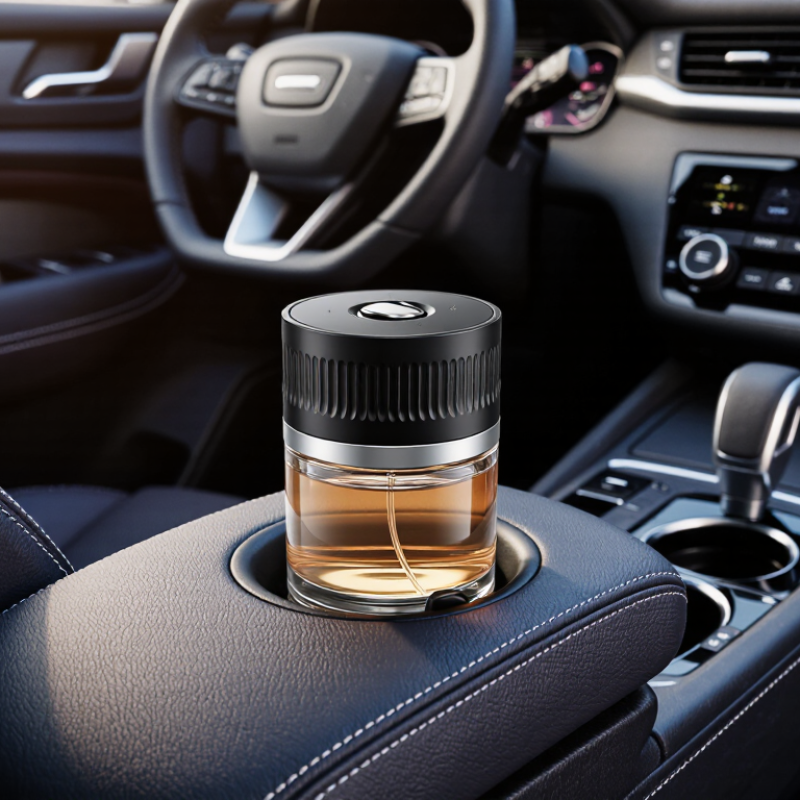
Car perfume diffusers attract wholesale buyers because they combine practical use with strong visual appeal. Drivers notice them beside the air vents, gear console, or cup holder. A compact diffuser can refresh a vehicle without occupying valuable space. This simple function supports steady demand from retailers, gift shops, and automotive accessory stores.

Wholesale buyers also value flexible product selection. Different scents, colors, refill options, and bottle shapes can serve several customer groups. Lightweight packaging helps reduce storage pressure and shipping costs. Clear scent labels make product comparison easier on a busy retail shelf. In practical purchasing tests, buyers often examine leakage resistance, scent stability, and attachment strength before discussing price. These details influence customer reviews and repeat orders.

Quality still decides whether the opportunity lasts. A diffuser that leaks onto a dashboard can damage trust quickly. Suppliers should provide material information, usage instructions, batch checks, and suitable safety documentation. Attractive packaging helps, but it cannot replace reliable performance. The category is not effortless. Strong fragrance may please one driver and irritate another. Some refill systems also create unnecessary waste. Wholesale buyers should test samples in warm and cold conditions, then review customer feedback before placing larger orders. A smart choice requires evidence, not only a pleasant first impression.

Why Car Perfume Diffusers Attract Wholesale Buyers

Wholesale attractiveness index based on practical buying criteria: replenishment potential, shipping efficiency, product variety, perceived value, and customization flexibility.

Car perfume diffusers are appealing to wholesale buyers because they are compact, easy to merchandise, suitable for repeat purchases, and available in multiple fragrance and packaging formats. Their lightweight design also supports efficient storage and distribution.

Key Benefits for Retailers, Drivers, and End Customers

Why Car Perfume Diffuser Is a Smart Wholesale Choice?

Key Benefits for Retailers, Drivers, and End Customers

For Retailers

For retailers, car perfume diffusers offer a compact product with practical shelf appeal. They need little display space, yet fit naturally beside car accessories, travel items, or checkout products. Wholesale buyers can select several scent profiles and refill options without carrying bulky inventory. Clear packaging, batch information, and usage instructions also help staff answer customer questions with confidence. A small tester near the counter can demonstrate the fragrance within seconds.

For Drivers

Drivers benefit from a more pleasant cabin during daily commutes, school runs, and long journeys. A controlled diffuser can provide a steady scent without requiring constant spraying. Adjustable intensity matters because strong fragrance may distract or irritate some users. In my experience, customers usually prefer a subtle result that remains noticeable after several days. Easy installation is equally important. A secure clip or vent attachment should not block airflow or interfere with driving controls.

For End Customers

End customers often judge value through durability, appearance, and everyday convenience. A well-designed diffuser should resist leakage, remain stable on uneven roads, and use materials suitable for normal vehicle temperatures. Not every attractive design performs well. Retailers should review sample units, test scent longevity, and check the refill process before placing large orders. This step takes time, but it can reduce returns and protect customer trust. Small details matter.

How to Evaluate Quality, Safety, and Supplier Reliability

Why Car Perfume Diffuser Is a Smart Wholesale Choice?

Car perfume diffusers offer compact packaging, repeat-purchase potential, and simple shelf presentation. Quality still decides whether wholesale demand becomes long-term business. The U.S. Environmental Protection Agency reports indoor VOC levels can be two to five times higher than outdoor levels. A vehicle cabin is smaller and warmer. Fragrance materials therefore need careful screening, not just attractive scent descriptions.

Quality checks should begin with the liquid, container, and closure. During sampling, I inspect leakage after vibration, upside-down storage, and heat exposure near 60°C. I also compare scent consistency across different batches. Ask suppliers for SDS files, allergen declarations, ingredient traceability, and stability results. IFRA Standards can guide fragrance-use limits, but they do not replace local labeling or chemical requirements. The packaging must resist swelling, cracking, and color transfer. Small details matter.

Supplier reliability needs measurable evidence. The 2023 ISO Survey recorded more than 1.26 million ISO 9001 certificates worldwide. Certification helps, but it cannot guarantee every shipment. Request batch COAs, retain samples, production photos, and a written replacement process. A supplier should explain lead times honestly, including delays. That is less impressive, but more useful. One weakness remains: many buyers test only the first sample. Rechecking later batches, especially after formula or packaging changes, can prevent expensive claims and silent quality loss.

Pricing, Customization, and Market Potential in Bulk Purchasing

Car perfume diffusers can be a smart wholesale choice because pricing remains flexible at scale. A basic vent clip or hanging unit often uses low-cost plastic, felt, and fragrance oil. Larger orders reduce packaging, assembly, and freight costs per unit. However, the cheapest quotation is rarely the best one. Buyers should compare fragrance concentration, leakage testing, packaging protection, and sample consistency.

Customization can raise margins without creating a completely new product. A supplier may adjust the container shape, label, scent profile, color, or gift box. Small details matter. A matte finish can feel more premium than glossy plastic. A concentrated refill may support repeat purchases. The Global Air Freshener Market report from Fortune Business Insights valued the market at about USD 12.56 billion in 2023 and projected continued growth through 2032. Mordor Intelligence also reports steady expansion in automotive air fresheners, although estimates differ because researchers define the category differently. That difference deserves attention.

Market potential is strongest where drivers spend long hours commuting, using delivery vehicles, or buying affordable interior accessories. Retailers can test three scents and two price points before committing to a large batch. In practice, scent preference is difficult to predict across regions. Citrus may sell quickly in one market, while woody notes perform better elsewhere. Wholesale buyers should request stability data, safety documentation, and production samples before approving volume. A small pilot order may reduce risk, even when its unit price is higher. Bulk purchasing is useful, but blind bulk purchasing is not.

Why Car Perfume Diffuser Is a Smart Wholesale Choice? - Pricing, Customization, and Market Potential in Bulk Purchasing

Wholesale planning table based on typical private-label Car Fragrance Diffuser specifications, purchasing quantities, and channel economics. Prices are shown in USD and may vary by material, fragrance, packaging, testing, and destination.

Evaluation Dimension Wholesale Benchmark Commercial Implication Customization Opportunity Bulk-Purchase Advantage
Pricing and Order Economics
Typical product format Hanging bottle or vent-clip diffuser; common liquid capacity: 5–10 ml Compact format supports low shipping volume and convenient retail display Glass or plastic bottle, wood cap, vent clip, hanging cord, or refillable design Mixed-format orders can test several product styles without requiring a full new category
Indicative unit cost at 100 units $1.80–$3.50 per unit Suitable for product testing, seasonal launches, and small retail programs Basic label and standard fragrance options usually provide the lowest setup cost Lower financial risk, but packaging and freight represent a larger share of total cost
Indicative unit cost at 500 units $1.10–$2.40 per unit Provides a more workable cost base for online and specialty retail channels Custom color, printed label, and selected fragrance options are more practical Estimated product-cost reduction of approximately 20%–40% versus small-batch purchasing
Indicative unit cost at 1,000 units $0.75–$1.80 per unit Supports promotional bundles, subscription boxes, and multi-location retail supply More economical use of custom molds, premium caps, and printed gift packaging Estimated product-cost reduction of approximately 35%–55% versus 100-unit orders
Common retail price range $5–$15 per unit for standard consumer-facing formats Creates room for packaging, freight, channel fees, marketing, and retailer margin Premium fragrance presentation and gift-ready packaging can support higher price points Higher order volumes allow promotional pricing while preserving gross-margin targets
Estimated gross-margin potential 45%–75% before freight, duties, marketing, and channel fees Margin depends mainly on purchase price, packaging level, sales channel, and retail price Private-label presentation can reduce direct price comparison with generic products Volume purchasing improves margin protection during discounts and campaign periods
Customization and Product Development
Logo and label customization Often available from approximately 100–500 units, depending on printing method Enables branded resale, event merchandise, dealer gifts, and subscription-box products Logo, label size, color palette, barcode, language, and regulatory information Fixed artwork and repeat orders can reduce setup costs in later purchases
Packaging customization Standard boxes may be available at lower quantities; fully printed boxes often require higher MOQs Improves shelf visibility and makes the product suitable for gifting Paper box, sleeve, insert card, hang tag, window box, or recyclable packaging Packaging components can be ordered in larger runs to reduce per-unit printing cost
Fragrance selection Common profiles include citrus, ocean, fresh linen, wood, vanilla, and floral notes A multi-scent assortment can appeal to different consumer preferences Fragrance name, intensity, color, scent assortment, and seasonal editions Consolidating several scents into one purchase can improve assortment efficiency
Material and sustainability options Glass, PP, ABS, wood, paperboard, and recycled-content materials may be available Material selection affects perceived value, breakage risk, cost, and shipping weight Recycled paperboard, reduced-plastic packaging, refill systems, or wood accessories Higher volume can make sustainable packaging upgrades more commercially feasible
Typical production lead time 15–30 days for standard products; 30–60 days for extensive customization Advance planning is important for holidays, automotive events, and promotional campaigns Lead time is influenced by artwork approval, fragrance development, tooling, and packaging Forecast-based purchasing reduces the risk of urgent replenishment and expedited freight
Market Potential and Sales Applications
Target customer groups Private-label sellers, automotive retailers, car-care stores, gift shops, e-commerce sellers, and fleet operators Multiple buyer groups reduce dependence on one sales channel Different label designs, scents, and pack sizes can serve separate customer segments Bulk orders can be divided into retail, promotional, and corporate-gifting inventory
Repeat-purchase potential Medium to high; fragrance products are consumable and suitable for replacement or gifting Replenishment sales can improve customer lifetime value after initial acquisition Refill packs, scent collections, limited editions, and seasonal packaging Standing orders and scheduled replenishment can stabilize inventory planning
Sales formats Single unit, multipack, gift set, subscription box, promotional giveaway, and fleet bundle Flexible formats support both high-margin retail and high-volume promotional sales Two-piece or three-piece scent sets, display cartons, and event-specific inserts One production run can support several price points and sales campaigns
Promotional suitability High for automotive service centers, dealerships, travel events, and corporate campaigns Small, useful, and visually customizable products have strong giveaway utility Campaign logo, QR code, event message, custom scent name, and branded card Large quantities reduce the cost per promotional impression
Inventory risk Moderate; unsold stock may result from fragrance preference, outdated artwork, or seasonal packaging Demand testing is recommended before committing to highly customized inventory Use neutral packaging, evergreen scents, and replaceable labels for lower-risk launches Phased purchasing can balance unit-cost savings with cash-flow control
Operational and Compliance Considerations
Shipping efficiency Lightweight and compact compared with many automotive accessories; glass formats require protective packing Low cubic volume can support economical carton utilization Flat-packed boxes, compact inserts, and leak-resistant closures can reduce shipping issues Full-carton or pallet purchasing generally improves freight efficiency per unit
Quality-control priorities Leak resistance, cap fit, fragrance consistency, label adhesion, bottle integrity, and packaging accuracy Consistent quality reduces returns and protects resale reputation Pre-production samples, approved color standards, and batch inspection criteria Formal inspection procedures become more cost-effective at higher order quantities
Documentation to confirm Ingredient information, safety data where applicable, packaging specifications, and destination-market requirements Documentation supports safer transport, customs processing, and responsible product claims Multilingual labels, warning statements, recycling marks, and carton markings Standardized documents can be reused for repeat orders and multiple sales channels
Recommended purchasing approach Begin with 100–500 units for market testing, then scale toward 1,000+ units after validating demand Combines demand validation with the cost benefits of volume purchasing Start with standard components and upgrade packaging or tooling after sales data is available Progressive scaling limits overstock while improving unit economics over time

Planning note: The price ranges above are indicative wholesale benchmarks for standard car perfume diffuser products and are not quotations from any specific company or brand. Actual pricing depends on order quantity, fragrance formulation, materials, packaging, testing, shipping terms, taxes, duties, and destination-market requirements.

Contact Us
