Why Choose a Dock Shelter for Your Loading Dock?
A loading dock is a busy transition point, where weather, dust, and temperature changes can affect daily operations. A Dock Shelter creates a sheltered space around a backed-in trailer, helping limit exposure while workers move goods between the vehicle and the building. It can also make loading more comfortable during rain, wind, or cold weather. Small gaps matter.
The right design depends on the dock opening, the range of trailer sizes, traffic frequency, and local conditions. A shelter that fits poorly may leave exposed areas or wear unevenly where trailers press against it. Fit comes first. Before choosing, measure the opening and review the vehicles that use it most often. Consider materials, mounting requirements, maintenance access, and how the shelter will handle repeated contact. These practical checks are more useful than relying on broad performance claims.
A shelter is not a cure-all. It does not replace sound dock equipment, careful operating procedures, or suitable temperature controls inside the facility. Its value depends on proper selection and installation, and results can vary from site to site. Some details are easy to overlook, especially when dock traffic changes over time. This guide explains why businesses choose dock shelters, what features deserve attention, and which questions to ask before installation. The aim is a more informed decision, not a promise that one product fits every loading dock.
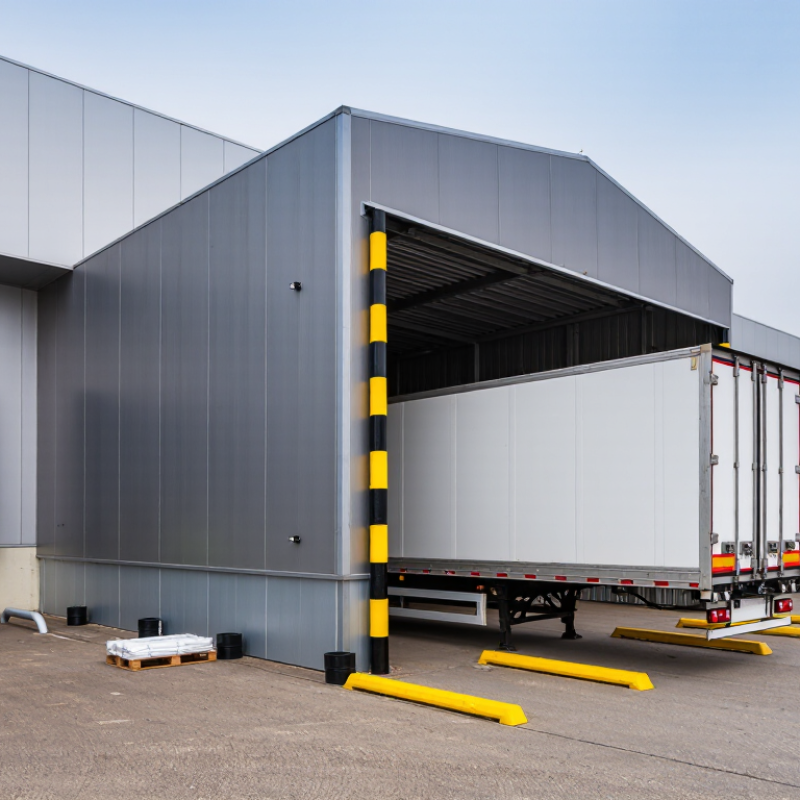
What a Dock Shelter Is and How It Works
A dock shelter is a framed enclosure fitted around a loading-bay opening. Its flexible curtains extend beyond the doorway, creating a sheltered space around a backed-in trailer. As the vehicle approaches, the curtains deflect against its sides and roof; they do not need to press tightly against the trailer body. This makes shelters useful for handling different vehicle widths while maintaining a more open clearance than many padded dock seals. The shelter helps limit wind, rain, dust, and insects entering the building. It is not an airtight barrier. Small gaps can remain, especially when trailer dimensions vary.
The U.S. Energy Information Administration’s 2018 Commercial Buildings Energy Consumption Survey identifies space heating as roughly 32% of energy use in U.S. commercial buildings. That figure is not a dock-shelter savings estimate, but it shows why limiting uncontrolled air exchange can matter in heated facilities. Fit matters. Before selecting a shelter, check the bay opening, trailer sizes, approach angle, and how often vehicles arrive. A poorly matched frame may leave gaps or wear unevenly where curtains rub against trailer corners. Inspect the fabric, fasteners, and frame regularly; a torn curtain can undermine the seal. No shelter fixes every mismatch.
Why Choose a Dock Shelter for Your Loading Dock?
What a Dock Shelter Is and How It Works
A typical fabric dock shelter has one head curtain and two side curtains. When a trailer backs into the dock, the curtains create a seal around its top and sides while leaving the loading opening accessible. Designs vary by dock and vehicle.
Key Benefits of Installing a Dock Shelter
A dock shelter creates a flexible seal around a trailer, helping limit drafts, rain, dust, and insects at the loading opening. For workers, that can mean fewer wet patches near the dock edge and less wind across the staging area. It also helps reduce the exchange of conditioned indoor air with outdoor air. The International Energy Agency reports that buildings account for about 30% of global final energy consumption. That figure is not a dock-level savings estimate, but it shows why controlling air movement matters. Less air escapes. In temperature-controlled facilities, a steadier dock environment can also support more consistent handling conditions.
Shelters suit a range of trailer widths and heights, while adjustable curtains can accommodate ordinary vehicle movement. The details matter: worn fabric, poor positioning, or a damaged frame can leave gaps. A shelter is not magic. It cannot replace sound door practices or routine inspection, and the actual energy benefit depends on climate, traffic, and building design. Before installation, measure the dock opening and observe how trailers sit against it during busy shifts. A few millimeters of mismatch may seem minor; repeated gaps can admit wind-driven rain and drafts. The IEA’s building-energy data makes efficiency a worthwhile goal, but site measurements should guide expectations.
Common Types of Dock Shelters and Their Uses
Why Choose a Dock Shelter for Your Loading Dock?
Common Types of Dock Shelters and Their Uses
Dock shelters create a flexible barrier around a backed-in trailer while leaving its doors accessible. Fixed-frame shelters use fabric curtains supported by a rigid structure. They suit docks serving similar trailer sizes and frequent deliveries. The curtains press against the vehicle’s sides, helping limit drafts, rain, and dust. Fit matters.
Retractable shelters use folding arms that yield when a vehicle approaches at an angle or differs in width. They can reduce damage from contact, though fabric and frame still need inspection. Inflatable shelters use air-filled cushions to close gaps around the trailer. They are useful where vehicle sizes vary or a tighter seal is needed, but require power and routine checks. Not every dock needs one.
The International Energy Agency’s Tracking Buildings 2023 report estimates that buildings account for about 30% of global final energy use and 26% of energy-related emissions. Those figures cover buildings broadly, not dock shelters specifically; they do not predict savings at an individual facility. A shelter can help limit outdoor air entering a temperature-controlled space, but results depend on trailer fit, traffic, and installation. It is easy to oversell the equipment. Measure the dock opening, check common trailer dimensions, and consider wind exposure before selecting a type.
How to Choose a Dock Shelter for Your Facility
Choosing a dock shelter starts with the way your facility actually works. Watch trucks arrive for several shifts, not just during a quiet hour. Note trailer heights, widths, approach angles, and how often vehicles change. Measure the dock opening and available wall space. A tape measure helps, but it cannot show every awkward alignment.
Match the shelter style to the vehicles and the building. Head curtains and side curtains can accommodate some variation, while rigid frames may suit more consistent fleets. Check the curtain material, frame strength, and expected exposure to wind, rain, and sunlight. Consider whether forklifts or pallets could strike the curtains. Small details matter. Ask the installer to review clearance around lights, doors, and dock equipment before confirming dimensions.
Think about daily upkeep, too. Can staff inspect the fabric and fasteners safely? Are replacement parts accessible? A shelter that seals tightly on paper may leave gaps when trailers sit unevenly. That is worth testing against real loading conditions. There is no perfect fit for every dock, and even a careful choice can reveal a missed detail after installation. A site visit and a record of actual trailer measurements can reduce guesswork.
Installation and Maintenance Considerations
Installation and maintenance determine whether a dock shelter fits the real workflow, not just the drawing. Measure the opening, dock height, wall condition, and clearance around the leveler. Check the range of trailer heights and widths that actually arrive. A shelter that is too tight may snag on a trailer; one that is too loose can leave visible gaps. Confirm that frames and anchors suit the wall structure, and keep forklift routes and emergency access clear. Small details matter.
The U.S. Bureau of Labor Statistics reported 930 fatal work injuries in transportation and warehousing in 2023. This sector-wide figure is not specific to loading docks, but it reinforces why installation should not compromise safe movement. After fitting, inspect the fabric, fasteners, frame, and vehicle contact points. Look for torn panels, loose anchors, water pooling, and wear where trailers rub. Check more often in high-traffic docks, and after a vehicle impact. A monthly visual check is a practical starting point, not a universal standard. One detail is easy to miss: the shelter may look sound while its anchor points loosen behind the frame. Record repairs and recurring damage; those notes can reveal poor alignment. Do not assume every tear needs the same fix. Repair materials and methods should match the shelter construction and site conditions.


 English
 España
 عرب
 简体中文

