
Why Choose Cup Paper Sheets for Paper Cup Manufacturing?

Choosing the right material is a practical decision in paper cup manufacturing. Cup Paper Sheet stock must feed smoothly, hold its shape, and support reliable side-seam and bottom sealing. A sheet that is too soft may buckle during forming. One that is too stiff can create feeding problems or uneven seams. The difference can appear small on a specification sheet, yet become obvious on a production line.

Manufacturers typically compare paper weight, stiffness, surface quality, and coating compatibility with their cup-forming equipment. These details influence how blanks cut, fold, and seal. They also affect the cup’s feel in the hand. For hot drinks, the paper structure and lining must suit the intended use and the supplier’s documented specifications. Food-contact suitability should be verified through current technical information, not guessed from appearance. Ask for sample sheets and test them on the actual machine. That step takes time.

Good material selection can help reduce jams, weak seams, and avoidable waste, but it is not a cure-all. Machine settings, storage conditions, and operator handling matter too. Paper kept in a damp room may behave differently from paper stored in a dry, controlled space. Even experienced teams can overlook that. There is no single sheet that fits every cup size, production speed, or end use. Comparing specifications with real forming trials gives buyers a clearer basis for choosing a dependable Cup Paper Sheet. Still, test results deserve review; one successful run does not prove every batch will perform the same.
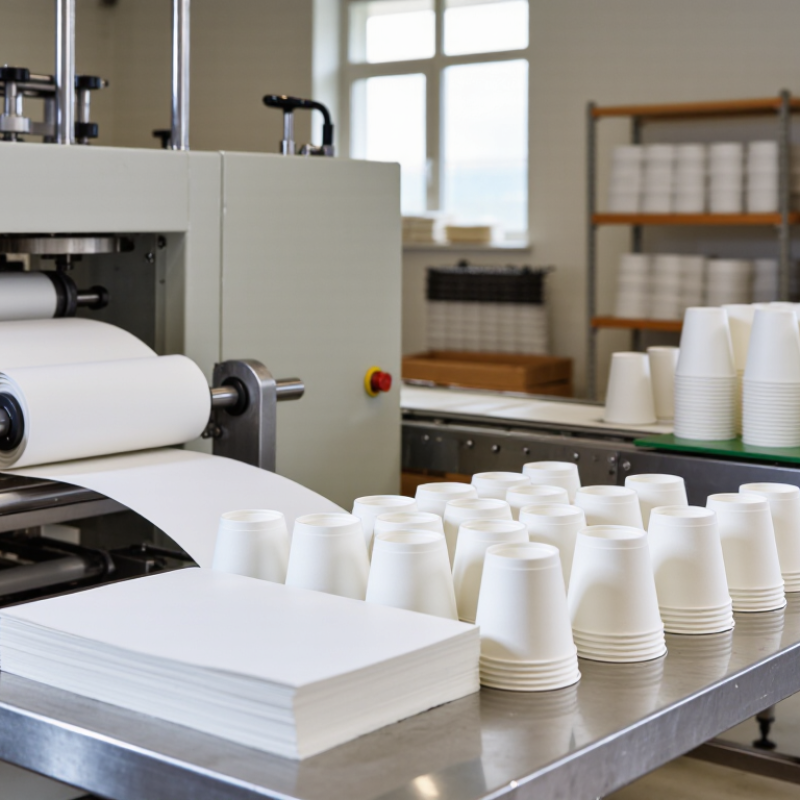
Why Choose Cup Paper Sheets for Paper Cup Manufacturing?

What Cup Paper Sheets Are and How They Are Made

Cup paper sheets are flat paperboard blanks used to form cup walls and bases. They arrive as rolls or pre-cut sheets, depending on the converting equipment. Many have a thin polymer or water-based barrier to help resist leaks and softening. The board adds stiffness; the coating limits liquid contact. Details matter.

Production begins with paper pulp, which is formed into board, dried, and calendered to create an even surface and consistent thickness. A moisture barrier is then applied and dried or cured under controlled conditions. The coated stock may be printed before die-cutting into fan-shaped wall blanks and circular base pieces. During cup forming, heat and pressure seal the side seam, and the base is fitted into place. Moisture, coating weight, and sealing temperature can all affect seam strength. Results are not always perfect.

Tips: Store sheets flat in a dry area, away from heat and humidity. Before a full run, test a small batch for curling, clean cuts, and leaks. A quick sample check can catch setup issues, though it cannot replace routine quality checks.

Why Choose Cup Paper Sheets? What They Are and How They’re Made

Cupstock is paperboard supplied in rolls or sheets, often with a thin polyethylene (PE) coating to help resist liquid. The chart compares typical basis-weight ranges for the paperboard and a single-side PE coating.

Typical approximate ranges: cupstock paperboard 170–350 g/m²; PE coating 10–20 g/m² per side. Actual specifications vary by cup design and intended use. Sheets are made by forming and drying paperboard, applying the barrier coating, then printing and cutting the stock into blanks for cup forming.

Key Materials and Properties of Cup Paper Sheets

Cup Paper Sheets: Key Materials and Properties

Cup paper sheets are usually made from layered paperboard, with cellulose fibers providing the structure. Virgin fiber can offer consistent strength and a clean surface, while recycled fiber may be suitable when its quality and intended use are carefully assessed. The right choice depends on cup size, forming equipment, and the beverage being served.

Small details matter. A sheet that feels firm in the hand may still crack at a tight side seam.

Many cupstocks use a thin polymer coating on the inner surface to slow liquid penetration and support heat sealing. Some designs use water-based barrier treatments, but their performance varies by formulation and converting conditions. Check coating coverage, seal strength, and resistance to the expected temperature and contact time.

Basis weight and caliper affect stiffness; grain direction can influence how smoothly a blank rolls into shape. Keep sheets dry and flat before use, since moisture changes can cause curling or uneven feeding. A practical trial on the actual forming line is still important.

Specifications help, but they do not capture every production condition. A supplier’s data should be checked against samples, and occasional variation deserves attention rather than dismissal.

How Cup Paper Sheets Are Converted into Paper Cups

Cup paper sheets are printed, cut into fan-shaped blanks, and fed into a cup-forming machine. The machine curls each blank around a heated mold, sealing the side seam with heat or an approved adhesive. A separate circular piece forms the base. Rotating tools press it into place, then fold and crimp the lower edge. The rim is rolled outward for a smooth drinking edge. Small changes in sheet thickness or moisture can affect feeding and sealing, so operators check settings during production.

Tips: Keep sheets flat and dry before feeding. Confirm the print direction and blank dimensions. Check seals and rims on sample cups; a neat surface does not always mean a strong seam.

Finished cups are checked for leaks, shape, and consistent stacking. A simple water test can reveal a weak base seal, while a quick rim inspection catches uneven rolling. When a machine jams, the cause may be a slightly warped blank, not a major equipment fault. That is easy to overlook. Sheet selection, coating compatibility, and forming temperature should be considered together, since adjusting only one setting may solve today’s issue but create another on the next run.

Why Choose Cup Paper Sheets for Paper Cup Manufacturing? - How Cup Paper Sheets Are Converted into Paper Cups
Dimension Typical Details Why It Matters
Base paper Food-contact paperboard is selected for stiffness, printability, and suitability for the intended beverage and cup design. A consistent base helps the cup keep its shape during forming and use.
Basis weight Cupstock is available in a range of grammages; the appropriate weight depends on cup size, wall construction, and required rigidity. Basis weight influences strength, material use, and how well the sidewall and base hold their shape.
Barrier coating Paperboard may use a liquid-resistant coating, such as polyethylene, or another suitable barrier. Coating choice depends on the product and recycling requirements. The barrier helps limit liquid penetration and supports reliable sealing at the cup seams.
Sheet format Coated cupstock can be supplied in sheets for printing and die-cutting, or in roll form for compatible production lines. Sheet supply is useful when the production setup requires flat blanks for printing and converting.
Printing and surface Artwork is generally printed on the outside-facing surface using inks and processes suitable for the intended packaging application. Good surface quality supports clear graphics while keeping the cup’s inside surface appropriate for its intended use.
1. Print and condition Printed sheets are prepared for converting, with attention to registration, coating condition, and moisture control. Accurate printing and stable material help reduce defects during cutting and forming.
2. Die-cut sidewall blanks A die cuts the flat sheets into tapered sidewall blanks. The blank geometry is designed for the target cup dimensions. Consistent blanks help produce an even sidewall and a correctly aligned seam.
3. Form the sidewall Each blank is curled into a tapered shape, and its edges are joined to create the side seam. Heat or another compatible sealing method may be used, depending on the barrier system. A secure seam helps prevent leakage and keeps the cup’s shape.
4. Add the bottom A circular bottom blank is fed into the formed sidewall. The joint is mechanically formed and sealed using a process suited to the cupstock. The bottom joint is a critical area for cup strength and leak resistance.
5. Curl the rim The open top edge is rolled into a rim, often to improve stiffness and provide a smooth drinking edge. A well-formed rim helps the cup retain its shape and can support compatibility with lids.
6. Inspect and pack Finished cups may be checked for forming defects, seam quality, dimensions, and leakage, then stacked and packed for handling. Inspection helps identify production issues before cups are distributed or used.
Choosing cup paper sheets Match the paperboard, barrier, sheet dimensions, and print requirements to the cup design, beverage conditions, converting equipment, and end-of-life requirements. Material compatibility across design and production supports efficient converting and dependable cup performance.

Benefits of Cup Paper Sheets in Cup Manufacturing

Cup paper sheets give manufacturers a flat, inspectable starting material for cup production. Operators can check surface marks, edge damage, and paper consistency before sheets enter cutting and forming. That matters on line. Stable thickness helps blanks fold predictably and supports cleaner side seams, although machine settings still need adjustment for each paper grade. More consistent sheets can reduce misfeeds and uneven rims.

A well-chosen sheet also balances stiffness with flexibility. It must hold its shape after forming, yet bend cleanly around the cup wall and bottom. A suitable coating or barrier helps resist liquid penetration, but performance depends on the paper structure, coating, and intended drink. Testing samples with the actual forming equipment is more reliable than choosing by appearance alone. The sheet should feed smoothly, seal well, and keep the finished cup comfortable to hold.

Flat sheets can be stacked and counted easily, which helps with inventory checks and production planning. Their printable surface can carry clear graphics, provided ink and finishing choices suit the paper and process. There is a trade-off, though: sheets need careful handling to avoid moisture, dust, and bent corners. A damaged stack can create waste. And sheets are not automatically the best format for every factory; equipment, storage space, and production volume should guide the choice.

How to Choose Cup Paper Sheets for Different Applications

Choosing cup paper sheets starts with the drink and how the cup will be made. For hot coffee, a sheet needs enough stiffness to hold its shape and a coating that limits leakage. Cold drinks may need stronger moisture resistance, especially when condensation forms outside the cup. Match the coating to the cup’s intended use, rather than assuming a heavier sheet is always better. Fit matters.

Check basis weight, thickness, and forming performance together. A sheet that feels sturdy by hand may still crack at the rim during curling. For printed cups, consider how the surface accepts ink and whether the coating affects color consistency. Ask for food-contact documentation and confirm that the material suits your production process. Small differences can show up on the line.

Storage matters, too. Keep sheets dry and protected from sharp temperature changes; moisture can affect feeding and sealing. For a new cup size or machine setting, run a small trial before ordering at scale. Watch for uneven seams, soft sidewalls, or leaks after filling. One detail is easy to miss: the best sheet on paper may not be the easiest one to form consistently. Test it under real production conditions.

Contact Us
