

 English
 España
 عرب
 简体中文
Top Outdoor Garden Furniture Suppliers for Global Buyers
Outdoor Garden Furniture has moved beyond seasonal patio décor. Global buyers now expect suppliers to balance weather resistance, comfort, design, and dependable delivery. The stakes are visible in market data. Grand View Research valued the global outdoor furniture market at approximately USD 50.4 billion in 2023 and projected continued growth through 2030. Market estimates vary by scope, so buyers should treat forecasts as indicators, not guarantees.
Good sourcing starts with details. Ask how frames handle moisture, whether fabric resists fading, and how replacement parts are supplied. A chair may look sturdy under showroom lights, yet wobble after repeated use. Small samples and clear specifications can reveal more than polished product photos. Charles Eames, an influential furniture designer, offered a useful design principle: “The details are not the details. They make the design.” For outdoor products, those details include welds, drainage, finishes, and packaging.
This guide compares leading Outdoor Garden Furniture suppliers for global buyers. It considers product range, materials, customization, production capacity, communication, and export experience. These factors help narrow a crowded field, but no supplier fits every project. A resort may prioritize fast replenishment; a retailer may value distinctive designs and consistent quality. Buyers should verify claims with samples, factory checks, and written terms. That takes time. It is still cheaper than discovering a weak finish after a container arrives.
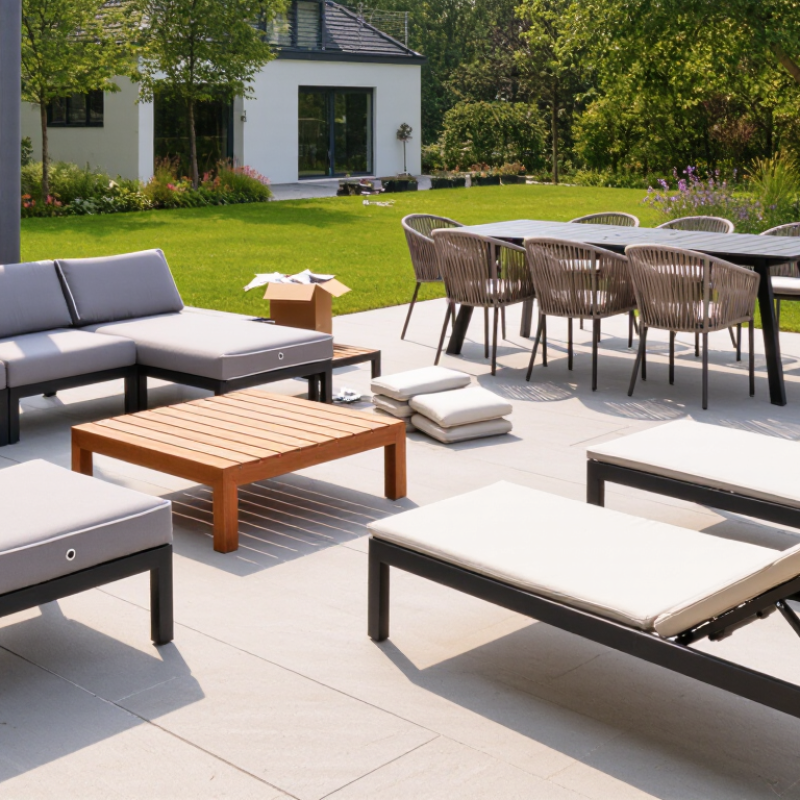
Understanding the Global Outdoor Garden Furniture Supplier Landscape
Global outdoor garden furniture sourcing is a varied landscape, shaped by climate, materials, shipping capacity, and buyer expectations. Grand View Research estimated the global outdoor furniture market at USD 50.8 billion in 2023, with a projected 5.2% compound annual growth rate from 2024 to 2030. This points to continued demand, but market growth does not guarantee consistent supplier quality. Buyers may encounter large factories, specialist workshops, and trading companies offering similar-looking products with very different production controls.
Material choices reveal some of those differences. Aluminum frames are light and resist rust, while teak and other hardwoods need clear sourcing and maintenance information. Woven resin can suit wet climates, but its performance depends on UV resistance and construction quality. Ask suppliers for material specifications, finish details, load-test records, and packaging samples. Verify that stated production capacity matches the order size and delivery schedule. A polished sample is useful, but it cannot show every weakness in a full production run. That part is easy to overlook.
Tips: Request a pre-shipment inspection and confirm how defects are handled. Compare landed costs, not just unit prices. Check whether replacement parts can be supplied. Keep a written record of approved colors, dimensions, and tolerances. Sourcing is rarely perfect; small specification gaps can still cause costly surprises.
Top Outdoor Garden Furniture Suppliers for Global Buyers – Understanding the Global Outdoor Garden Furniture Supplier Landscape
| Manufacturing Region | Common Product Categories | Materials and Construction | Typical Sourcing Strengths | Buyer Due-Diligence Priorities | Useful Verification Points |
|---|---|---|---|---|---|
| China | Outdoor dining sets, lounge seating, parasols, modular sets, and mixed-material collections | Aluminum, steel, synthetic wicker, plastics, textiles, and combinations of these materials | Broad product and component availability; many suppliers offer multiple construction and finish options | Confirm factory capabilities, material specifications, sample consistency, production capacity, and inspection arrangements | Request product-specific test reports, finish and fabric specifications, and documented quality-control procedures |
| Vietnam | Wooden outdoor furniture, woven seating, dining furniture, and selected mixed-material products | Wood, rattan and other woven materials, metal frames, and outdoor-use finishes | Established furniture-making base with capabilities across wood and woven construction | Check legal timber sourcing, moisture control, joinery, finish durability, and production lead times | For applicable wood products, verify species and origin documentation and any relevant chain-of-custody claims |
| Indonesia | Wooden seating, tables, loungers, and woven or handcrafted outdoor pieces | Wood, natural and synthetic weaving materials, and metal components | Furniture and woodworking skills suited to crafted designs and wood-led collections | Assess timber traceability, dimensional stability, outdoor finish maintenance, and repeatability between batches | Review material declarations, construction samples, and documentation supporting any responsible-sourcing claims |
| India | Metal garden furniture, outdoor seating, tables, and selected woven or wood products | Steel, aluminum, wood, woven materials, and painted or powder-coated finishes | Varied metalworking and furniture production capabilities across different product segments | Specify corrosion protection, weld quality, coating thickness requirements, packaging, and inspection criteria | Request coating and corrosion-test reports where relevant, and check that reports match the supplied product or finish |
| Turkey | Metal and plastic outdoor seating, tables, and selected woven or upholstered products | Aluminum, steel, molded plastics, synthetic wicker, and outdoor textiles | Access to regional manufacturing and trade routes serving European, Middle Eastern, and nearby markets | Confirm material grade, UV and weathering performance, export documentation, and delivery terms | Check applicable market requirements, product test evidence, and packaging suitability for the shipping route |
| Central and Eastern Europe | Wooden garden furniture, metal seating, outdoor tables, and seasonal collections | Wood, steel, aluminum, and weather-resistant coatings or finishes | Potentially convenient logistics for buyers serving European markets; capabilities vary by country and supplier | Compare production scale, seasonal capacity, material sourcing, and total landed cost | Check product safety documentation and the exact standards or regulations applicable in the destination market |
| Multi-region sourcing programs | Coordinated collections combining seating, tables, shade products, and accessories | Multiple materials and suppliers managed under a shared specification | Can diversify production sources and support broader assortment planning | Align color, dimensions, finish, carton, spare-parts, and quality requirements across suppliers | Use approved samples, common inspection criteria, traceable specifications, and shipment-level quality records |
Standards and compliance: EN 581 is a European standard series covering safety requirements and test methods for outdoor furniture within its stated scope. ISO 9227 specifies salt-spray corrosion testing methods; a test result is not, by itself, a general product certification. FSC chain-of-custody certification applies to the relevant supply chain and claims, while REACH obligations depend on the product, substances, and market. Buyers should verify current requirements for the destination country and the exact product being purchased.
Related Posts
-
How to Choose the Best Outdoor Garden Furniture?
-
10 Best Outdoor Furniture Suppliers for Global Buyers
-
China Top Outdoor Dining Furniture for Your Home Style?
-
Top Global Patio Furniture Manufacturers Leading the Export Market
-
China Quality Manufacturing Your Partner for Premium Custom Outdoor Furniture Solutions
-
How to Choose the Best Patio Furniture Sets?
-
- about us
- About Us
- Qualification
- Privacy
-
- Packaging products
- Hot Sale
- Outdoor Sofa Sets
- Outdoor Dining Sets
- Outdoor Loungers/Sunbeds
- Swing Chairs
- Single Chair

