

 English
 España
 عرب
 简体中文
Top 10 Patio Furniture Manufacturers for Global Buyers
Choosing Patio Furniture for international projects involves more than comparing photographs or headline prices. Buyers must weigh climate, intended use, order volume, lead times, and the supplier’s ability to maintain consistent quality. A dining set destined for a humid coastal hotel faces different demands from lounge chairs for a covered café terrace.
This guide introduces ten manufacturers for global buyers and explains practical points to investigate before requesting a quotation. It looks at product range, frame and fabric options, customization, production capabilities, quality checks, and export support. Details matter. Ask how finishes are tested, whether replacement parts are available, and what packaging protects furniture during long-distance shipping. These questions can reveal gaps that a polished catalogue may not show.
No shortlist can identify one best manufacturer for every project. A supplier that suits a large resort may not fit a small retailer’s budget or order size. Buyers should confirm current specifications, sample quality, warranties, certifications, and delivery terms directly with each company. That takes time. It is also a useful safeguard against assumptions based on old listings or attractive product images. The manufacturers discussed here offer a starting point for comparison, not a substitute for careful checks. Some details may change, and that deserves a second look.
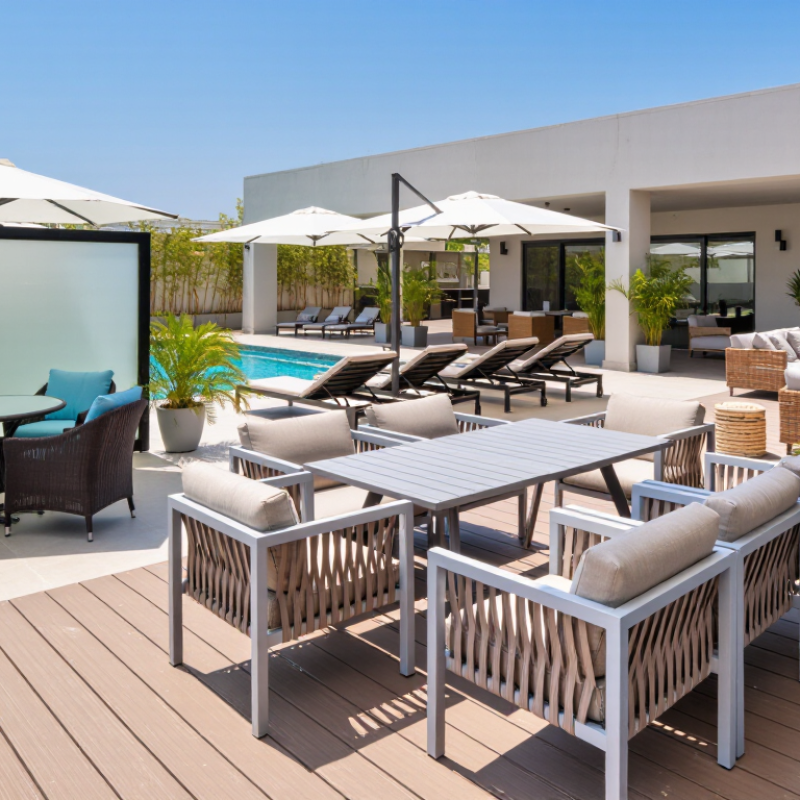
Define Patio Furniture Categories, Materials, and Global Manufacturing Regions
Patio furniture covers several distinct product groups: dining sets, lounge seating, sun loungers, benches, and compact balcony pieces. Their frames, proportions, and cushions serve different spaces. A deep sofa may suit a covered terrace, while stackable chairs work better for seasonal storage. Buyers should compare dimensions, load capacity, and replacement-part availability, not just appearance.
Material choices shape upkeep and service life. Aluminum is light and resists rust, but thin frames can feel less stable. Teak handles outdoor exposure well when maintained; its color changes as it ages. Powder-coated steel offers strength, though damaged coatings may expose the metal to corrosion. Woven resin is easy to clean, but weave quality and UV resistance vary. Manufacturing is concentrated across China and Southeast Asia, with additional production in Turkey, Eastern Europe, and North America. Capabilities differ by factory, so regional labels alone do not prove consistent quality. I have found that finish details often matter more than a polished catalog suggests.
Tips: Measure the narrowest doorway. Ask for material samples and finish specifications. Check packaging dimensions, assembly steps, and cushion fabric care. Request production photos, but treat them as supporting evidence, not a substitute for a sample inspection.
Top 10 Patio Furniture Manufacturers for Global Buyers - Define Patio Furniture Categories, Materials, and Global Manufacturing Regions
Buyer-oriented overview of established patio-furniture manufacturing regions and their common product strengths. This is a regional sourcing guide, not a ranking of named companies; capabilities vary by factory and supplier.
| No. | Manufacturing Region | Common Patio Furniture Categories | Typical Materials | Common Manufacturing Strengths | Buyer Considerations |
|---|---|---|---|---|---|
| 1 | China — Guangdong and Zhejiang | Dining sets, lounge seating, daybeds, umbrellas, and mixed-material collections | Aluminum, steel, PE synthetic wicker, tempered glass, plastics, and wood | Broad supplier base, extensive component options, and capacity for varied product specifications and order sizes | Confirm frame alloy and coating details, outdoor fabric specifications, packaging standards, and testing documentation. |
| 2 | Vietnam — southern industrial provinces, including Binh Duong and Dong Nai | Outdoor dining furniture, lounge sets, occasional tables, and wood furniture | Wood, aluminum, steel, PE synthetic wicker, and outdoor fabrics | Export-oriented furniture production and experience with wood, metal, and woven products | Check the wood species, legal sourcing documentation where applicable, moisture control, and finishing requirements. |
| 3 | Indonesia — Java, including the Jepara furniture area | Teak dining sets, benches, lounge chairs, and other wood-led outdoor furniture | Teak and other woods, with metal or woven components in mixed-material products | Woodworking expertise and access to established furniture-making skills | Ask about wood grade, kiln-drying, joinery, surface treatment, and maintenance needs; outdoor exposure affects natural wood. |
| 4 | India — Jodhpur and other Rajasthan furniture-making centers | Metal dining sets, benches, occasional furniture, and wood-and-metal designs | Steel, wrought iron, aluminum, and wood | Metalworking and handcrafted detailing, with options for traditional and contemporary designs | Specify corrosion protection, weld quality, coating type, and product tolerances for the intended climate. |
| 5 | Turkey — manufacturing areas across the Marmara and Aegean regions | Garden seating, dining furniture, loungers, and woven-look collections | Aluminum, steel, plastics, PE synthetic wicker, and outdoor textiles | Production serving domestic and export markets, with capabilities across several furniture materials | Verify outdoor-grade material specifications, coating performance, and delivery terms for the destination market. |
| 6 | Poland — central and southern manufacturing areas | Garden chairs, tables, benches, loungers, and modular seating | Wood, steel, aluminum, plastics, and synthetic wicker | Access to European supply chains and a range of wood, metal, and polymer processing capabilities | For sales in the EU, confirm applicable product-safety, chemical, packaging, and consumer-information requirements. |
| 7 | Italy — including furniture-producing areas in Veneto and Lombardy | Design-led lounge furniture, dining sets, sun loungers, and umbrellas | Aluminum, stainless steel, wood, synthetic materials, and outdoor textiles | Design and product-development expertise, with a strong focus on coordinated collections and detailing | Compare specifications and construction details carefully; design positioning alone does not establish weather performance. |
| 8 | Spain — including manufacturing areas in the Valencia region | Outdoor dining and lounge furniture, woven seating, and terrace furnishings | Aluminum, steel, plastics, synthetic wicker, and outdoor fabrics | Experience with products for residential terraces, hospitality settings, and outdoor living spaces | Check UV-resistance claims, replacement-part availability, and fabric care instructions for the intended use. |
| 9 | United States — regional manufacturers across multiple states | Patio dining sets, lounge seating, benches, and recycled-plastic outdoor furniture | Aluminum, steel, wood, recycled high-density polyethylene, and outdoor fabrics | Domestic production options and access to locally sourced materials for some product types | Confirm where each component is made, production lead times, freight costs, and the scope of any domestic-origin claims. |
| 10 | Brazil — manufacturing areas in the South and Southeast | Outdoor chairs, dining furniture, lounge seating, and plastic or wood-based products | Aluminum, steel, plastics, wood, and synthetic fibers | Regional manufacturing capacity and access to a range of metal, polymer, and wood furniture production | Check material traceability, finish suitability for humid or coastal conditions, and export packaging requirements. |
Related Posts
-
How to Choose Outdoor Garden Furniture for Your Space?
-
2026 Top Trends in Custom Patio Furniture for Outdoor Living Spaces?
-
7 Essential Tips for Choosing the Best Outdoor Dining Furniture for Your Space
-
China Top 10 Outdoor Patio Furniture Sets Manufacturers?
-

Unlocking Potential: How Best Outdoor Dining Furniture Elevates Hospitality Experiences
-
10 Best Patio Furniture Sets for Wholesale Buyers
-
- about us
- About Us
- Qualification
- Privacy
-
- Packaging products
- Hot Sale
- Outdoor Sofa Sets
- Outdoor Dining Sets
- Outdoor Loungers/Sunbeds
- Swing Chairs
- Single Chair

